
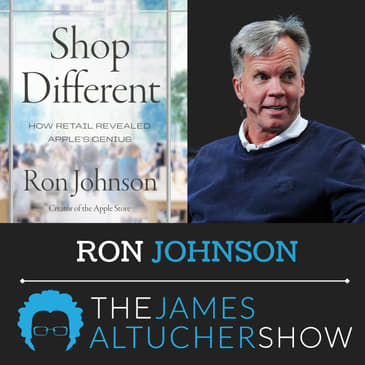



Ron Johnson built the Apple Store as Apple's SVP of Retail, and is the author of Shop Different: How Retail Revealed Apple's Genius.
A Note from James:
I love the Apple Store.
I can walk into one without needing anything and still want to stay. I like looking at the products. I like touching everything. I like the space. I like the feeling.
I remember buying one of my first iPods at the Apple Store on Fifth Avenue in New York. I walked out smiling, listening to music from my childhood that I hadn’t heard in years.
And that feeling was designed.
My guest today, Ron Johnson, is the person who created the Apple Store.
Before Apple, Ron was at Target, where he helped prove that design could matter even in mass-market retail. He worked with Michael Graves and helped establish this idea that something affordable could also be beautiful.
Steve Jobs noticed.
Steve had come back to Apple. The Mac was competing in a world dominated by Windows. And he realized there was something advertising could not do: it could not let someone actually experience the product.
You had to touch a Mac. You had to use it. You had to see why it was different.
So Steve hired Ron.
And together they created something that went against almost every trend in retail at the time.
No giant stacks of boxes. No salespeople hiding behind registers. No pressure to buy. Products sitting openly on simple tables. Lots of light. Lots of employees. A Genius Bar. A place where you could come in, play with the computers, ask questions, learn something, leave without buying anything, and then come back again.
Retail experts said it would fail.
And for a moment, they looked right.
When Apple opened its third store in Texas, Ron walked into the Monday morning executive meeting and Steve Jobs looked at him and basically said, “What are you doing here? You haven’t sold a computer in the state of Texas.”
Ron fixed it.
Eventually, Apple Stores became some of the most productive retail spaces in the world.
Ron’s new book is Shop Different: How Retail Revealed Apple’s Genius. And what I loved about the book is that you get to see how someone who has spent decades thinking about stores actually sees one.
Ron can walk into a store and notice the floor, the lighting, the width of the aisle, the employees, the products, where people park, how customers move, what they see first, and whether the place has what he calls a heartbeat.
He sees retail almost like an artist sees a canvas.
And the lessons are much bigger than stores.
They’re about design. Leadership. Kindness. Steve Jobs. Knowing what your customer values. Knowing what parts of your identity are sacred. And maybe most importantly, knowing when not to rush.
What You’ll Learn:
- Why Steve Jobs believed Apple needed its own retail stores.
- How Ron Johnson’s work with design at Target attracted Steve’s attention.
- Why Ron sees retail as a fundamentally human and emotional business.
- How kindness influenced Ron’s relationship with Steve Jobs.
- Why Apple designed the store collaboratively instead of handing the project to a traditional retail team.
- Why location was one of the first messages the Apple Store sent customers.
- How George Blankenship brought critical retail real-estate expertise to Apple.
- Why Apple spent heavily on elaborate window displays in its earliest stores.
- How the Apple Store was divided between new customers and existing owners.
- Why Apple removed almost all visible inventory and boxes from the sales floor.
- How the Genius Bar fit into the original philosophy of service and support.
- Why Apple Store employees were deliberately different from traditional electronics-store employees.
- Why Apple recruited people from bookstores.
- How Apple shifted the retail goal from transaction to relationship.
- Why Ron told employees never to hurry a potential customer.
- What Target taught Ron about differentiation and design.
- How Steve Jobs responded when Apple's first Texas store failed to sell a computer during its opening weekend.
- Why Ron says Steve criticized performance rather than attacking the person.
- What Steve Jobs taught Ron about leadership, delegation, standards, and focus.
- Why Steve wanted A players and gave them room to operate.
- Why Ron believes physical retail is not dying.
- What separates “tired retail” from a store with a heartbeat.
- Why brands need to understand which parts of their identity are sacred.
- How institutional memory slowly pulls companies away from what originally made them special.
- Why Ron believes the best business advice is simply: don’t be in a hurry.
Timestamped Chapters:
[04:38] Seeing a Store Like a Chessboard
James tells Ron that reading the book feels like watching a master see patterns invisible to everyone else.
[06:08] The Apple Store Begins
James asks what Ron and Steve Jobs disagreed about while building the first stores.
[07:29] Building the Store With Steve Jobs
Ron explains why Apple’s stores were developed collaboratively rather than designed independently and presented to Steve for approval.
[08:55] How Target Led Ron to Apple
James asks whether Ron’s design work at Target was what originally caught Steve Jobs’ attention.
[09:21] Why Apple Needed Stores
Ron explains that Steve believed Apple had to control the customer experience if it wanted people to understand why the Mac was different.
[10:40] Kindness in the Steve Jobs Interview
James asks why Ron emphasized kindness when describing his first meeting with Steve.
[11:22] Living in Your Heart
Ron describes his upbringing in Minnesota and why retail taught him to think first about the person in front of him.
[13:26] Going Against the Retail Trend
James and Ron discuss why opening expensive physical stores seemed almost irrational during the rise of Dell, e-commerce, and struggling electronics chains.
[14:00] The Mac Had to Be Experienced
Ron explains why advertising could only take Apple so far. Customers needed to touch the product and experience the operating system themselves.
[15:18] The First Message Is the Location
Ron explains Steve Jobs’ belief that the location of the store itself tells customers something about the brand.
[17:09] Getting People Through the Door
Ron describes the importance of real estate, window displays, and creating stores people felt compelled to enter.
[18:18] A Place to Hang Out
The early Apple Store becomes somewhere customers can surf the internet, play with computers, and spend time without pressure.
[19:27] Simple Enough to Understand at a Glance
Ron explains the original store layout: products and discovery in the front, ownership support and services in the back.
[20:25] The Employee Is the Star
Ron explains why Apple staffed its stores so heavily and designed employees’ jobs around helping customers rather than completing other tasks.
[21:44] Why Tech Stores Felt Intimidating
Ron contrasts Apple’s approach with the employees and environment he saw in traditional computer stores.
[22:43] Hiring From Bookstores
Ron explains why bookstore employees provided a model for the hospitality and discovery experience Apple wanted.
[24:24] Transaction vs. Relationship
Ron compares Target, where customers arrived ready to shop, with Apple, where many customers needed multiple visits before they were ready to buy.
[24:56] Never Hurry the Customer
Ron explains why employees were taught to spend time with people, excite them about the product, and invite them to return.
[25:34] Target vs. Walmart
James and Ron discuss the strategic difference between the two discount retailers and how Target used fashion and design to differentiate itself.
[27:15] How Apple Influenced Tesla Retail
James notices similarities between Tesla and Apple stores, and Ron explains George Blankenship’s role in both companies.
[28:31] “You Haven’t Sold a Computer in Texas”
Ron remembers opening the third Apple Store and walking into an executive meeting before the location had sold a single computer.
[29:51] What Steve Jobs Was Really Criticizing
Ron says Steve’s intensity was about performance and standards, not personal criticism.
[30:20] Steve Jobs as a Leader
Ron explains why Steve focused less on conventional management metrics and more on what Apple should build next and how it could better serve customers.
[31:03] Hire the Best People in the World
Ron talks about Tim Cook, Jony Ive, delegation, A players, and how quickly Steve moved when someone did not fit.
[33:26] Are Physical Stores Dying?
James asks the question Ron hears constantly, and Ron argues that retail formats evolve rather than disappear.
[34:55] Why New Brands Still Want Stores
Ron points to newer specialty brands opening physical locations and explains why demand for good retail space remains strong.
[36:05] Experience Beats Convenience
Ron distinguishes online shopping’s transactional convenience from the emotional experience and sense of belonging a physical store can create.
[37:48] Tired Retail
James brings up JCPenney, and Ron explains why outdated, dim, oversized retail experiences gradually lose relevance.
[39:29] Walking Through Stores as an Art Form
Ron describes visiting stores constantly and reading every product, display, floor, and merchandising decision as evidence of someone’s thinking.
[40:40] What Target Lost
Ron compares today’s Target home assortment with the Target he helped shape decades earlier.
[42:00] The Danger of Losing Institutional Memory
Ron explains how companies gradually drift away from the qualities that originally made them successful.
[42:50] Why the Floor Matters
Ron gives a seemingly small example: Target’s move from bright white flooring to darker concrete changed the emotional character of the store.
[43:59] Every Great Brand Has Something Sacred
James and Ron discuss why companies need to know which parts of the customer experience define their identity and should not be casually changed.
[45:16] The Best Business Advice Ron Ever Got
James asks for Ron’s most important business lesson.
[45:40] Don’t Be in a Hurry
Ron explains why patience, focus, high standards, and sequential innovation were central to Apple’s success.
[47:16] Apple, AI, and the Race for the Next Platform
James and Ron connect the lesson about patience to the enormous investment and uncertainty surrounding artificial intelligence.
[49:03] Closing Thoughts
James reflects on what the Apple Store has meant to him personally and recommends Shop Different.
Additional Resources:
- Shop Different: How Retail Revealed Apple’s Genius — Official Book Site
- Ron Johnson — Official LinkedIn Profile
- Apple Retail
- Apple Fifth Avenue
See Privacy Policy at https://art19.com/privacy and California Privacy Notice at https://art19.com/privacy#do-not-sell-my-info.
[00:00:01] Today on The James Altucher Show In the technology world, people tend to be living in their heads. You know, you're thinking about products and chipsets and software and you're kind of here. In my world, you're living in your heart. You know, that's what a retailer does. It's all about the human impact of what you do. When you walk into other technology, you saw some employees.
[00:00:28] They didn't look like people you'd want to meet. They were kind of techy, kind of guys. Didn't make a lot of eye contact. They were having their heads in their products like tinkering. You know, they loved to play with products. That's why they worked there. They didn't work there for customers. And it felt very different. It wasn't a place you felt welcome. Especially if you're new to technology. It was intimidating to mere mortals.
[00:00:55] And suddenly, the Apple Store is the friendliest, most inviting store in them all. This isn't your average business podcast, and he's not your average host. This is The James Altucher Show. I love the Apple Store.
[00:01:24] Like, I could just go into the Apple Store and just look at the products. And I just feel good. I remember the first time I bought an iPod. This is like over 20 years ago in the Apple Store on Fifth Avenue in New York City. I was in heaven. I was smiling so much. And that feeling was designed on purpose by the guy who's on this show today, Ron Johnson. He created all the Apple Stores, and he's the author of the new book, Shop Different.
[00:01:49] So Ron spent years at Target proving that design could matter in a world where it seemed like nobody cared. And Steve Jobs, who obviously cared so much about design, Steve Jobs noticed. Steve Jobs realized Mac wasn't a commodity. It was something you had to feel with your hands. You had to look at. You had to see the beauty of. And no store in America was built for that. So Ron built one. No boxes, no pressure, no clerks hiding behind registers, just tables and light.
[00:02:20] And everyone said it would fail. Retail experts wrote the obituary before the doors opened. And for a minute, they looked right. The third store opened in Texas, and by Monday morning, in all the state of Texas, he hadn't sold a single computer. So Steve looked at Ron in the weekly executive meeting. What are you doing here? You haven't sold a computer yet in the state of Texas. So Ron fixed it. And within a few years, Apple Stores were making more money per square foot than Tiffany's. This guy is a retail genius.
[00:02:48] I've learned so much from talking to him. That's who's here today, the guy who can walk into any store and tell you what gives it a heartbeat or what is quietly killing it. Here's Ron Johnson, author of Shop Different. Oh, I loved it. And, you know, it's so interesting. Like, I mean, we'll talk about this in the podcast, but you're like an artist.
[00:03:17] And to really see how you think. Like, when I go in this store, you're looking at, you're like Magnus Carlsen on the chessboard. And, you know, when you look at a store, you see so many patterns and ideas and things. And that's what's really inspiring in your book, to really see how a master of something thinks about his domain. And that's really special.
[00:03:41] I wrote it, like, in the third person and tried to be a fly on the wall, you know, inside meetings. But then I said, I think people want to know what was in my head. So I went to the first person and really tried to expand on what I was thinking all the time. And I think that made the book a lot more interesting to read. And I think it's good, like, you know, the rhythm of it or, you know, you start with, you know, Steve Jobs' interview.
[00:04:06] And it kind of, like, dovetails his managerial style, you know, throughout while you're building these stores. I'm struggling to figure out where to start because I'm so fascinated even when you're at Target and you're going into the Walmart in Florida and analyzing, you know, the length for two shopping carts. And how they didn't have as many products per category. So you were able to play with design more. Like, that's all fascinating stuff.
[00:04:32] But I want to, I guess the proper way to do this is to jump right into, you know, the Apple Store. And then we can kind of weave back. Whatever happens. Ron, what a pleasure to have you here. You know, you do realize, by the way, I am probably the biggest customer that the Apple Store has ever had. So almost everything in this house comes from the Apple Store. If I could have bought a bed in the Apple Store, I would have done it. So thank you very much. Oh, that is great. It makes me really happy. I'm a pretty big customer myself.
[00:05:02] Well, you know what I like so much about the Apple Store is that, let's say I'm walking in a mall and there's an Apple Store. It's one of the few stores other than like a bookstore that I'm just going to go in there and just hang out. And just like look at the devices, you know. So, and because the devices themselves, as you know, are works of art. And this is where you and Steve Jobs really kind of merged intuitively is that you both felt design was important.
[00:05:31] You coming from your experiences at Target and, of course, Steve Jobs, he's all about design of these, you know, the iPod versus the typical MP3 player in the early 00s. Like he was all about design all the time. And I'm just, I'm just wondering when you were designing the store, where did you guys disagree? Well, that's a really good question. Well, James, thank you for letting me come on your show. It's a, it's a real privilege. Oh my gosh. It's a real honor for me. You know, it's funny.
[00:06:00] I wouldn't say we disagreed very much. And what I mean by that, we disagreed more on strategy. You know, thinking about who's the customer we should go after and what kind of location should we put stores? You know, we did disagree on some of that until we talked it through. But see with Steve, you rarely disagree because he's always searching for the best answer. And that's all as a result of a conversation he has with his team.
[00:06:29] And so you might have a different opinion, but as you talk it through, you kind of work your way to the right answer. And then you tend to agree. And so when I look at the stores that we created, especially the first store, the prototype that he was very involved with, and some of the first really big flagship stores like our Soho store in New York, which was our first flagship, the Fifth Avenue store, that glass cube, those stores that he got involved with,
[00:06:57] you know, we saw eye to eye in everything because we developed the stores together. It wasn't like I went and built stores and he's my boss and let's go review it. Or I design a store and he reviews it. We sat in an empty warehouse and said, okay, where do you want to start with? Let's start with the floor. But what are our options? And we talk it through. You know, and so honestly, there wasn't a lot of disagreement in design because you developed that together.
[00:07:23] What's fascinating is you came, you know, at Target, when you were running Target Home, you kind of had this idea that I think at the time was very unusual for big retail stores like Target or Walmart or whatever, which is that design is important. Design of the store, design of the products. And that's when you brought on Michael Graves, who's a famous kind of product designer. And was that what attracted Steve Jobs to you? Did he know? You know, Steve was just, Steve knew he had to open stores.
[00:07:53] He had just come back to Apple in 97. The company had 30 days of cash. You know, he did all these business things working with Fred Anderson and the team to improve the balance sheet. But he launched a cult product, the iMac. And it was on the cover of Time Magazine. And it got rave reviews from everybody. But it didn't change the game because Apple sold to the Mac faithful. And Windows, from his perspective, had won.
[00:08:20] They had 95% market share after 20, 25 years competing for computers. And so Steve concluded that if he was going to win, he had to control the customer experience. So despite, you know, Dell going online, winning online with, you know, custom computers shipped to the house, the dot-com boom, Steve said, I want stores.
[00:08:42] And when he went to figure out who to talk to about that, he asked to see that guy who's doing all the design work at Target. Because he loved design. And somehow that had broken through the clutter of retail and gotten a lot of attention. And so I went to meet Steve. And I think it really was the work I did in design at Target specifically that brought me to him. You know, it's interesting. You described that first interview.
[00:09:09] And one thing you really point out, and it was sort of an odd thing to point out in a memoir. Or maybe not, but you tell me. But you pointed out that one thing that stood out in this interview was that you were kind and Steve appreciated that. It's kind of an unusual set of sentences to talk about an interview with Steve Jobs. Maybe describe, like, what specifically were you kind about and how you think he appreciated that?
[00:09:37] Well, I think, you know, by the end of this podcast, you'll probably reach the same conclusion. I'm sure I reached it already, by the way. Well, no, my point is I just grew up outside of Minneapolis in a family where kindness was valued. You know, everything you did was for the other person. It wasn't for yourself. You know, if our neighbor's husband passed away and it was winter, you know, we were the kids who were going to go shovel their driveway.
[00:10:06] And then we'd shovel our own. You know, but we had to, we just did that by, you know, that's how we grew up. And so it's very natural for me to, you know, think first about what does the other person need? What do they know and how do I deliver that? And then if there's time, ask for something for me. But I think Steve just kind of picked that up in the interview, you know. It was unusual for him. Because in the technology world, people tend to be living in their heads.
[00:10:36] You know, you're thinking about products and chipsets and software and you're kind of here. In my world, you're living in your heart. You know, that's what a retailer does. It's all about the human impact of what you do. How do you connect with customers? How does a product connect with a person emotionally and not just intellectually?
[00:10:59] And I think Steve picked that up in the conversation that talking to Ron was very different than talking to people that he normally spoke with at Apple. And it's a nature of my upbringing and a nature of the work that I did as a retailer. You know, I'm sure also, though, like he knew he had to build a store, which, by the way, it's interesting you say he knew. Because at the time, like Circuit City was about to fail or, you know, within a few years.
[00:11:27] Comp USA, that doesn't really, that doesn't exist anymore. I think Best Buy, of course, has been a success, but that was a hard road. But they didn't carry the Mac. Remember, they wouldn't carry the Macs. That wasn't often for us. Right. So, but just the idea of retail as opposed to Dell's approach of going online, which seemed like such a natural thing. And, of course, famously, Michael Dell told Steve Jobs to shut down the company and return the money to shareholders, I think, like in 2002.
[00:11:53] And, you know, but meanwhile, you guys said, OK, let's go against every trend that's happening out there. Let's build a store, which is going to cost money. You initially wanted to build 300 stores. I like what that, your guy that George, forget his name. Blankenship, yeah. George says to you, no, no, not 300, 25. And he was dead on. Like, I like that expertise coming through. Like, and he explained why, and he was 100% right.
[00:12:18] But it's a very different path for a company that at that time just made computers. It is, but here's the difference, OK? In the PC world, you're basically selling a commodity that runs Microsoft Office. And 95% of people are going to upgrade their computer when it doesn't work or they need faster or whatever. You're selling something to speak. The Mac was a different choice altogether.
[00:12:44] It was all about the magic of the operating system and the software. And that's something you can't market. You know, Steve was a great advertiser. But back then when I launched, when I was at Apple, we would spend $50 million a quarter. That was the budget on advertising. And Steve knew he could only advertise one thing a quarter. He had to be very focused. And so for someone to get convinced to buy a Mac, they had to go a layer below that. They had to get their hands on a product. They had to experience the operating system.
[00:13:14] They had to see that it was easy to use. And then they had to experience the software, right? And so Steve really believed after 25 years of losing market share, the only thing they hadn't tried was around stores. And why not give going to market, owning the customer experience, a great shot? And that's why he wanted these stores. It's so interesting reading your description because, first off, I grew up in New Jersey, which is known as the mall state.
[00:13:42] Like, actually, you in Minnesota, you had the best mall in the country with the biggest mall there. But New Jersey had a lot of malls. Like, every weekend was the mall. And so just hearing you guys analyze, okay, it's got to be near maybe the anchor stores at the ends. But you can't be down the hallway with all the stores that nobody wants to pass by. Like, it's really interesting. The analysis to you can't be second best. If you're launching with Apple, Premier brand is launching a store for every time.
[00:14:12] It has to be Premier in every aspect. Again, that's Steve Jobs. Steve's a perfectionist. But like he told me, when we met with George Blankenship, who came from the Gap, who was one of the most respected retail, you know, real estate people in the world. And I talked to George, and Steve said, the first thing we say to the customer is where we locate. And if we're in the wrong spot, they're going to all ask, why did Apple go there?
[00:14:40] You know, because every customer knows their local market. They know where people shop. They know where the traffic flows. They know where good parking is. They know where you ought to be. So you've got to be as smart at picking real estate as the, you know, neighbors in town would be at evaluating a site. That's fascinating what you said right there. That basically the customer knows where to park. So you have to know where the customer's parking.
[00:15:08] Like, that's a dimension I never would have thought about, for instance. But you've got to know where people work, where they live, where they play. Who else comes in there? Do tourists come? You know, it's pretty basic if you're in the retail real estate business. But we had to learn that. Apple didn't know any of this prior to the stores. All we had was, you know, Steve and my intuition. You know, I'd never done the real estate side of the business. I'd been a merchant at Target, you know, developing products like the Michael Graves collection and others.
[00:15:38] You know, we had to rely on an expert like in George Blankenship to really help us with the location. But that was a big part of what we did. We located in the right place. And then we built these beautiful stores that you had to come into. And as an example, we hired the best window designer, you know, windows like you'd see on Fifth Avenue. You know, in a department store at Christmas.
[00:16:01] We hired someone like that to do window displays at the Apple stores in the beginning to make sure people who walked through the mall would turn right or left and come into the store. That was a big investment. And most people were at that time just putting up a little graphic, like a picture. You know, now get your cotton t-shirt. And we had these three-dimensional animated displays that were just beautiful, like pieces of art to look at.
[00:16:30] So everything we did was meant to connect emotionally with the customer and get them in the store. And once they got in the store, we created an experience that, you know, they just wanted to enjoy. They felt welcome. They put their hands on the computers. In the early days, they just surfed the internet because no one had smartphones at the time. You know, phones, if you had a cell phone, it was for phone calls. It wasn't for connecting.
[00:16:56] But you come to the Apple store and just hang out and play with the computers. And people did that. I mean, it was hard to get on the computers in those early days. The Fifth Avenue Apple store, that was my Apple store. I wonder if everybody has their Apple store. Like, that was the one I would go to. And I just loved it. Like, you had the spiral staircase or at least, I don't know if it was spiral, but it had a lot of different angles to get to see the store. And then, you're right, it's just beautiful. Everywhere you looked, oh, here's the wall of iPhones.
[00:17:24] And by the way, that was an innovative idea. Kind of like having just this, it's not like shelves in the Target or Walmart retail sense. It was laid out so that you could see from a distance where all the products were. And they were beautiful. So, what were the design decisions that were almost antithetical to how you did things at Target? Well, I'll give you an example. Steve felt very strongly that someone should walk in the front of the store and be able to look and say,
[00:17:53] I know exactly what's going on here. You know, you didn't want you to have to work too hard to figure out what's going on. And so, we simply started with an idea. Well, we got a big store. The front half is for new customers. People buying a product for the first time. And the back half is for owners. And that's where we're going to provide services and support that help them do more with our Mac. That was an easy thing. You could see that. At the front, you'd see tables.
[00:18:22] And all you had were products. There was no inventory on the floor other than what you could use. There weren't boxes. There weren't shelves. There were big graphic panels that invited you to try a product or think about photography or music or whatever you wanted to do. But it was a very elegant, simple space. And you knew, okay, this is where I can try a product. And then when you got to the back, it was very clearly marked out. This is a theater. You could tell by the seats. You could see the big screen.
[00:18:50] You saw the genius bar. Highly dedicated. Now, everything was clear to the customer. That was a design principle. Right? But the second design principle is really how we thought about the employees. And we had to create a store where the employee, in many ways, was a star. You know, when you go to an Apple store, what you really see is the color of T-shirts everywhere. Now, you walk in and you see, boy, they have a lot of employees.
[00:19:19] And they're all friendly because they're engaged. They aren't doing other tasks. Now, you go to a Target store, you'll see people stocking shelves, doing this. You just see people at the Apple store waiting to help you. I don't think any store has as many staff per square foot that the Apple store has. You know, and there's just people everywhere that are there to help. You know, and it's interesting because when you were researching the prospects of taking this job,
[00:19:45] you visited a CompUSA, a Best Buy, and you saw how, or the circuit cities of the world, you saw how the employees, even the ones, I think it was CompUSA, where you had the Apple mini stores before you started, you just saw employees, like, not helping. Yeah, and it was a whole different experience. When you walked into other technology stores, you saw some employees. They didn't look like people you'd want to meet. They were kind of techie kind of guys.
[00:20:16] Didn't make a lot of eye contact. If anything, they were having their heads in their products like tinkering. You know, they loved playing with products. That's why they worked there. They didn't work there for customers. And it felt very different. It wasn't a place you felt welcome, especially if you're new to technology. So we had to create a place that was the opposite of that, that felt like the most welcome store in them all. And so think about that. That's what we accomplished.
[00:20:45] You know, a tech store was not a welcome place. It was intimidating to mere mortals. And suddenly, the Apple store was the friendliest, most inviting store in them all. And that was a design. How did you hire different types of employees than a typical tech store? Well, we went out and found them. You know, in the early days, we had our store leaders go out there, and we gave them ideas of where to look.
[00:21:14] We loved bookstores. You know, if you think about it, back before the internet, when you were a reader, you went to a bookstore, you wanted to discover a book. So the people in the bookstore were amazing and said, hey, James, welcome to the store. What have you been reading lately? What kind of book are you looking for? Well, let's go look over here, and I'll help you find that. Right? They were in the service business. Well, that's kind of like going to the computer. Hey, James, what are you at the Apple store for? Is there something you're interested?
[00:21:42] Yeah, I'd love to learn about doing photography on the Mac. That's like finding a book. Well, let me show you how to do photography on the Mac. Is there anything else I can do for you today? We wanted to deliver a hospitality experience. We were in the service business. We were in the relationship business. So all this comes down to a mindset. Yeah, and it's funny the comparison with bookstores because bookstores and the Apple store have enthusiasts as customers and employees.
[00:22:12] Target or Walmart, it's not like someone's a food, like I'm a Campbell's soup enthusiast, which is what's sold in the typical large box retail store. So it's a different type of store, and you had to make that transition. What was the biggest transition in terms of what you thought about retail that you had to change in your mind when you switched to making Apple stores? Well, the big thing at Target, it was always about helping people transact. You know, people came with a list.
[00:22:41] They did their Target run. They were going to fill a shopping cart with merchandise. So at Target, you had to find a way to, through display, without employee involvement, get someone to see a product and say, I want to buy that. And that was tricky. That was a different kind of challenge. At the Apple store, it was the opposite. You know, we knew. I can't remember if we had research or what, but we assumed it would take four or five visits to the store before someone would buy a product. And I told our team, don't ever hurry the customer.
[00:23:12] You will turn them off and they'll never come back. Spend as much time as you can with them. Get them excited about the product. Thank them for coming. And say, I can't wait for you to come back again. I'll show you something else. And eventually, when they came in, they said, hey, you know, I've been to the store four or five times. I'm ready to buy my first Mac. You know, so we never hurried the customer. Yeah, we were really trying to just get them into the belief
[00:23:40] that they should become a part of Apple, right? Where at Target and other stores, you got to sell things. Look, so this is interesting because Target and Walmart are, and you describe the differences between them in the book, but they're competitive, right? They're in the same business. You even mentioned they started the same year. I didn't know that. And 1962, how did you differentiate Target from Walmart enough? I always think of Walmart as low-grade and Target as slightly more upgrade.
[00:24:09] Yes. No, that's what it's always been. Target was a suburban strategy to start. Created by a department store company that wanted to build an off-mall strategy. So Dayton Hudson Corp., one of the great department stores, Dayton's, invented Target at the same time that Kmart and Walmart launched, when these discount stores started to come. Walmart was coming from small-town rural America Bentonville. And, you know, rural people don't have near as much money
[00:24:38] as city and suburban people. So Walmart went to be the low-priced leader on a broad selection of goods for everybody. And to this day, that's their strength. That's their position in the marketplace. Target has to be different than them because you never want to look just like your competitor. So Target was slightly upscale at Walmart. It'll have the same everyday items, like your soft drinks, like your basic food, like your health and beauty aids. But then when it comes to apparel or home,
[00:25:08] Target's going to be a little more fashionable, right? The big change I did in the 90s is I just caught this idea that design was coming, that there is a third dimension for merchandise. You know, there's basics, things you just use. There's fashion, things you wear for a season. Design was this timeless beauty. Let's take a quick break. If you like this episode, I'd really, really appreciate it. It means so much to me. Please share it with your friends.
[00:25:38] If you subscribe to the podcast, email me at alpature at gmail.com and tell me why you subscribe. It strikes me that the Tesla store looks like an Apple store. Like I bet they kind of stole, not stole, but they kind of were inspired by the design concepts of the Apple store. Like I don't even drive across. I don't have a driver's license,
[00:26:07] but I like walking into a Tesla store. Can I tell you something pretty interesting? George Blankenship, who did the real estate for the Apple stores, after a number of years left, to go do something different. And he went to Tesla and launched the retail stores. But no, Tesla went to shopping malls too. Yeah. Isn't that interesting? Yeah, no, it's a very similar strategy. And kind of the open feel, the way the Apple stores do, the fact that the kind of, you could see the products very easily.
[00:26:37] It's very different from any other kind of car dealership, obviously. He was one of the first people Tesla hired when they wanted to do retail. And I'm sure they talked a lot about what made the Apple store work. And they talked about the environment we created and how it became a place you had to walk into. And the Tesla store was always very inviting, is very inviting. And so I think people have a big impact on what people do. So Steve Jobs as a manager, like there was a couple instances in the book where maybe sales weren't going so well
[00:27:06] in Apple stores, particularly in the beginning. And he was all so nice and everything. Hey, let's fill this. And then he's like, what are you doing here? You didn't sell anything last week. Like, was there ever a point where he was like, whoa, Steve, I'm an adult. You can't talk to me this way. Or like, was there ever any friction? No, no. Third Store. We opened on a Saturday. As of Monday morning, when I would go to the executive team, me and Apple, we'd all show up at nine o'clock.
[00:27:36] We hadn't sold a computer yet. I didn't think Steve would know that, but he was paying attention to this stuff, looking at sales reports. And I walked in, he looked at me, he said, what are you doing here? I said, well, it's nine o'clock Monday morning. He goes, you haven't sold a computer in Texas yet. Not just the store we had. You haven't sold a computer in the state of Texas. What are you doing here? You know, it was interesting. You know, he could be very direct, but I just sat down. I said, I'm here to, I'm here to learn and help. And I'll,
[00:28:06] I'll fix the computer problem. Yeah. But he was very direct. But you know, Steve was never criticizing you as a person. He was criticizing your performance. He was criticizing. You weren't up to the standard. He expected from you. And as a high performing person, which I and most people worked from work, you'd love that challenge to meet his standard. That's kind of one of the fun things to working for someone like Steve,
[00:28:36] you know? And so you never knew how he would be, what he would say, but he was very insightful and really smart. And what did you learn from him as a manager? As a, well, as a leader, I think I learned about leading from Steve. Steve wasn't a manager. You know, we never talked about a stock price at an executive team. We never talked about business performance. We talked about what are we doing next? What can we do to better serve a customer? You know, he believed in these very high North stars,
[00:29:05] you know, doing these incredibly hard things. So I learned about setting big goals, how to hold people accountable by setting high standards, by inspecting what you expect, by paying attention to all the details, you know? And those are the kinds of things I learned from Steve. And I became a better leader because of that. Yeah. And it seemed like, like you look at his, the bench, the people who were underneath him doing the big items. So there was you, Tim Cook, Johnny Ive.
[00:29:36] These are like the best in the world at what they were doing. How did he keep that tension? How did he keep them inspired? And also was there a time when there was somebody who wasn't at their level? Steve didn't realize it. He just had to get rid of them. Yeah, of course. Well, Steve was a master delegator. And so you're exactly right. Tim Cook was clearly the best supply chain manager operator in the world.
[00:30:01] And Steve let him run operations for Apple and then gave him more and more. But Steve never interfered with Tim's work. He let him run that. Yeah. Steve wasn't all the time. How's this going? How's that going? Whatever. He was asking, how can I help? You know, Johnny was, is one of the great hardware product designers in the world.
[00:30:26] And Steve knew that when he got to Apple and he worked side by side with Johnny all the time. And he worked with A players and Steve always said, you want to hire A players. The people are the best in the world at what they do and then learn how to manage them. You know, so Steve surrounded himself with A players. And like, was there ever a time he made a mistake in that? And someone seemed like an A player or maybe they were the CEO of a big company and up, just, they didn't fit in. Yeah. Not often,
[00:30:54] but he made mistakes and he moved quickly when he did. You know, I'm not going to name names. At one point, he hired a head of marketing for Apple. Right. And this guy came in and you know, the marketing creators can be kind of, you know, unique. And he came in and the first thing he did, he wanted to paint all the walls in the design studio, a new color. The person lasted one week. A week later said, Steve said, thank you for joining us. But you're done.
[00:31:24] And he went on. So Steve judged people very quickly. And if you're on the team, he was going to, you're going to be a partner of his for the rest of your time at Apple until you wanted to leave. You know? And if he didn't, you know, find a lot of talent in you, he was quick to move on that decision. You know, but most people were very loyal to Steve and worked with him for a long time. You mentioned in the book, a lot of people ask you now about the future of retail.
[00:31:53] I'm going to do the same. I go to the mall now. Most malls seem kind of half empty. And obviously, look, when I go into a bookstore, I confess, usually I'll just take photos of the books I want to buy. And then I'll go buy them on Amazon. So I don't have to buy them and then carry them around. And what is the future of, of offline retail? I think there's a huge misunderstanding. People think stores are dead because you see stores that go out of business, right?
[00:32:22] But retails always had transitions. Now, if you look back over my 40, 50 years in the industry, when it started, the department store was the, that's where we all shopped. There were 150 unique department store nameplates in the U S in 1980. Think about that. They were all local family run businesses that had drawn buying teams. Today, there are 10. The department store has gone away,
[00:32:52] but the specialty store has arisen. Online shopping has come on, but most of us target stock is approaching one of its highest levels in a number of years. Another banner growth, you know, a quarter. So this idea that stores are dead is just not true. There's always been stores that, you know, do well and stores that do poorly and the tired ones go away and they're replaced by something new. But if you take a shopping center, the biggest mall operator in the world, in the U S is Simon properties.
[00:33:22] Their centers are 96% least, the highest they've ever been in the history of the company. Their average rent per square foot is the highest it's been in history. Every company is up like 6% over the last year. There's huge demand for physical space because all of these new DTC companies are scrambling to get retail stores open as quick as they can. You know, think of you want to buy active wear. There's worry.
[00:33:52] There's aloe. They're trying to beat up on Lululemon, which has kind of been around for a bit. There's all these new ArcDirects, on running shoes, Hoka shoes, competing with Nike. They're all building out their own stores. So this idea that retail is failing is just not true. You know, Walmart stock price is almost eight times higher than it was in 2000 when we opened the Apple stores. And that's with the dot-com boom and all that happened with online shopping over the last 25 years.
[00:34:22] You know, so people buy in stores and they always will. So it's interesting. So why do you think, why do you think retail is not dead? Well, because there's convenience, which has always been an attribute of buying in stores. Before online, you would say, okay, how do I deliver value? It's the merchandise I offer. It's my pricing. It's the people that interact with the customer. It's the excitement and the quality of the shopping experience.
[00:34:53] And it's got something like fast checkout. But convenience wasn't the driver of a physical store. It never has been. The Apple store, sure, it's located where you can park and come in, but it's never about waiting on convenience. It's about waiting on an experience, on going to a place that I love to be and I belong. The online can't do that. Online is very convenience oriented. It's transactional. That's all it is.
[00:35:20] And that's not how most people choose to shop. And it's a settled question. That's the interesting thing. Everyone thinks this is changing. It's not. You have been buying, making a choice every week for 30 years. Do I buy online? Do I go to a store? And you make that differently for every category, for your groceries, for your apparel, for your Apple products, where you go to the Fifth Avenue store. But you've made that decision, right?
[00:35:49] And you're probably not changing your buying behavior much today compared to last year or the year before. Well, every customer goes through that same experience. They shop all the time, right? And they've got built-in habits. And those are well-engrained now because having the chance to go online is not a new thing. We've been doing that for 30 years. But, you know, some store categories do seem to be fizzling out. Like, you spend time, obviously, at JCPenney. And, you know, that was a very different experience.
[00:36:18] I feel like that's like this sort of mid-category. I don't know how to describe JCPenney. Sort of this, it's basically an anchor store in a mall, and it's like mid-category. It's not high-end. It's not low-end. I describe it as tired retail. Okay. JCPenney stores, it's a big store. With an internet or, you know, Instagram, and I can find an item and know what I want to buy so quickly, why do I want to walk in a big, tired, poorly lit, disorganized store? I don't want to do that.
[00:36:48] That's a tired retail format. That's largely what happened to the department stores through the years. They've gone away. They've been replaced by vibrant stores, generally specialty stores, and others that are a much more exciting place to shop. Right? So you're right. The tired stores go away. You know, they always have. But the data, the data is really clear. Every, every year, there are published reports, what's bought online, what's bought in stores. It varies by category.
[00:37:18] It varies by city versus rural. But it's largely pretty static today and has been for a number of years. Online shopping isn't growing. Now, it might be within a certain retailer. Walmart's online stores doing really well. They've really worked hard in their marketplace. Target's isn't growing as fast online, but their stores continue to grow. Both Target and Walmart had very positive comp store growth this quarter. You know, it's this idea that, you know, people aren't shopping in stores. It's just not true. Obviously,
[00:37:47] you keep up with all this. Like, what's, what's kind of like your dreams now for yourself, for the, for the future? You, you obviously wrote this great book, Shop Different, but, you know, you love stores. You love the retail experience. I love going to stores. I, I walk into stores every day. You know, if I'm in a city, I'm going to go through stores. I just, I feel energy in a store. I love being in stores. And it's like, it's like art for me. It's seeing what people do because everything in there is a decision someone made
[00:38:17] in the last 90 days. The merchandise was selected. How it was presented. You know, all this stuff. It's alive. It's fast moving. And it's, and it's fun to watch how these things evolve. Every time I walk in a store, I'll notice the change from the last time I walked in that store. I feel like you could write a book called Bad Retail Decisions where, you know, you, you analyze a hundred different, you know, stores and see the bad decisions they've made. Like, well, what's the last time
[00:38:47] you walked into a store and you think to yourself, huh, that was a bad decision. Oh, and it happens every time. Every time I go out to stores. You see it. Like, what's an example? Well, I was in Target recently. You know, oh, I shouldn't, well, I'm going to say it. I'll tell you the truth. But I was curious because people say Target has lost its edge in like home and apparel. So, I went in and I remember exactly by every
[00:39:17] single category in the home area of Target, the price points we offered, what products we offered 25, 30 years ago compared to today. And I asked myself, I went through every aisle and home and I said, would I prefer to shop the assortment today at these price points they're offering with the presentation or would I prefer to shop 30 years ago? And it was unquestionable. Target was a more exciting store with better merchandise, more interesting things 30 years ago
[00:39:47] than it is today. Unquestionable, right? So, people change. And it's not to be changed. Also, there's more choices now too. Like, you know, I can go to Louisville Lemon for t-shirts instead of Target. Although, by the way, I do buy all my t-shirts, Goodfellow brand from Target. Oh, that's great. That's great. No, but my only point is these stores, you know, you walk in. So, when I look at what Target's doing today in some categories I go, I kind of scratch my head and go, why would they have evolved to this?
[00:40:17] But you realize institutional memory fades pretty quickly in companies. You know, if you aren't staying pure to what your vision is, you're going to see an evolution away from what made you successful. The best companies never do that. You look at these luxury brands like Louis Vuitton, you know, they are so pure on what their customer values. The Apple Store, I think the Apple Store is as great an experience today as it was when I led it, you know, 15 years ago.
[00:40:46] It's still a vibrant store. You walk in, it's got a heartbeat. People are connected. They're alive. It's a great experience, right? But what's like a decision in Target that brought it down? What do you see as, huh, they made that decision? And it doesn't have to be Target, but like, what maybe, because you just brought it up, what's a decision specifically that they made that you're like, I would not have made that decision. The floors. You know, when I was at Target, we were famous for these white floors that we'd clean every night. We'd run this thing,
[00:41:15] and the whole store would look clean. And the merchandise would reflect off that and all the colors. It was a happy place. It was alive. You wanted to be there. They made a decision probably a decade ago to start transitioning to these dark, gray, concrete, warehouse-looking floors, which were supposedly pretty hip. But they weren't. They were hip for a moment in a few places. But it's taken down the entire feeling of walking
[00:41:45] to your Target store. Just look at a picture of a modern Target and look at it from 20 years ago and you'll see the difference. Right? But someone made that decision and they didn't understand how important that little decision was to Target. So let's say you were the CEO of Target and someone came to you and said, listen, I want to try this new hip thing. Everybody's doing it. All the kids are doing it. It's the gray, concrete, whatever floor. How would you have responded?
[00:42:15] I would have said no because stores have an identity just like Target's red bullseye is a big part of the identity of Target. They've done a great job of marketing the Target brand. To me, that white floor said Target. You know, with these big aisles. You know, you'd walk in the Target, there was a racetrack, we called it. It ran around and all the merchandise was organized off that racetrack. That was sacred to Target to me. So I would have said no. It's not like
[00:42:44] the Apple stores. There are certain things in that store that are pretty sacred. So it's sort of like each store should almost figure out its Bible. Like, this is why we're alive. This is why this has been working. This is why we've survived the test of time this is the Bible. And you kind of have to stick with it even if there's new fads. You got to be really careful because, and you guys walk through all the elements of marketing. Your presentation, your products, your pricing, how you promote,
[00:43:14] your people. Each one of those. What is our secret sauce? What does the customer expect to find in this store? And how do I make that a little better every year? But you don't want to walk away from that core value proposition that customers rely upon. Now, I kind of want to ask the cliche question here because you've had so much experience with kind of the heart of industry, which is basically retail sales, and you worked with the best
[00:43:44] entrepreneur potentially of history, Steve Jobs. After all this, what is the best piece of business advice you've gotten that has really stuck with you? Don't be in a hurry. You know, it's so easy for people in business to be moving too quickly, right? And things take time. You know, and I use Steve Jobs as a perfect example. Steve left us way too early
[00:44:14] at age 57, right? Yeah. But in his career, he launched, created the personal computer. He invented the animated digital movie. You know, turned movies into digital movies that became a big deal. But he only did one thing at a time. You know, he only let Pixar make one movie a year while he was there. You know, it'd be pretty easy. Let's build a business. Let's do two movies. We'll get double revenue. Steve knew they could only make one great movie a year,
[00:44:43] and they wanted to do insanely great movies. You know, we launched the iPod, the music player. The first thing after a Mac, years later. It took six years until we went and made a phone because we had to do a great job with the iPod first. And then we did a phone, and it was three years until we did another product, and that was an iPad. But if you think about that, Apple was never in a hurry. We focused on doing things really well and learning how to make them better,
[00:45:14] and then we earned the right to do another thing. But some people in business seem like they're in a hurry. Yeah, sure, you got to make good decisions and do great work, but at the end of the day, business seems to move fast. Customers don't move at that pace. You know, you got to do great work. It's a really great point. I think about this in the context of AI right now. Like, you see every company is scrambling over themselves to spend hundreds of billions of dollars on an outcome that is very unclear. Like, we all know the world
[00:45:43] is moving towards AI, but we don't really know who's going to win, what are the features that are going to win, who are the customers that are going to spend the most. I like how Apple sits back, doesn't spend a dime, surveys the landscape, and eventually, I'm sure they're going to do a lot of stuff with AI, but they just don't have to do it today. They're sort of waiting to see. Right. Well, I think a lot of that is a function of, you know, when you see an example, Apple went from being a very low-valued company by really winning in the smartphone,
[00:46:13] a device that everyone used, it became, you know, a trillion-dollar company. Google, with one great technology application called Search, became a trillion-dollar company. So I think investors today view AI like the next Google Search, the next smartphone, and they think it's a trillion-dollar-plus idea. And they think it's going to be a winner-take-all thing. Now, just like Google,
[00:46:43] one on Search. Apple's kind of one on smartphones. I think this money, and then therefore, the way AI is being developed, there's some big companies that are competing, like Google, like NVIDIA. And then you've got investors to keep up with them. They've got to put a lot of money into this, like in Anthropic and OpenAI. So there's this big race. There'll be winners, but there are going to be some big losers through this investment too. I think that everyone knows that. And you're just hoping you're on the right side of the right company.
[00:47:14] Well, Ron Johnson, I just want to mention again, such an honor to have you on the show and talk about this. I mean, I've been a huge customer of the Apple Store over the decades. It's literally brought a smile to my face. Like the first time I bought an iPod at the Apple Store on Fifth Avenue, I just walked out of there smiling, listening to all the music of my childhood, which I hadn't heard in years. So it was such an amazing experience. But you wrote a book, Shop Different, How Retail Revealed,
[00:47:43] Apple's Genius. Again, great book. So many valuable lessons there, not only about retail and stores and your experience, but also Steve Jobs and working for such a legend. And thank you once again for coming on the show. Well, I'm just happy you enjoyed the book and I hope other people will too. It was really a thrill to write it, to look back and all the things I got to experience and to share those stories with others. So I hope people enjoy it like you did. Thanks, Ron. Write another one. I will. Thanks, James. Great to see you.
[00:48:14] And welcome to Pluto Phone. If you know the name of the movie you'd like to see, just stream it for free on Pluto TV, where all your blockbuster favorites are landing all summer long. Catch Anchorman, The Legend of Ron Burgundy. Fantastic. The Matrix Trilogy. Welcome to the real world. Mean Girls. Shut up.
[00:48:44] Titanic. I'm the king of the world. And so much more. For Showtime's, press nothing. They're free 24-7. That is so fetch. On Pluto TV. Stream now. Pay never.