
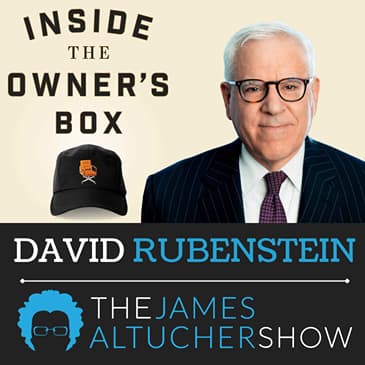



He admits he was so bad at firing people at Carlyle that he sometimes promoted them instead by mistake...
A Note from James:
On this show, I’m usually the one asking the questions.
But near the end of this conversation, David Rubenstein turned it around on me.
He asked why I care whether the Mets win.
And I didn’t really have an answer.
I said, “I guess when I was a kid, it felt like I was winning when they won.”
And David said, basically, yeah. That’s the whole thing.
David owns the Baltimore Orioles now. And he explained that Baltimore has spent roughly 200 years living in the shadow of cities like New York, Boston, Philadelphia, and Washington. If the Orioles win, somebody in Baltimore who will never make a dollar from the team still gets to feel like they won too.
His new book is Inside the Owner’s Box: Conversations on Power and Leadership in Sports.
And there were two things David told me that I can’t shake.
One: he was so bad at firing people at Carlyle that employees would come into his office to get fired and somehow convince him to promote them instead.
So Carlyle took firing away from him.
He didn’t become better at it.
He just stopped doing it.
And two: since he bought the Orioles, they’ve more than doubled what they pay their players.
The team did not become twice as good.
I’ve spent a lot of money in my life trying to fix things that were never money problems.
And, honestly, I’ve spent a lot of my life feeling like a winner because of things I didn’t even own.
So I wanted to ask someone who actually owns the team what ownership teaches you that being a fan never can.
Here’s David Rubenstein.
Episode Description:
David Rubenstein has spent decades buying companies, building The Carlyle Group, negotiating major deals, interviewing world leaders—and now he owns the Baltimore Orioles.
That last job has taught him a few things the others didn’t.
His new book, Inside the Owner’s Box: Conversations on Power and Leadership in Sports, grew out of conversations with owners including Robert Kraft, Ted Leonsis, Tom Ricketts, Jeffrey Lurie, and others. James asks David what he learned from them now that he has crossed from businessman and sports fan into ownership himself.
The first surprise is that sports ownership isn’t primarily about maximizing profit. David says most owners obsess over something much more emotionally dangerous: winning.
And winning is difficult to buy.
Since David’s group took over the Orioles, player payroll has more than doubled without producing a corresponding improvement on the field. That leads James and David into a larger discussion about luck, accountability, talent evaluation, coaching, and how much credit any leader should take when things go well.
David is unusually comfortable admitting what he doesn’t know. He doesn’t pick every player. He doesn’t choose managers by himself. He relies on people who know far more about baseball than he does.
That same philosophy helped him at Carlyle: understand your limitations, then surround yourself with people whose expertise exceeds your own.
The conversation also turns into a masterclass on negotiation.
David tells the story of nearly walking away from the Orioles deal after an exchange with the seller’s investment banker. The important lesson wasn’t the disagreement itself. It was that even when the deal involved his hometown team—a team he genuinely wanted—he had to be willing to leave.
If the other side knows you will pay any price to get something, David says, you have already weakened your negotiating position.
James and David also discuss hiring, firing, job interviews, sports analytics, AI, betting, media rights, franchise valuations, and why elite athletes don’t necessarily make elite coaches or owners.
But the most interesting lesson comes near the end.
David asks why ordinary people care so intensely about teams in which they have no financial stake.
His answer is that sports allow people to participate emotionally in success. When the hometown team wins, the city wins. And for a few hours, millions of people get to feel that victory personally.
That, David says, is something he never encountered in private equity.
What You’ll Learn:
- Why owning a sports team is fundamentally different from owning a traditional business.
- Why spending more money can improve your odds without guaranteeing success.
- How David separates leadership decisions from luck and outcomes.
- Why knowing your limitations—and hiring people smarter than you—is a competitive advantage.
- What David looks for when interviewing and hiring people.
- Why the ability to walk away is essential in any serious negotiation.
- How analytics, AI, betting, and media rights are changing professional sports.
- Why fans feel genuine personal success when their hometown team wins.
Timestamped Chapters:
[02:00] Firing People and Walking Away From Deals
David previews two themes that recur throughout the conversation: why he was terrible at firing people and why a negotiator must always be prepared to leave.
[02:53] A Note from James
James introduces David, the Orioles, Inside the Owner’s Box, and the strange emotional relationship fans have with teams they don’t own.
[04:13] Will There Be Baseball Next Year?
James opens with the uncertainty surrounding Major League Baseball’s next labor agreement.
[04:58] Why David Bought the Orioles
David explains why sports ownership is less financially motivated than traditional investing and why he sees the Orioles partly as a way to give back to Baltimore.
[06:06] Spending More Doesn’t Guarantee Winning
The Orioles have significantly increased payroll, but David says the results demonstrate why money alone cannot manufacture success.
[06:26] When Do You Fire the Manager?
James asks whether a struggling team’s manager deserves the blame when so many factors determine performance.
[07:34] How Much of Winning Is Luck?
Tom Brady becomes the example for separating brilliant decision-making from the enormous role of uncertainty.
[08:39] When One Decision Changes Everything
James and David discuss whether owners can identify specific decisions that truly altered the trajectory of a franchise.
[10:08] The People Who Make the Baseball Decisions
David explains why he trusts the Orioles’ baseball executives rather than attempting to make decisions outside his expertise.
[10:34] David Rubenstein Was Terrible at Firing People
David admits employees sometimes talked him out of firing them—and even into promotions—so Carlyle eventually gave the job to somebody else.
[11:29] How Do You Evaluate Someone Smarter Than You?
James asks how a leader can judge an expert whose technical knowledge exceeds his own.
[13:19] David’s Rules for a Job Interview
Always have questions. Be prepared. Show curiosity. And don’t make compensation the first thing you ask about.
[15:17] What Sports Owners Have in Common
After interviewing owners across major leagues, David identifies the trait they share most consistently: an obsession with winning.
[16:13] Losing in Public
Unlike many business failures, sports losses happen in front of everyone—and are analyzed every day.
[17:02] Becoming a Public Figure in Baltimore
David describes how owning the Orioles changed the way people recognize and interact with him.
[18:00] Buying a Team Is Personal
James compares Ted Leonsis’s approach to buying teams with David’s much longer negotiation for the Orioles.
[19:04] The Zoom Call That Nearly Killed the Deal
David explains why a condescending explanation of debt irritated him enough to walk away from the negotiation.
[20:19] The Most Important Negotiating Rule
Even when you desperately want the deal, David says you have to establish red lines and genuinely be prepared to leave.
[21:36] Preparation, Advisors, and Hidden Liabilities
David breaks negotiation down to preparation, financial sophistication, good advice, and understanding exactly what you’re buying.
[22:46] Starting Carlyle Was Riskier Than Buying the Orioles
David remembers creating Carlyle with no real business background and far less certainty than he has today.
[23:26] Money Is Not the Solution to Every Problem
Ownership reinforces a lesson David already knew from investing: capital helps, but it cannot compensate for every organizational weakness.
[24:00] Why Baseball Prospects Are So Hard to Predict
David compares baseball’s long development path with the greater predictability of early draft picks in basketball and football.
[25:20] Tom Brady, Johnny Unitas, and Hidden Talent
James and David discuss the stars nobody recognized early enough and the limits of forecasting human potential.
[28:05] Do Great Players Make Great Leaders?
David explains why playing brilliance does not automatically translate into coaching, management, or ownership ability.
[29:17] Know What You Don’t Know
James identifies one of David’s recurring strengths: recognizing his limitations and surrounding himself with people who possess the expertise he lacks.
[31:20] How Do You Actually Turn a Team Around?
David runs through the variables an organization has to examine after a disappointing season, from coaching and player development to health and team chemistry.
[32:00] Surviving Criticism as an Owner
David’s strategy for social media criticism is simple: he doesn’t read it.
[34:16] Why Sports Rights Keep Getting More Valuable
David talks about streaming, global audiences, television economics, and live sports’ unusual ability to keep attracting mass audiences.
[36:20] Finding the Next Great Sport
Investors pitch David everything from pickleball and padel to cricket and women’s hockey—but he admits he can’t reliably predict which will break through.
[36:47] Why Baltimore Matters More Than Baseball
David returns to his real motivation for buying the Orioles: his connection to his hometown.
[38:01] Moneyball Meets AI
James asks how artificial intelligence could push sports analytics beyond the statistical revolution popularized by Moneyball.
[39:35] Statistics Matter—But Athletes Still Have to Perform
David argues that increasingly sophisticated analytics remain secondary to skill, motivation, health, and execution.
[41:10] Lies, Damn Lies, and Sports Statistics
They discuss the limits of metrics like WAR and the danger of mistaking measurement for complete understanding.
[42:00] Prop Betting and the Integrity Problem
David explains why bets on individual player actions can create risks that traditional winner-and-loser betting does not.
[42:55] The One Thing Carlyle Couldn’t Teach Him
Sports ownership reveals an emotional relationship between a business and a community unlike anything David encountered in private equity.
[43:49] Why Fans Feel Like They Won
David turns interviewer and asks James why a Mets victory matters to him personally.
[46:03] Population, Media, and the Future Value of Sports
James and David consider what demographics, immigration, AI, and productivity could mean for the future sports economy.
[47:30] Nobody Knows
The serious conversation ends on uncertainty before David pivots to perhaps the episode’s hardest question: what exactly is happening with James’s hair?
[48:55] Closing Thoughts
James recommends Inside the Owner’s Box and wishes David luck on the rest of his ownership journey.
Additional Resources:
- Inside the Owner’s Box — Simon & Schuster
- David Rubenstein — The Carlyle Group
- Baltimore Orioles Ownership Group
- How David Rubenstein Became Owner of the Orioles — MLB.com
- The David Rubenstein Show: Peer-to-Peer Conversations — Bloomberg
- History with David Rubenstein — PBS
- MLB’s 2026 Collective Bargaining Negotiations
See Privacy Policy at https://art19.com/privacy and California Privacy Notice at https://art19.com/privacy#do-not-sell-my-info.
[00:00:00] Today on the James Altucher Show. As a general rule of thumb, when professional sporting teams don't do well, it's easier to remove the coach than to remove the players. And owners don't tend to remove themselves, right? At my firm, Carlisle, whenever we had to get rid of somebody, I asked one of my partners to do it because I wasn't very good at firing people. When I was supposed to originally fire people, I would actually wind up promoting them when they'd come into my office when they'd tell me how great they really were.
[00:00:28] So they got rid of me as a firer and we had somebody else in our firm fire people. You always have to be prepared to walk away in a deal if you're going to really be a good negotiator. Because if somebody knows that you'll pay any price, bear any burden, do anything to get the deal done, you're probably not going to get the best deal. This isn't your average business podcast and he's not your average host. This is the James Altucher Show.
[00:01:03] So on this show, I'm usually the one asking the questions. But near the end of this conversation, David Rubenstein kind of turned it around on me. He asked me, you know, why do I care whether the Mets win? And I didn't really have an answer. I said, I guess when I was a kid, it felt like I was winning when they won. And he said, yeah, that's it. That's the whole thing. And then he said, look, Baltimore has been the stepchild to New York and Boston for like 200 years.
[00:01:33] So if the Orioles win, some guy in Baltimore who's never going to make a dollar off that team gets to feel as good as the guys in New York. So David owns the Orioles now. His new book is Inside the Owner's Box. And there were two things he told me that I just can't shake. One, he was so bad at firing people that they'd basically talk him into promoting them instead. So his own firm took firing away from him. He didn't get better at it. He just stopped doing it.
[00:02:01] And two, he's more than doubled what the Orioles pay their players and the team hasn't gotten better. And I mean, I've spent a lot of money in my life trying to fix things that were never money problems. And honestly, most of my life, I felt like a winner because of things I didn't even own. So I'm asking a guy who owns a baseball team how to stop. And here's David Rubenstein.
[00:02:31] First off, just a question unrelated to your book. Is there going to be a baseball season next year? To be honest, I don't think anybody really knows. I think that the negotiations are going on, but until the season is technically over and the contract is over in December, I don't think the negotiations will be taken that seriously in terms of really getting down to brass tacks. But I don't think anybody honestly knows. No owner knows. No player knows. We just don't know yet. And you know, you're a relatively new owner of a baseball team, the Baltimore Orioles.
[00:03:01] And obviously, I love your technique of learning and also writing a book at the same time, which is, hey, let's interview all the sports team owners I can find. And I get both book and knowledge out of it. What are some of the things you've learned? And then I have some specifics on this. I've learned that people that buy sports teams are not motivated by money as much as people that buy other kinds of companies are. You care about the community. You care about winning.
[00:03:27] You care about trying to, you know, do something for the area that you kind of represent. And to some extent, it's a philanthropic endeavor. Obviously, people are making money on these teams. The prices are very high. But like, as I say in my book, I really did it as a philanthropic gesture to my hometown of Baltimore because I felt I owed more to Baltimore than probably I'd given. That's why I really did it. I don't expect to ever sell the thing while I'm alive. And, you know, somebody will ultimately figure out what to do with the team when I'm gone.
[00:03:57] But at the moment, I will probably I have a partner. And when I get to a certain age, I'd like him to take over and run it. But that doesn't mean I have to sell my stake and I probably would want to hold it forever. Well, it's interesting because as opposed to owning a company where you're going to maximize the bottom line. Right. Right. Often you make ownership decisions with a sports team, which may maximize the value, but it doesn't necessarily maximize the bottom line of the business, the earnings of the business. Much different constituencies. Absolutely.
[00:04:27] Look, we've more than doubled the salary of the players since I took over this particular team. Yet that the performance hasn't translated into, you know, more success in the field. So clearly spending a lot of money can be helpful, but it doesn't guarantee success. Unlike many other businesses. Also, you mentioned the somewhat underperformance of the Baltimore Orioles. Right. Correct. Like just a few years ago, the 2023 was the head of American League East. Correct. And had some disappointing years.
[00:04:55] And you got rid of the manager, Brandon Hyde. Was this you, you know, is it necessarily the manager's fault? Like how much is it luck when a team doesn't do well or it's a combination of all sorts of things? Like why he was a good manager for a while. Why make that decision, you know, after one, one bad streak? That's a fair question. As a general rule of thumb, when professional sporting teams don't do well, it's easier to remove the coach than to remove the players.
[00:05:24] And owners don't tend to remove themselves. Right. So as a general rule of thumb, it's easier. And this has been going on for 50 or a hundred years or so. So in that particular case, it was difficult because Brandon Hyde had been the manager of the year for the Orioles, the year that they came first place. But we just felt the time was necessary to make a change. But, you know, that's the way sports teams are. You tend to, you know, there, you don't fire your players so much as firing other people.
[00:05:51] It's interesting to me how much of a success as an owner, a success as a manager could be like, like you were talking to Robert Kraft in the book, who's the New England Patriots. And obviously drafting Tom Brady in the six round draft pick, you could argue that was more of a function of luck. And he became like the greatest player of all time and Patriots won six Superbowl. Correct. When can the owner, you know, say, Hey, this was me. Or when is it just, you just got to say, Hey, thank God for this choice.
[00:06:18] I mean, owners, it depends on, you know, your, your level of your ego and your, you know, willingness to be honest. I think Bob Kraft would admit that it was somebody on his coaching staff who recommended that particular draft. And Bob didn't really know Tom before they drafted him. And it turned out to be one of the greatest in drafts of all time. You know, look, it gets down to, you know, who takes credit for things?
[00:06:42] Abraham Lincoln didn't walk around saying, you know, I just won the Civil War by myself, or I just wrote the Gettysburg Address by myself, or I just freed the slaves. He was a more humble person. Some people like to brag more. So, depends on the personality. In the interviews you did in the book, were there interviews or discussions where you felt the owner did make a critical decision that changed the outcome of that team for that season? Well, sure. Some owners, look, owners that I interviewed, some of them have won championships.
[00:07:11] The Chicago Cubs hadn't won in over a hundred years, your hometown or where you are now. And then the family that bought the team and, and with Tom leading it, they won the World Series. I mean, it's amazing when you think about it. I don't know if you're a Cubs fan or a White Sox fan, but if, or maybe neither. I'm a New York Mets fan. I'm from New York. Oh, you're from New York. Okay. Well, the Mets are a good example. They have one of the wealthiest people in, in major league baseball, if not the wealthiest. And he's been unable to win a championship yet. And he spent a fair amount of money.
[00:07:40] It shows, you know, just spending money doesn't necessarily guarantee championships. On the other hand, the Dodgers have spent a lot of money and they've done quite well. So a lot of different factors. Yeah. So, and I'm wondering, but when, when has there been a specific, or when did you learn in the course of this book that there's been a specific ownership decision that you'd really did that you personally felt this was the factor that changed the outcome? Well, clearly when the, when the Patriots took out Drew Bledsoe as the, as a quarterback
[00:08:06] one time and they put in Tom Brady and it turned out to be the, you know, the greatest decision anybody could have made. That was an ex a good example of that happening. One decision putting in one player in made a big difference. Did the owner make that decision? Well, I don't know. In that particular case, I suspect the coach did, but the owner certainly agreed to it. You know, there's a lot of decisions you have as an owner already have made. You know, again, we, we talked about when you remove the manager, did you consider at the time, you know, the, the general, the, the, the GM, Mike Elias, he's the one who
[00:08:36] brought on, you know, the, the pitchers, the, you know, had the staffing decision. Was there any consideration there of? Well, um, um, we have a high regard for Mike Elias. And at the time we made that decision, we only considered what we did. And we did that. We made the decision to remove the manager and replace them with somebody who was a coach. And then we got a new manager this year, you know, getting rid of people is never easy at my firm, Carlisle. Whenever we had to get rid of somebody, we, I asked one of my partners to do it. Cause I wasn't very good at firing people.
[00:09:05] When I was supposed to originally fire people, I would actually wind up promoting them when they come into my office, when they would tell me how great they really were. So they got, got rid of me as a firer and we had somebody else in our firm fire people. Firing is never pleasant. I don't know if you've ever done it, but it's not easy to do. I think I'm more in your category, although you probably have a lot more experience with it. Like what was there ever a case where you accidentally promoted someone where it did work out? The promotion worked out. I, yeah, sometimes I was told that we got to get rid of this person. I couldn't quite do it. And, and the person turned around, they did okay. So, uh, you never know.
[00:09:33] And remember a lot of managers who are fired recycle and they turn out to win championships at other places. So, you know, who knows? You never can tell who's going to be a great manager and who's going to be a great general manager. I mean, how do you, how do you, this is in general, true, probably in private equity and sports. I mean, how do you evaluate someone who is an expert or greater what they do when they also know much more about their subject than you do? Like what questions can you ask that, that.
[00:10:01] Well, in life, that's generally the case when you're hiring people. In very, but you're hiring somebody with an expertise and probably in a given area that probably is greater than you have, but you bring your own life experiences. So if I'm interviewing somebody, I'm not really interviewing the managers really. I mean, the general manager will pick the candidate he thinks is best and then will let me talk to the person. If I, if the person was a terrible person, it didn't know what he was doing. I think the interview was a disaster. Then you probably wouldn't go ahead with it, but that's not likely to happen.
[00:10:32] So generally by the time it gets to me and in the business world or in the sports world, decision is pretty much baked unless I think the person is dissembled so poorly, or I just have some terrible reaction to the person. So usually it's kind of, you know, made before you really make the final decision yourself. What does it mean a terrible reaction? Like how do you feel a terrible reaction? What happens? Look, um, look, I've interviewed thousands of people over the years at Carlisle.
[00:10:58] Now I've hired, you know, former presidents, United States, former secretaries of state. I've hired lots of prominent people. I've hired junior people right out of college too. You know, you do an interview with somebody. If you've ever hired anybody, you know, you do an interview and you have a sense that the person knows what they're talking about, or seems like they have a cultural fit. You might hire them, but sometimes people stick their foot in their mouth during an interview and you realize maybe this person isn't going to work out. But by the time I'm going to interview somebody these days, it's unlikely they're going to be
[00:11:25] so tongue tied that they can't have a reasonable conversation with me. And they've probably been coached on what I like and what I don't like. That's interesting that, uh, I mean, for example, I haven't written a book about this. I've thought about it. I'm maybe going to write a book about this, but how do you go do a job interview? You know, I don't, you've, you've probably been in job interviews. I've been in job interviews and I've done a lot of job interviews, you know, and one of the things I always tell people is when you're doing a job interview, when somebody is interviewing you and they say,
[00:11:54] do you have any questions? Don't say no. Always have questions because if you don't, can't think of anything to ask, doesn't show a lot of intellectual creativity or curiosity and never ask somebody what the salary is. If the salary is the main determinant in terms of the job interview, they're probably interviewing the wrong person. Yeah. It's interesting. So, so what else you give this is? This is a big topic. You're going to write a book. When I'm interviewing people, you know, I'm amazed at how many people aren't prepared.
[00:12:21] Sometimes, you know, people have read who I am or they've read the background, but sometimes they don't know, or they will, you know, say things that just don't make any sense or they get tongue tied and you feel bad for them in some cases. But remember being able to speak well in an interview isn't the only determinant. I mean, if somebody is a brilliant, I mean, I'm sure if I interviewed Albert Einstein, I probably would turn him down saying, look, guy can't talk that well. And he's really, you know, he's got his, you know, his hair isn't that well combed and, and whatever else, but you know, who knows?
[00:12:49] Sometimes, you know, when you go to for a job interview on these days, I am amazed how many people show up in job interviews dressed like, you know, they're, they're going on a subway or something and they just want to dress down. But it used to be when you used to dress up for an interview, but people don't do that anymore. I have to get over that. And, you know, obviously you've dealt with all sorts of personalities when interviewing these team owners. These are people who are very passionate about their, passionate about their hometowns. They're like you, like, like, like Bob Kraft was another person who says, I'm never going to sell the Patriots.
[00:13:18] I think that's a common, I think they don't use these as like standard businesses. And obviously, again, you were doing a lot of these interviews felt to me like you're learning by talking to them, how you should be as a team owner, how you should be to the community. Of course, that's what I wanted to do. Did anybody, did you feel like you got contradictory advice from any two team owners? No, but I would say, look, there are infinite number of books on sports heroes. And I didn't, couldn't find a lot of books on sports owners.
[00:13:44] And that's what motivated me to kind of write why I became an owner, my process of going through it and interview other owners. And what I thought the most common trait that they have is that they really care about winning more than anything else. Winning is more important than making money. Winning is more important than being popular. Winning is the everything in the sports world and other things flow from that. And all the owners really are obsessed with trying to become a winner. But obviously every year, only one team is going to win in any given sport.
[00:14:10] Yeah, I think it was Ted Leonsis who said that it feels really bad to lose the seventh game in a playoffs. Of course. And I'm wondering if that's something that's particular to sports or competitive activities like that. Or if you feel something similar, let's say if a company falls apart in the private equity world. Well, when you're trying to buy a company, obviously only one buyer is going to win. So you're competing in that sense. But the whole world doesn't know if you were trying to buy a company in every case.
[00:14:37] So if Carlisle is trying to buy something and there are five bidders and we don't get it, it's generally not news that we failed. In the sports world, there are very few secrets. Everybody seems to know everything. And of course, every day you measure your performance and everything is very visible. And today we have so many statistics to measure how you're performing. And there's so much data going on that today everything is analyzed to the nth degree. So if you don't like public exposure, you don't want to talk to the media ever. You don't want to ever be criticized in the press. Don't buy a sports team.
[00:15:07] You mentioned this that right after, even when you were still kind of finishing up buying the Orioles, people would recognize you if you wanted to take selfies with you. Right. I don't know if this was common for you being in the private equity world, people coming up to you to take selfies. But was this a new thing for you? And how did you react to it? I have a couple of TV shows on Bloomberg and on PBS where I interview people. And so as a result of that, some people do recognize me from time to time in other parts of the world.
[00:15:34] But when I'm in Baltimore or when I'm in the stadium, people come up and they want selfies or pictures and try to do what they can. But I would say, since the team hasn't been doing as well the last couple of weeks, I have had fewer requests when I walk by. People will kind of look at me, but they don't stop and say, hey, thank you very much for saving the team. Or thank you very much for what you did. But, you know, if we have a good winning streak, maybe it'll change. Who knows? That's not my main focus, of course, not to do selfies.
[00:16:02] But I try to be polite. If people want a selfie, I give it to them. People want an autograph, fine. When I was a boy, I tried to get autographs from players. And I wasn't happy when the players wouldn't do it. You also mentioned talking to Ted Leonsis. He was saying something about when you're buying a sports team, it's a personal thing. So the last thing you want to do is haggle and spend too much time negotiating. Like he basically, they told him a price. I think it was like $80 million for his first sports team. He just said, done. And you, it took you quite a while.
[00:16:32] Even though it was a passion project for you, the Orioles, it took you like a year or more to buy the team. Well, there's the reasons for that. But one, originally the owner wasn't prepared to sell control. Then later he was prepared to sell control. But, you know, the price had to be established. That wasn't the principal issue so much as other terms. You know, buying a team, you have lots of complications in contingent liabilities, existing debt, all kinds of other things.
[00:16:59] The government's involved because the government actually owns a stadium. There are a whole variety of different things. It's complicated to get a deal done. And Ted Leonsis, when he was buying the teams, he was dealing with one man who owned them, A. Poland. And A. Poland owned everything there wasn't the government entity he had to deal with as well. And there was one time in the negotiation where you were like personally insulted. You didn't say what you were personally insulted about. And you logged off the Zoom and that way. That's right. That's right. Yes. Tell me what it was.
[00:17:27] What happened was, you know, there was an investment banker on the other side who tried to explain to us what debt is. D-E-B-T, debt. And on my side was Mike Arragetti, who runs the largest private debt business in the world and knows more about debt than probably anybody walking on the face of the earth. And I just thought it was somewhat insulting to say, for the guy on the other side to say, let me tell you what debt is all about or how debt works. Just seemed to be kind of childish to kind of say that.
[00:17:56] So I just got disgusted with it and hung up. And in which retrospect do you think that was, I mean, clearly he's just, he was just not a good person to negotiate with, but you still wanted the Orioles. I wanted, but look, as I said in the book, every deal has its ups and downs. And every time Carlisle's ever done a deal, it probably fell apart a couple of times before it got done. And so, you know, at the point, as I said in the book, I was prepared to walk away because I wasn't sure I was really the right person to buy the team and I had enough other things to do.
[00:18:24] But in the end, I just concluded that it was a rare opportunity to buy my hometown baseball team. And so I went back in and kind of got it done. Take a quick break. If you like this episode, I'd really, really appreciate it. It means so much to me. Please share it with your friends and subscribe to the podcast. Email me at altature at gmail.com and tell me why you subscribed. Thanks.
[00:18:55] With most negotiations you do, you're probably okay with either outcome. Like obviously you want the negotiation to succeed, but if it doesn't succeed, it's not like a personal passion of yours. Like what's different about, like how do you control your emotions when something is a passion project? And so you want the negotiation to succeed, but you still have to be a good negotiator. Well, if you tell somebody, look, I really want to do this and I'll do this no matter what, then you're probably not going to be an effective negotiator.
[00:19:21] You've got to make it clear that you have certain points that you can't go across certain red lines. And if the price goes way above a certain level or there are other things that you just can't tolerate, then you've got to make it clear. And then you will prepare to walk away. You always have to be prepared to walk away in a deal if you're going to really be a good negotiator. Because if somebody knows that you can pay any price, bear any burden, do anything to get the deal done, you're probably not going to get the best deal. Right. That's interesting. So if someone knows it, but let's say you know you really want this deal to be done.
[00:19:51] How do you draw that line in for yourself? Like how do you, how do you prepare? Well, you try to be careful in not conveying that I want this deal no matter what. But you try not to say, look, I can't wait to get this deal done. My children want me to get this deal done. This is the highest priority of my life. If you say that, you're probably not going to be an effective negotiator. Yeah. And what else in negotiation? I mean, this is probably a... Well, negotiating, you've got to be, you actually know what you're doing.
[00:20:17] You should be well prepared, have good advisors, have financial sophistication about knowing what you can afford to pay and make it work. And then make sure you know what all the liabilities are that you're going to inherit. Deals take a long time to put together. Typically, baseball teams, when they're sold, they take many, many, many months to negotiate because you have so many different issues that you have to deal with, not just price. Right. And not only that, the league has to approve you. The league has to approve you for sure.
[00:20:44] And that's true in all leagues, but you've got to get the ownership committee to approve you, then the full league to approve you. And clearly, sometimes people get turned down. I feel like, obviously, when you're very successful, negotiation plays, it feels differently when you've negotiated successfully so many times. You've bought, sold companies, you've built up the Carlisle Group. And again, this was probably your first real passion project that was so significant that it played such an emotional role.
[00:21:12] But going back like 40 years, when you were first setting up the Carlisle Group, raising your first $5 million, do you feel that had the same intensity, just negotiating to start that? Well, in hindsight, that was riskier because I didn't know what I was doing when I was starting the firm. And I had no background in business. I'd been a lawyer and work in the government. So that was riskier in many ways, and nobody was paying attention to me when I was starting Carlisle. When the baseball team is being negotiated, it leaked out that we were doing this. You know, everybody's paying attention to you.
[00:21:40] So it's different, and there's a lot of spotlight on what you're doing. And I'm sure a lot of other owners, particularly people you were friendly with, were giving you advice along the way. Is there anything, since you've now become the owner, what didn't you understand before becoming an owner that you now understand that maybe everybody was trying to tell you, but now you realize it's true? Well, one thing I've learned for sure is just increasing salaries if players is not going to necessarily make a team win.
[00:22:07] We've more than doubled the salaries of the players since I've taken over with my partners, and it still hasn't produced the results we would like. So spending money isn't always going to solve the problem, for sure. Yeah, I wonder how often it is that, let's say, the first-round draft picks, I mean, you probably know all the statistics on this, but how often do the bidding wars for the great first-round draft picks are not really that accurate in determining who is going to be? Well, but it's different sports.
[00:22:34] If you were drafted in the first, there are only two rounds that say now in the NBA. Years ago, these have 25 rounds or so. There are only two rounds now. And if you're not drafted in the first two rounds and you try to get on some other way, you're probably not going to make it. But if you are drafted in the first two rounds, you're almost certainly going to be an NBA player, maybe a superstar in some cases. Same is true of the NFL. If you're drafted in the NFL in the first couple picks, you're almost certainly going to be a star there. Baseball is different.
[00:23:02] The number one, number two, number three draft pick every year doesn't necessarily ever make it to the majors, let alone be a hero or a star. Remember, in major league baseball, unlike football and basketball and hockey, you go into the minor leagues for two years. And it's very, very rare to come out of the minor leagues before less than two years. And then some people come out of the minor leagues better than they were when they went in. And some people turn out to be not as good as people thought they were going to be.
[00:23:26] So there are very few people who've been first round, the first picks in basketball who didn't succeed. There's some, but there are very few people who are the first picks in baseball who necessarily became the MVPs. Sometimes Alex Rodriguez was that overall first one pick, first round pick, number one. And, but that's rare when somebody is such a superstar that he's picked as number one and everybody wants him more than anything else. And we just talked about Tom Brady. He was picked in the sixth round. Who knew?
[00:23:54] Johnny Unitas from my hometown, Baltimore Orioles, Baltimore Colts. I mean, when I was Colts, when I was growing up, he was a star quarterback. He was, I think, undrafted by the Colts. And he kind of came as a trade from Pittsburgh where he was barely drafted. So you never know. So I feel like back then, and even older than that, there, it was possible for unknowns to have such great talent and skill that was developed, not in the colleges, high schools, that they were, it was possible for them to be discovered.
[00:24:20] Do you think there's like hidden talent in any of these major sports where you just don't know them? They play in their local, let's say basketball. They play in their local street court and they happen to be so good. They're like NBA quality. Or is that just impossible? It's unlikely that somebody is going to play in a local neighborhood and all of a sudden be an NBA player. I think the biggest risk is that when you get drafted, you have injuries or you have unforeseen problems that you just couldn't have known about for sure. For example, I'm a graduate of Duke University.
[00:24:51] Zion Williamson was the best college basketball player in the country the year he was a freshman at Duke. But then when he was drafted by New Orleans, he didn't yet prove to be as good in the pros as he was in the college. Now, he may turn around to be better in the future, but he's had some weight and other health issues. So you just don't know. Some superstars are drafted number one in baseball and they just never get to the major leagues. It's just, you just can't predict. And it's like this. Like, for example, you're doing this right now. This is a show you have.
[00:25:20] Could anybody predict that you'd be this successful in this business 10 years ago? I don't know if people could have predicted it then or even predicted it now. Like, I'm not necessarily, I try my best to be a good interviewer, but, you know, it's always difficult, as you know. Well, you're doing pretty good. So when did you start this? About 10 years ago. All right, 10 years ago. And what were you doing before? I've always been a writer. I've always done interviews. I used to do interviews at HBO. I've done it for a long time. Okay, so you know what you're doing. I hope so.
[00:25:49] I knock on wood. All right. Well, look, you never know who's going to turn out to be good at anything. I mean, when you were in grade school, would you have predicted you'd be doing this for a living? No, but, you know, I'll say, like, for instance, take chess, for instance. It's unlikely somebody off the street is going to come in and be even a top 1,000 player in chess. That's correct. In baseball, it's more likely in basketball and football that somebody that's drafted early will be a star.
[00:26:17] It's less likely in baseball, just if you look at the statistics. Cal Ripken is an example. Cal Ripken was drafted. He was not drafted in the first round and turned out to be one of the greatest Orioles and baseball players of all time. He wasn't drafted in the first round. And now he's with you in the ownership team. He is. He is. He's also an advisor to the team, but he's also an owner, yes. Do you find that former professional players are valuable as owners? Do they have better skills as owners?
[00:26:42] Well, most professional athletes don't make that much money during their athletic career relative to what other people make so that most of them cannot afford to be control owners. There are some exceptions, obviously. Alex Rodriguez is now, you know, in effect, one of the most important owners of the Minnesota Timberwolves. Tom Brady owns a small share in the Raiders. But as a general rule of thumb, great athletes don't make so much money that they become major sports owners.
[00:27:10] As a general rule of thumb, there's some exceptions, of course. But in terms of the experience and knowledge they gain, do you think they would make good owners? Cal Ripken has a lot of experience and he's very helpful to us. But look, for example, take the greatest baseball players of all time didn't turn out to be great managers. You know, who were the greatest baseball players? Babe Ruth couldn't get a job managing. Ted Williams was a modest manager in terms of his success. Joe DiMaggio never got a job managing. Some of the best managers were people that couldn't even play in the major leagues.
[00:27:39] Harold Weber was a manager for the Orioles. He's in the Hall of Fame now. He never played in the major leagues. You just can't tell who's going to be a good manager or who's going to be a good owner. You know, one skill I've noticed you have, and this is our fourth or third interview. I forget how many of you. You've obviously written many books and have come on the show a couple of times.
[00:27:58] You always have a healthy disregard, at least overtly, for your own skills and very much use the skills of the people who work with you and work for you and so on. And you even mentioned in the book that many successful people, many billionaires often think that because they're a success at one thing, they're going to be a success at owning a business. But that rarely happens.
[00:28:26] I mean, it's rarely the case that somebody is great at one sport and is also great at another sport. Or somebody is great at one type of business, great at another type. It's rare. It's very rare. It happens, but it's rare. In my own case, you know, I recognize what my limits are and I try to, therefore, surround myself. People know a lot more about what I'm trying to do than I do. So I think maybe that's your skill that did lend itself to owning a baseball team, is that you know how to surround yourself with the right people and you know how to trust them. Well, I hope so.
[00:28:55] Well, time will tell because I'm now in my third year and we haven't done so well this year yet. Hopefully it'll turn around, but we'll see. I'm getting worse as I own the team more longer, so I've got to turn around. But you don't attribute that to yourself. I mean, the team was already formed. Yes, there's some changes that happen every year, but, you know, how much is kind of, again, how much is destiny from prior decisions from the past 10 years? Of course. How many decisions do you make per year that actually change the focus of the team? Very few, probably.
[00:29:25] Probably not that many, for sure. A lot of it's baked in. You know, we're playing with players that were drafted well before I got involved in baseball. I mean, and so, you know, I'm making decisions that will have some impact down the road, perhaps, but not right away. Sure. Given that, I mean, what sort of decisions do you think, like, again, how would you guide the ship? Let's say you wanted to try to win a championship. Obviously you do. What decisions do you start making now? Do you say, okay.
[00:29:50] Well, what you have to do is, let's say, at the end of the season, we say, okay, how come we didn't do as well as we wanted? Was it that we didn't train our players appropriately in spring training? We didn't have the right players on the field. We didn't have the right teamwork and camaraderie among the players. We didn't have the right coaches to improve the players. We didn't give the players the rest and recreation they might need when they're on the road so they get more time to recover from injuries.
[00:30:17] How do we recover from injuries generally? How do we prevent injuries? There's so many different things that you can put into the mix. On the whole, though, I would say very few people that have a chance to buy a sports team in their hometown and have the money to do so probably would walk away from it. But maybe some would. Some people just say, well, I don't want publicity. I don't want attention. Remember, you're going to get criticized every day. I don't read social media.
[00:30:43] But I'm told that everybody's criticizing me from time to time for not doing this with a theme or not firing this person or not hiring this person. So rather than read all the social media, I just don't read it. And I feel like this is a new thing for you also in that, and you've mentioned it a couple of times, like you're getting, you're implying that you're getting criticized and blamed for the. I am. But it's clearly not true, okay? You're only the owner for like two years, three years. No, I know.
[00:31:09] But, well, they're not saying, you know, when the Red Sox were having problems at the very beginning of the season, there were lots of protests saying John Henry should sell the team. Now, and people were very serious about it. They haven't been saying that yet to me, but I'm sure the people are saying, well, how come I didn't do as good a job as I was supposed to do? How come the team isn't doing better? So, you know, it's easier to blame the manager, the general manager, but, you know, I'm sure they'll get around to blaming me too. But that's okay.
[00:31:38] I mean, look, it's fair game. And look, if you don't, if it can't stand the heat, don't get in the kitchen, right? Well, that's true. But, but again, I think it's also, well, and it sounds like you're not really taking it too much to heart. Like you're not reading the social media is clearly not true. But I read the newspapers, but I don't read the social media because in social media, it's just, it's just endless things will go on. And just, you can get depressed pretty quickly. I've never been to a psychiatrist, but I suspect if I read all the social media, I would probably be driven to go to a psychiatrist and say, what am I doing wrong?
[00:32:07] Or why am I so terrible? Believe me, over the years, I probably have been driven to psychiatrists because I read the social media. So it's not, it's, it's never a pleasant, but, you know, looking forward to the future, like obviously a team's value goes up when it, whether it's winning or losing. It's not, that's not a hundred percent of the factor, but it's part of it. But there's other things too, like, you know, the, the, the rise of, of payments from TV towards, towards NFL to MLB. That's the principal one probably. Right.
[00:32:35] And like, what does that ever, does that ever stop? Like what, 10 years from now, 20 years from now, what are the things that worry you about the media landscape that could, that could be bad or good for, for sports? Well, the good thing it will be, eventually you'll have a global viewing audiences that we don't quite have yet. I mean, those, the people that are watching baseball today in the United States are mostly Americans. There's obviously people in Japan watching some of the teams and some people in Taiwan and Korea, but generally people in the Middle East are probably not following baseball.
[00:33:05] So if you can get a more global audience, that would be certainly attractive. And also you've got to make sure that the, the, the money that they, you get paid for the TV broadcasts and the, and the streaming are justified. And that's justified if the enough eyeballs show up. Right now, the prices for teams are very, very high in part because media is working. Ninety-five percent of the highest watch shows every year in the United States on TV are sport, live sporting events. Ninety-five percent.
[00:33:33] You know, I was growing up, people were watching sitcoms, but they're not watching that anymore. But always, even, even when you were growing up, my guess is the Super Bowl and the World Series each year, right? I watched events of the year. Right. But you have now, because of legalized betting, prediction markets, a whole variety of other things, you have more teams people cover. As I pointed out in the book, in 1958, there were no teams west of St. Louis in the Major League Baseball. In 19, none. In 1958, there were no teams west of this.
[00:34:03] Think about this. In 1960, 1960, you weren't alive then, but I was. 1960, how many teams were there in the NHL? The answer is six. That's it. There were six teams. How many teams were there in the NBA in 1960? Eight. That's it. Eight teams. Now, each of these teams, the conferences have 32, 30. So you have much more people who are feeling they have a team that they can root for. But just think about it. Before 1958, there were no teams west of St. Louis.
[00:34:31] There was no team in the West Coast, no team in Texas, no team in Seattle, no team anywhere like that. And in hockey, you had nothing. You only had six teams. It's amazing, right? You think about it. And now there's, like you mentioned in the book, there's new sports. There's pickleball. There's paddle. There's all these new sports. I know. All these sports, everybody comes to me all the time and says, you should invest in this sport or that sport. Because everybody wants the next, you know, the great sport to take off and you'll be an owner of it.
[00:34:57] So I get seats, things from women's ice hockey, padel, pickleball, beach volleyball, cricket. I mean, I get offers all the time. And I don't really know if I can honestly assess which ones are going to take off and which ones are not. But again, though, the Orioles, though, like you say, this is a passion about baseball. Well, for me, it's mostly to try to give back to Baltimore. I do like baseball for sure. But Baltimore is a place I grew up in and my parents grew up there. And my parents are buried there. I'm going to be buried there. I just feel I should do more for Baltimore.
[00:35:26] That's why I really motivated myself to do it. Yeah. And I think that's what separates owning a sports franchise from owning a company or private equity firm is that you feel some, like you said, it's almost like, I don't want to say charity, but it's like you're giving back. I'm trying to, you know. And look, I've gotten more attention than I thought I would get than one time they handed this out. And it was my surprise. I didn't have anything to do with it. See this? This is called a bobblehead.
[00:35:53] And, you know, I mean, bobbleheads are a big thing in this business, apparently. And we handed out one bobblehead this year, the Tupac, the former rapper. We sold out the stadium. So many people wanted the Tupac bobblehead. I don't think that many people wanted my bobblehead. But anyway, they did one for me. You know, Bob Kraft's got his own neck issue. I agree. I'd like to have my own Nike shoes, too. Has Nike approached you? Nike hasn't approached me yet. I know the people of Nike, but nobody's ever said, damn, we're going to make a shoe for you.
[00:36:36] I wanted to ask also, like, remember the movie Moneyball with Brad Pitt and Joel? And it was a great book by Michael Lewis. How much of those statistics are actually useful now for, you know, picking players? Well, when Moneyball came out, that was now maybe 40 years ago or so. And that was novel at the time because people didn't realize that statistics were being used in different ways than had been used traditionally.
[00:37:00] But now everybody has the access to these kind of statistics and everybody more or less uses them. Now with artificial intelligence coming in, you have a whole new level of things that you can look at. And artificial intelligence will really dramatically improve the statistics that people use. But it does drive the game, for sure. In baseball, we know everything about every critical hit and everything on the pitch. And you compare things in ways you couldn't before.
[00:37:27] Like with AI now, you can see how every player on the field is moving and what that might signal. Oh, the pitcher's about to pitch this pitch because he got this signal. Right, correct. This person's about to steal first because they're moving this way. And this is how they've moved the last 20 times they've stolen, you know, second. Does that play a minute-by-minute role in decision-making of the coaches? I don't know if it plays a minute-by-minute, but for each game, they do have scouting reports. They have statistical analyses. They give it to the players and say, this is what this person is doing.
[00:37:56] If they're a pitcher, this is what this guy can hit. This is what the guy can't hit. But in the end, you have to, you know, physically do certain things. And sometimes you can't do everything you say you want to do. So the analytics are important, but it's not the most important thing. The most important thing is having athletes who really are skilled and well-motivated and stay healthy. Yeah, that's interesting. I was about to ask, you know, what analytics are currently missing that you would like to see there? But to your point, that's never going to be just a good athletic team that works well together.
[00:38:25] Yeah, look, new analytic tools will always come out. For example, when I was growing up in baseball, if you're a hitter, there were three things that mattered. Your batting average, your home run percentage, or how many home runs you had, batting average, and your hits. There were three key things. How many hits? Your RBIs and home runs. Now, and batting average, four things you could argue. Now, there's so many analytical tools that are more important, like OPS. What is the percentage of time you actually get on base and deliver in hits and so forth? There's so many different statistics.
[00:38:54] Or there's something called WAR, W-A-R, which is wins above replacement. And that's something that people consider the ultimate statistic, which is how many games have you won that wouldn't have been won if you weren't in the game? How do they determine that? Well, they have a way of saying, if you hadn't played, what would the average available person in Major League Baseball who was going to play that position, the average person, how would he have performed? And how did you perform compared to him?
[00:39:21] And they have statistics, and it goes all the way back to the Babe Ruth's time. You can go back and say, who has the highest war, W-A-R, wins above replacement of all time? It's Babe Ruth. In other words, Babe Ruth, I have it in the book. And Babe Ruth, you know, because of who he was, let's say won 130, 440 games just because of who he was, not because of anything else, that he won the game pretty much by himself. And, you know, that's one statistic you can use, and people do use that statistic today.
[00:39:47] But I wonder, though, and maybe this is less important for baseball than something like the NFL or basketball. I wonder how much of that is because of your teammates. Like, in basketball, obviously, you need, you know, Michael Jordan needs people passing them in order to succeed. Well, look, people love statistics. And as I point out in the book, there's a famous British prime minister who once said, there are three types of lies. Lies, damn lies, and statistics. Because sometimes statistics, you know, can mislead you.
[00:40:14] But baseball and other sports now are really driven by statistics. Look, you know, in basketball, how many points do the person score? How many three-pointers do they score? What's a foul shooting percentage? These statistics, people obsess over these things, and now people make bets on them. And as you know, we've sadly seen people making bets on whether a player is going to make a foul shot or not. And sometimes the player, you know, is in on the bet. You mentioned that in the book. And I was surprised even an NBA coach was arrested recently for us. That seemed unbelievable.
[00:40:42] Well, so if people aren't familiar with betting, and I don't bet. I made a bet when I was in high school, and I lost. I swear I've never bet again in my life, and I never have. So I stay away from betting. But from what I understand is that they have a thing now called prop betting. And prop betting means you're not betting on who's going to win. That was the old day. Who's going to win? Who's not going to lose? Then you would have scores. Well, you know, who's going to win by a certain score and so forth. But now you have a prop betting where you're betting on one thing happening. A guy is going to make a foul shot. This guy is going to make a three-pointer. Or a guy is going to block something or an assist.
[00:41:12] They bet on one thing that one player can control. And that invites a lot of scrutiny. Because if one player can control something, you know, one player could be tempted to do something he shouldn't do. Yeah. No, it's obviously very bad when a player is involved in betting. It's the Chicago Black Sox example. Right. Good example. Yeah. Look, you know, obviously you've been so successful and people look up to you and admire all that you've accomplished.
[00:41:36] But what is one thing about owning a sports team that you've learned that you never were able to learn at Carlisle with all that you did at Carlisle? Like just something completely new about leadership, ownership, or whatever. What I've learned is that people have an affinity for their local sports team that transcends almost anything you can find in other parts of life. For example, why should people in Baltimore care whether the Orioles win or not?
[00:42:03] If the average person in Baltimore, why do they care if the Orioles win? They're not going to put more bread on the table. They're not going to get a higher salary if the Orioles win. Why does the average person care? And it's because people want to feel a sense of success in life. And if your local hometown team is successful, you take pride in it and you feel more successful yourself. And so that's why people root for these teams. In other words, most people rooting for teams have no ownership stake in it. Why do they care? You just told me you were a New York Mets fan.
[00:42:33] Why do you really care if the Mets do well or not? What difference does it make to your life? I mean, I guess when I was younger and really more of a fan, it felt like I was winning when they won. Right. Okay. Because you feel a greater sense of it's kind of saying, I am successful. For example, in Baltimore, as I point out in the book, Baltimore has been competing against Boston, Philadelphia, New York, Washington for power and for money for 200 years. And we were always kind of the stepchild. Now, if you Orioles can win a championship as they've done three times, it makes them
[00:43:02] feel like, hey, we're as good as the guys in New York or as good as the guys in Washington. So in the Mets case, you know, you feel, okay, the Yankees, you don't like the Yankees, presumably for some or whatever reason. Let's suppose you're from Queens and you like the Mets better. If the Mets do well, you can say, hey, look, those guys from Manhattan, they're not as good as we are. We're really better. It gives you a feeling of success and people like that. It's true. And so I guess with private equity at Carlisle, there's not really that same kind of affinity with the community. Unless I go to an auto company and you're in Flint, Michigan or something. Yeah, it's not the same.
[00:43:31] I mean, people, if Carlisle buys a company in Flint, Michigan, it does well. You know, people aren't going to be cheering for us as we walk down the streets. But, you know, if you win a sports championship, I mean, look at the Knicks just won a championship. Millions of people showed up at their celebration. Why? They didn't own any piece of it. They're not making any more money because of it. Why do they feel good? Because the Knicks won. Why? Because people take pride in their success of something around them. They feel that it's them. Same thing as schools.
[00:44:00] I went to Duke University. Duke has enormous affinity for basketball. And why does the average graduate care whether Duke basketball is good or not? It's not going to affect him, rightly or wrongly, but him or her, it'll make them feel like they're more successful in life because they went to a school that actually did well in basketball. Now, logically, it doesn't make a lot of sense. But, you know, logic isn't everything in life. It's true. And, you know, again, with a lot of sports ownership, it's not about the bottom line.
[00:44:28] It's all these extra things like how close the team is with the community, how much the community loves the players, the media rights and so on. But you mentioned one thing in the book that was very interesting, how the population of the U.S. is essentially more than doubled in the past, I don't know, 20, 30 years. And that's contributed a lot to the increase in fans of all these and increase in value of all these sports teams. What if, you know, the U.S. right now has a very low birth rate. What if U.S. population doesn't increase over the next 20 years? Does that slow down the value of these teams?
[00:44:57] Well, to some extent, for a population to stay exactly the same, women of childbearing age need to have on average 2.1 children. In the United States, that number is now 1.6. So we're not reproducing our population. We'll shrink unless we have immigration. If we don't have any immigration, the country's population will go down. If a population goes down of any country, its GDP inevitably goes down. You have fewer people working. So if we don't have more immigration or our women don't produce more children, we will have a smaller GDP in relative terms in 10 or 20 or 30 years for sure.
[00:45:27] So it's important to keep the population growing. That's one of the reasons why the United States has been so successful. In 250 years ago, we had 3 million people. Now we have 340 million people. So we have, you know, more than 100 times as many people. And that's why one of the reasons we're successful. We have a lot of people to work. I think can AI increase productivity enough that GDP continues to rise even if population stays the same? Well, it's hard to know because AI might unemploy people. So if it unemploys people, you know, maybe productivity goes up. In that sense, it helps.
[00:45:55] But on the other hand, it may have fewer people working, which maybe depresses the GDP. So who knows? Nobody knows. Well, David, it's a good point to end on. Nobody knows. Well, thank you. But look, I admire your haircut there. Where do you get that haircut? Well, probably I just roll out of bed and don't do anything at all. And then it just looks like a mess all the time. Well, do you ever have a comb or no? Eh, you know, I just, I get straight to work. I don't... Well, that's good. Okay. I wish I had as much hair as you have. Well, you're 74, 75.
[00:46:25] I've got quite a head of hair for 75. Yeah, but how old are you? 58. 58. That's not that you're a teenager. I don't even know anybody that young anymore. 58 is nothing. A teenager. Teenager. I feel like a teenager. But think about this. In 1900, the average life expectancy in the United States was 49, 1900. In 1934, it was 65. But you're middle age now, 58. You probably live to be, you know, in your 90s for sure. You know, and here's an interesting thing. A lot of people say it's because of the rise in medicine and so on.
[00:46:54] But I think just the fact that people have eliminated smoking and to some extent drinking from their lives, that adds like an automatic like 18 years to the average person's life. Well, 400,000 years ago, when humans came out of caves as Homo sapiens, the average life expectancy was 20. Because of violence and mortality. It was violence. It was also sanitation, medical problems, and so forth. But now we've gone from 20, 400,000 years ago to, let's say, 80 in an advanced society today. So we increased lifespan by four times. Yeah.
[00:47:23] Hopefully it continues. All right. Thank you. Yeah. David Rubenstein, author of Inside the Owner's Box, Conversations on Power and Leadership in Sports. You're such a great interviewer. I always love reading these interviews and particularly when it's focused on this one topic. It's just so fascinating. Thank you very much. I appreciate it. And thanks for your time. Good luck on your ownership journey. And I'm going to send you a comb, okay? All right. Much appreciated. All right. Thanks a lot. Bye. Thanks, man.
[00:47:50] In this life, you can't win. When the world gets you down. No! Escape to Pluto TV. This is objectively fantastic. Relax into the movies and shows you already know and love all for free. Swing! Even our news is uplifting. You stay classy, San Diego.
[00:48:16] Watch School of Rock, Crazy Ex-Girlfriend, Anchorman, The Legend of Ron Burgundy, The X-Files, Wayne's World, and so much more. We're not worthy! The best things on TV really are free. You just have to know where to look. Escape to Pluto TV. Stream now. Pay never.