
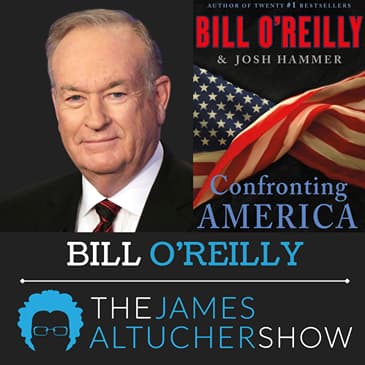



Two weeks after one phone call, four hostages walked free from Gaza...
A Note from James:
After the election, before Trump was sworn in for his second term, Biden’s national security team needed to reach the president-elect about the hostages in Gaza.
According to Bill O’Reilly, they couldn’t get through.
So who did they call?
Bill O’Reilly.
Bill says he set up the conversation, moderated it, and didn’t offer a single opinion. About two weeks later, four hostages were released.
That story is a good example of his new book, Confronting America: What Has to Change.
Bill has spent more than 50 years around the people who make the news. Presidents. Political leaders. Media executives. Celebrities. He’s interviewed five presidents. He’s traveled around the world. And in this book, he names names. No anonymous sources.
It’s Trump. It’s Mamdani. It’s Soros. It’s Paul McCartney. It’s David Letterman.
In 1996, Bill launched The O’Reilly Factor. It was an opinion show that openly said it was an opinion show, and it became one of the biggest programs in cable news.
Now he runs his own media operations outside the traditional networks.
Fair warning: I was more opinionated in this interview than I usually am.
Bill has strong views on the media, Iran, New York City, the political parties, and where the country is headed. I pushed back in a few places, agreed with him in others, and the point is not that you have to agree with either of us.
Listen and decide for yourself.
At the end, I asked Bill about something he wrote in the book: his father’s final words were about never reaching his potential.
So I asked Bill whether he feels like he has reached his.
I expected him to say he was still chasing it.
He didn’t.
Episode Description:
Bill O’Reilly joins James to talk about Confronting America: What Has to Change, a book built from decades of firsthand encounters with presidents, political figures, media executives, and major events.
The conversation starts with O’Reilly’s account of helping establish communication between the outgoing Biden national-security team and President-elect Trump during negotiations over hostages in Gaza. From there, James asks what being close to power has taught him—and how much of what happens behind the scenes ever reaches the public.
They turn to the U.S.-Iran conflict, oil prices, the Strait of Hormuz, and the risks of making decisions when the consequences are difficult to predict. O’Reilly argues that the conflict became more complicated than initially expected, while James asks how media coverage shapes public perceptions of events like these.
That leads to a larger debate over political media. O’Reilly distinguishes the openly opinionated format of The O’Reilly Factor from what he sees as increasing ideological alignment inside news organizations. James pushes on whether opinion-driven cable news helped create that environment in the first place.
They also discuss the Trump administration’s fight with CNN, MS NOW, and Politico over White House access. Despite his criticism of those outlets, O’Reilly says he would have handled the dispute differently: keep them in the room, but don’t give them additional attention.
The conversation then moves to New York City politics, affordability, inequality, Mayor Zohran Mamdani’s agenda, municipal grocery stores, and the broader disagreement over how much government should intervene in markets. James is unusually explicit about his own views in this section, while O’Reilly explains how he sees the ideological divide reshaping both parties.
Near the end, James asks what changed when O’Reilly left corporate television and began running his own media operations. O’Reilly says independence gives him something he values more than reach: control over what he says and how he says it.
Finally, James asks about one of the most personal passages in the book. O’Reilly’s father died believing he had not fully realized his potential. Does Bill still feel the same pressure?
His answer is surprisingly settled. He wants to continue doing good work, but he no longer feels he has something left to prove.
What You’ll Learn:
- O’Reilly’s account of helping connect the Biden and Trump teams during Gaza hostage negotiations.
- Why he views the U.S.-Iran conflict as a major political and strategic risk.
- How James and O’Reilly think media bias, opinion programming, and White House press access have changed political journalism.
- Why O’Reilly says The O’Reilly Factor was designed to present strong opinions alongside competing viewpoints.
- How affordability, inequality, municipal grocery stores, and government intervention shape their debate over New York City politics.
- Why O’Reilly believes technology and partisan media environments are changing how voters understand politics.
- What running his own media companies taught O’Reilly about editorial independence and control.
- How his father’s final words shaped his thinking about ambition, achievement, and whether he has fulfilled his potential.
Timestamped Chapters:
[02:57] A Note from James
James introduces Confronting America, O’Reilly’s career, the political tone of the conversation, and the question he asks Bill about fulfilling his potential.
[04:21] Why This Book Is More Personal
James asks why Confronting America feels different from O’Reilly’s historical books and previous Confronting titles.
[04:55] Fifty Years Around Power
O’Reilly says his career gave him firsthand access to presidents, political figures, media executives, and major events he wanted to document.
[06:10] The Hostage Negotiation Story
James asks O’Reilly to explain his account of connecting the Biden foreign-policy team with President-elect Trump.
[07:44] Trump, Netanyahu, and the Transition of Power
James asks why Israeli Prime Minister Benjamin Netanyahu wanted Trump’s approval during the presidential transition.
[08:17] The Risk of the Iran Conflict
O’Reilly discusses Trump’s decision-making on Iran, the length of the conflict, and potential political consequences.
[09:37] Is Iran Near a Breaking Point?
James and O’Reilly discuss economic pressure on Iran, oil shipments, Hormuz, and the administration’s strategy.
[10:28] Why the Media Covers Bad News
James asks why negative stories often dominate political and economic coverage.
[11:50] Playing Devil’s Advocate
James challenges the idea that rising household assets necessarily constitute an exceptional news story.
[13:16] Did Opinion Television Change News?
James asks whether programs like The O’Reilly Factor helped push television toward more subjective political coverage.
[13:51] The O’Reilly Factor as an Op-Ed Show
O’Reilly says the distinction was that his program explicitly identified itself as opinion.
[15:32] Trump vs. CNN, MS NOW, and Politico
James and O’Reilly discuss the administration’s attempt to remove several media organizations from White House access.
[16:13] Press Freedom and Media Bias
O’Reilly makes his case that political alignment has damaged trust in corporate media.
[17:03] Why O’Reilly Would Have Kept Them in the Room
Despite his criticism of the outlets, O’Reilly says he would not have removed them from the White House.
[18:11] New York City and Zohran Mamdani
James openly states his own disagreement with the mayor and asks O’Reilly why Mamdani’s message connected with voters.
[19:01] Inequality, Affordability, and Anti-Establishment Politics
O’Reilly gives his interpretation of the economic frustrations behind Mamdani’s support.
[20:13] Candidates or Movements?
O’Reilly argues that modern elections increasingly represent competing political movements rather than just individual personalities.
[22:17] History, Populism, and Authoritarianism
James asks about lessons from historical authoritarian movements and what voters understand about political ideology.
[23:28] Technology and the Political Information Bubble
O’Reilly argues that smartphones and personalized media make it easier for people to construct information environments that reinforce existing beliefs.
[24:17] The Affordability Debate
James and O’Reilly discuss cost of living and whether political rhetoric matches policy outcomes.
[25:26] Does Mamdani Believe His Own Policies?
James asks whether the mayor’s economic positions are strategic or sincerely held.
[26:05] The Municipal Grocery Store Debate
James and O’Reilly discuss grocery margins, city-backed stores, subsidies, bodegas, and government intervention in consumer markets.
[27:35] George Soros and Criminal-Justice Policy
James asks O’Reilly about his criticism of George Soros and organizations supporting progressive prosecutors.
[29:14] Life After Fox News
James asks what changed when O’Reilly went from hosting a corporate television program to running his own media businesses.
[30:33] Editorial Independence at The Factor
O’Reilly describes the autonomy he says he had during most of his years at Fox and how he wanted the program to attract viewers across political lines.
[31:27] When Cable News Became an Echo Chamber
O’Reilly criticizes the modern tendency to build panels and programming around people who largely agree with one another.
[32:08] Did Bill O’Reilly Fulfill His Potential?
James asks whether O’Reilly still feels driven by his father’s final words.
[32:24] “I Don’t Know What Else I Gotta Do”
O’Reilly says he no longer feels he has another major quest to complete, though he still wants to make good programs and grow his current work.
Additional Resources:
- Confronting America: What Has to Change
- Bill O’Reilly — Official Website
- NYC Municipal Grocery Store Program
See Privacy Policy at https://art19.com/privacy and California Privacy Notice at https://art19.com/privacy#do-not-sell-my-info.
[00:00:00] Today on The James Altucher Show. So, Jake Sullivan was a national security advisor under President Biden. And he called a friend of mine and said, look, can O'Reilly set up a meeting between Biden, not the man, but his foreign policy people, and Donald Trump? So my friend said, you know, if anybody can do it, it's O'Reilly. And I did it.
[00:00:30] And it led to four hostages being released. I can't get on CNN. They never booked me in a million years. Even though when I go on any show, their ratings go up. So what's the deal? Why are you blackballing non-liberal authors? This isn't your average business podcast, and he's not your average host. This is The James Altucher Show.
[00:01:08] After the election, you know, before Trump was sworn in for his second term, Biden's national security team needed to reach the president-elect about the hostages in Gaza. And they, like, couldn't get through. So who do they call? Bill O'Reilly. And Bill says he basically set up the call, he moderated it, didn't offer a single opinion. And, you know, about two weeks later, four hostages were released. And that's kind of the whole book. Confronting America. What has to change?
[00:01:38] Bill was in the room. He names names. No anonymous sources. I mean, it's Trump. It's Mamdani. It's Soros. It's even like Paul McCartney and David Letterman. In 1996, Bill launched The O'Reilly Factor, which was, you know, an opinion show that actually said it was an opinion show. And it became one of the biggest hits in cable news history. And now he runs, like, three media companies of his own. Fair warning. I was kind of more opinionated in this one than I usually am.
[00:02:07] Bill has really strong views on the media, on Iran, on New York City. And I think I only played devil's advocate, like, once. So, you know, listen and decide for yourself. And at the end, I asked him about his father's last words, which were about never reaching his potential, and whether Bill feels like he's reached his. And I kind of expected him to say he's still chasing it. He didn't. This is Bill O'Reilly.
[00:02:40] First off, Bill, how are you feeling? You mentioned in the book in January you were sick. What was going on? Well, I'm an old guy, you know. We got a little ailments here and there, but we're trucking along. So, appreciate you asking. We're okay. All right. Well, stay healthy and keep writing these books. This one, I feel, was a little more personal than a lot of your books. It's not like, you know, killing, you know, X, Y, Z.
[00:03:04] This is like, you name people, you name names, you say what's wrong with them, and you take no prisoners. So, what was going on? What inspired the book? I witness history. So, when you've been around as long as I have, you see a lot of things. Been to 90 countries. I know everybody. Even you, James. I'm nobody, but yes.
[00:03:27] Once, when somebody is doing something, whether it's good or bad, I can usually get to them. And either discuss the situation or have them on one of my broadcasts or whatever it may be. So, over the years, I've, you know, interviewed five presidents.
[00:03:45] And so, I decided to basically put down who these guys and gals are and some of the mistakes they've made, some of the good things they've done. But it's not a melt-toast thing. It's a very sharp point of view. We have this problem. Why aren't we fixing this problem? Here's the solution to this problem. And that gets some people upset, but, you know me, I don't care.
[00:04:13] I just wanted to write a book that was informative. No anonymous sources, as you pointed out. All the names are right there. And you'll learn a lot if you read it. There's a lot of interesting stories where you were in the middle of some pretty big situations. Like, I had never heard the story of you kind of almost brokering between the Obama White House and President-elect Trump. Can you describe that story? Well, there was a situation when Trump was elected the second time.
[00:04:43] He wasn't yet sworn in. Where the Biden administration wanted to get to President-elect Trump about the hostages in Gaza. And they couldn't get him. So Jake Sullivan was a national security advisor under President Biden.
[00:05:02] And he called a friend of mine and said, look, can O'Reilly set up a meeting between Biden, not the man, but his foreign policy people, and Donald Trump? So my friend said, you know, if anybody can do it, it's O'Reilly. And I did it. And it led to four hostages being released. So I did it because I'm an American citizen and I don't want people hurt. I didn't do it for politics.
[00:05:32] And it was a fascinating discussion. I was the moderator of the discussion. I did not offer an opinion. And Donald Trump, to his credit, was on it, knew everything about it. And he had to sign off or B.B. Netanyahu would not. Netanyahu was looking for Trump to sign off on the mechanics of the deal. And about two weeks later, the hostages were released.
[00:06:01] And why did Netanyahu depend on, like, was it something America had to do? Like, why did Netanyahu wait for Trump's approval on this? Because he didn't want to alienate Trump. You know, he didn't want to do something out of the Trump umbrella when the man was just elected president for the second time. So he wanted to have security that President Trump was okay with this. That's why he did it.
[00:06:29] And do you think that their relationship has held on? Like, do you think, I don't think Trump has any regrets about Iran, but do you think he has any kind of misgiving at all that this has gone on very long? And do you think B.B. and Trump still have as close a relationship? Hard to say, when this all started, I said to the president and to my audience, this is the biggest risk Donald Trump has ever taken in his life.
[00:06:58] His whole life, dealing with these mullers who couldn't care less who they kill, their own people, whatever. It's a very, very difficult thing to deal with these people or they would have been dealt with before. So the president believed that he could knock them out fast. Did not happen. And here we are five weeks before the midterms. And it could cost the Republican Party the majority on the Hill.
[00:07:28] It was, I think that the thinking about what to do with Iran was okay. But they didn't take in the unintended consequences if the initial hit didn't work. If you were to guess, like, what do you think would happen right now? Well, I don't have to guess on anything. What do you want to know? Like, okay, what's going to happen right now?
[00:07:54] There's a column in the Wall Street Journal by David Petraeus, former CIA chief. Honest guy, knows what he's doing. Says Iran's on the brink of collapse. Yes, that's what the Trump administration's waiting for. Because once that happens, if it happens, the prices in America and worldwide will go down fast. So they're hoping that Iran is this close to going under.
[00:08:23] Because they don't have any food. They can't get anything in there. And Hormuz, according to Petraeus, is open. They're getting the tankers through. Oil's coming out of there. So Iran is losing what leverage it had. Again, this is according to David Petraeus. And that's what President Trump is waiting for. And so it's really interesting because often I hear insights like that.
[00:08:51] And yet the media doesn't really cover this story very well. And this is true for many stories, not just what's happening in Iran. It's true for anything from AI to Israel to whatever. And it's so disappointing. Like, why is the media, sure, they're against Trump, but why is the media so skewed against reporting what could be potentially good news? It's always like fear news.
[00:09:18] Because the people who run these operations, Disney, NBC, CNN, they hate Trump. Viscerally hate his guts. They want to hurt him. So they're not going to report anything that makes them look good. So almost two weeks ago, there was a story that broke that at this point in history, American families have more assets than they've ever had.
[00:09:47] And a lower poverty rate than they've ever had. CNN blacked that story out. Did not mention it. Inconceivable. Inconceivable. They did it because they despised Donald Trump and they want him to get slaughtered in the midterms. So I'm going to play, and I agree with you, but I'm going to play devil's advocate for a second.
[00:10:11] And usually any given year, let's say from, let's just say since the financial crisis from 2010 to now, every year, Americans have had, Americans have had greater assets than they've ever had before. So it's not necessarily a news story. I'm just playing devil's advocate. Well, it's new and the stats are new. And, you know, it keeps going up and up and up.
[00:10:34] And all you hear about is gas and food prices because they have an immediate impact on the American consumer. While, you know, a collaboration of every household doesn't. But if you look at the design of the economy, the American economy, it's strong. But the corporate media is never going to admit that ever in a million years. They'll always punt back to gas prices and food prices. Always.
[00:11:03] So is that good reporting? Is that fair reporting? Do Americans benefit from that? I don't think so. And I agree with you. And like, particularly the oil thing, like this, the fear across the economy even led to the Federal Reserve, obviously raising interest rates last week, despite the fact that inflation is just a supply shock relating to oil and the war. But everybody thinks the war is going to go on forever in contradiction to what Petraeus said and what you just said. So oil prices will go down.
[00:11:32] But potentially this media fear that's sort of put out there is very dangerous. But here's the question. A lot of the bias in the media, I feel, was almost started or maybe made more overt when shows like yours, when you were on Fox, you know, became much more subjective as opposed to objective. Now, I appreciated your show because you say what you think and you had an opinion and you admitted you had an opinion. You weren't like a sort of a standard, you know, here's the news today kind of show.
[00:12:00] So how do you feel things have veered since you had kind of one of those first subjective sort of shows? Well, when I came on the air in 1996, I mean, it clearly stated to the audience that this was an op-ed show, whereas every newspaper has pages devoted to opinion and counter-opinion, whatever. But television didn't have it. So I started it. You know, why not?
[00:12:29] That's what people wanted. That's what they responded to. Soon we became the biggest success in cable news history. Now, though, it's been carried to such an extent that the corporate media, Hollywood, Democratic Party kind of merged together.
[00:12:47] And this is where when you're suing to keep CNN and Politico and MS out of the White House, this is what the judges are going to have to look at, Supreme Court judges. Never before in our country has there been a corporate move on the media to merge and help a political party. Ever.
[00:13:13] It was always, we'll criticize the parties, okay, or we'll praise them, but we're not going to be in business with them. And that's what happened. So people go, oh, Madison and Benjamin Franklin and Jefferson, they would be appalled. No, they wouldn't. They'd be appalled that the corporations have thrown in with political parties. That's what they'd be appalled with using the First Amendment to do it.
[00:13:43] And it's going to be fascinating to see the discussion among the Supreme Court justices about that. Yeah, and so, you know, Trump just, quote unquote, kicked CNN out of the White House because they said, and at first he started to say it's because they were being negative about him. But then he brought up what I think are the legal points. He said they don't tell the truth. And he said specifically they're a national security threat. So I guess those are the questions that the court's going to have to go around.
[00:14:12] Now, there was a case about this in the Nixon era that you couldn't, if you'd already agreed to let a news organization in the White House, you couldn't really kick them out without due process. It was like a Fifth Amendment kind of ruling. And I'm wondering what the court case does look like for this. Well, I think that there will be some of that. But the overarching is always an overarching on all of these stories is that we have a corrupt media in America. Flat out corrupt.
[00:14:42] I mean, I'm talking to you on your podcast, and I appreciate the invitation to do so because I want people to know about confronting America when it has to change. I can't get on CNN. They never booked me in a million years. Even though when I go on any show, my ratings, their ratings go up. So what's the deal? Why are you blackballing non-liberal authors? And I don't put myself in a conservative stance.
[00:15:11] I'm a non-liberal. Okay. But why are you blacking that out? Okay. So Victor Davis Hanson's got a big book. He can't get booked. That's corruption. You're not free. Okay. A free press if you're knocking out half the country. That's not free. You're playing a game. And Trump is furious about it.
[00:15:40] Although if I were the president, I would not have booted these three out of the White House. I would have shunned them. I would have given them seats in the back and never called on them. That's what I would have done. Yeah. Like it's almost like strategically, did he do the right thing? Kind of bringing more attention to them, but maybe he just really just hated having them in the room. I don't know. No, but he wanted the publicity.
[00:16:06] President Trump wanted people to know that we have press corruption and that he's a fighter against that. I see what he's done, but I think he's made that point before. Don't know if he has to make it again when the odds are he'll lose the fight in the courts. Well, you know, it's interesting though because it seems like, like you said, the media is sort of aligned with a party, but that party has gotten more and more extreme.
[00:16:35] Like you live in New York City. I lived in New York City all my adult life. I don't live there right now. Now, you know, with the election of Mamdani as mayor, you know, it seems to me, and this is where I'll be really biased. It seems to me clearly he is not a good thing for New York City. He's not a good thing for the U.S. It seems like when he speaks, like he either doesn't understand economics 101 or he's willingly doing bad things.
[00:17:03] What is up with him and why is the Democratic Party? You mentioned him in the book. It's definitely one of the culprits that need to be confronted. So why are people falling for his story? And I'm being really biased. I'm normally not this biased on the podcast. Well, because they, a lot of people in New York City don't like the establishment.
[00:17:27] They don't like the fact that they have to live in a small apartment that pay $4,000 a month. And they look out the window and there's a billionaire walking down the street. They don't like that. All right. That's called income inequality. And we lead the league here in New York City on income inequality. But it's always been that way. Okay. And unfortunately, many of Mandani voters don't know anything. All right.
[00:17:56] They don't know what socialism is, what communism is. They don't know anything. So they voted for a guy who said, oh, I'm going to make life better for you. I'm going to give free this, free that. Never going to happen. But it was better than the other two candidates who were awful. All right. Curtis Sliwa and Andrew Cuomo. And that's going to happen in other states.
[00:18:20] In Texas, that's the only reason Tallarico is competitive because Paxson is awful. It's as simple as that. And I say when you vote in November, you're voting for a movement. You're not voting for a person anymore. And the movement is traditional, conservative, Republican. Keep the country the same because it's been the most successful country the world has ever seen.
[00:18:47] Or you're voting for the progressives who blow the whole thing up because it's all corrupt and the billionaires have everything and we're getting hosed. That's what you're voting for. There's no in-between. And the Democratic Party has gone into that progressive mindset. I never thought it was going to happen. But it has.
[00:19:36] In a second income way. In a, this makes Sunday more interesting way. PrizePix is doing their best offer yet. New users who sign up get $150 in lineups if you win your first $5 lineup. That's it. Win the first $5 lineup, you get $150 in lineups. And they're available nationwide now. What you on this football season? I'm on Kenneth Walker. He shared the backfield in Seattle, then was MVP in the big game, and Seattle let him walk to Kansas City. I took more on his rush yards.
[00:20:06] He's playing like a guy who wants them to remember that decision. He's my guy. He's on PrizePix. They're going crazy in stacked September. New promo every day. Guaranteed picks every Sunday, plus profit boosts and daily discounts. You pick two to six players, more or less, on projections like pass yards, rush yards, fantasy. PrizePix. Run your game. Simple. Injury reboot if a guy goes out in the first half and doesn't come back. Live box scores. Copy popular picks in one tap.
[00:20:35] Download the app today and use code ALTATURE to get $150 instantly in lineups if you win your first $5 lineup. So download the app today. Use code ALTATURE to get $150 instantly in lineups if you win your first $5 lineup. PrizePix. Run your game.
[00:21:00] But it seems like people don't understand how history works. So you look at all of these really horrific dictators throughout history. And let's go to Mao, Stalin, Hitler, Mussolini. They all started from populist movements, you know, that were basically either pretending to be socialist and communist or really were. I mean, the Nazi party is a nationalist socialist party.
[00:21:26] So why do people not realize that a lot of these authoritarian evil empires have basically come from these populist socialist movements, kind of like the way Momdani is presenting himself? Well, but the book before this is Confronting Evil. And I got Putin, Ayatollah, Hitler, and Mao on the cover of the book. And they're all totalitarians.
[00:21:54] So it's my way or you're dead. And it's an easy book to read. It's fact-based. There's nothing in it that isn't true. But I will tell you that maybe 100% of Momdani voters never read the book. They're not interested in anything but a free bus ride. And that happened because of high tech. So now you can create your own world on this.
[00:22:23] You can spend all day and all night on this. Creating whatever you want to create. So you don't have time for reality anymore. You don't have time to read a book. You don't have time to do any research. It's this all day long. That has really dumbed down the electorate. And they're going to get it right between the eyes. Look at California. So the Democratic Party is running on affordability.
[00:22:51] James, how many times have you heard the word affordability from the left? How many times? Being again from New York City a billion times. Okay. So if you go to California, the most heavily Democratic state in the union, top to bottom run by Democrats, is there anything affordable in California? Anything? Lettuce? Housing's not affordable. Gas's not affordable. Utility's not affordable.
[00:23:20] Nothing is affordable. Yet the party is going to run on affordability? I mean, this is, to me, I'm going, this is so crazy. But it's what we got. Yeah. And why do people buy into it, though? Like, why? You know. Because it's easy. It's easy. Their friends buy into it. They think Mandami is a savior. Meanwhile, neighborhoods are collapsing.
[00:23:47] The social order, in Manhattan at least, is horrible. Homeless people run around. They do whatever they want. The sex trade is wide open. Mandami's not going to enforce any laws at all. He's pro-criminal. Again, the people who voted for him, they're going to pay for it. But they don't know that. Do you think he realizes he's wrong on some of these issues? Or do you think he believes in these issues?
[00:24:17] Look, Mandami is an old Bernie Sanders. That's what he is. And so Bernie gets in there, and Bernie goes, Oh, the big news. Does Bernie Sanders believe that? Yeah, he believes it. Because people believe what they want to believe. And Bernie Sanders wants to believe that his country, the United States, is corrupt. It's run by oligarchs. That's what he wants to believe.
[00:24:44] So he's going to believe it, no matter how much evidence you put in front of him. Let's just take a simple example, like Mandami saying, Okay, we're going to open up grocery stores where the prices are 20% cheaper, or when grocery store margins are typically 1%. So kind of just economics 101. Every bodega near, you know, the bodega is like a small grocery store. Every bodega near a Mandami grocery store is just going to simply go out of business. And those aren't rich people. It's just mom and pop running a little store. Like this is just basic economics.
[00:25:14] Yeah, the delis will go out of business. The bodegas will go out of business. The street guys who peddle a food on a corner in Manhattan, they'll go out of business. But what Mandami's vision is, is, well, those people, we'll take care of them. We'll give them stuff to get them through. We'll give them a house. Or they'll get increased food stamps or whatever it may be. So that's how he rationalizes it off. Yeah, they may go down, but we'll save them.
[00:25:43] But you're right. I mean, it's not like people thinking this stuff out. And I don't believe these grocery stores are going to be effective anyway. It's just too many people in the city. I think they're building nine of them. And they're going to have to subsidize them. New York City didn't have any money. Where's that money going to come from? Hochul? Maybe a little bit of it. Trump's not going to give them any money.
[00:26:08] So, you know, a lot of this is techno stuff that the average voter does not even think about. You know, and related to that, you mentioned George Soros as another potentially culprit, someone who potentially hates America and puts money behind all these organizations that hate America. And my wonder about this always is, why would he hate America? Like, what does he get out of it by doing this?
[00:26:38] Nobody knows. The worst thing that Soros has done is try to collapse the criminal justice system. That is, you know, by getting soft on crime DAs elected. That has been so harmful to so many people. And why does Soros do it? I don't know. He doesn't give interviews. He's got unlimited amount of money.
[00:27:05] He's working with a guy named Neville, somebody over in China. The Chinese are heavily involved with this progressive socialist movement. He's been heavily involved in getting money pumped into it. Soros is part of that machine. But it's impossible to say why the man wants to tear down social order in America. I just can't answer the question. Like, again, I've always wondered, like, what is the motive? You can't guess? Nobody's told you anything?
[00:27:35] No. He's a shadowy guy. That's all I can tell you is he lives in Westchester, north of New York City. He lives a lavish life. He made his money in questionable ways in France and the UK. But, man, not a lot of information coming out of there. And so, you know, I was always curious, though. After you left Fox, you built No Spin News. What was the difference for you?
[00:28:04] Did you like running your own media company? What was the difference for you as opposed to just, like, having a show that you showed up for every day? Now you're actually running this media company. Three of them. I'm the CEO of three media companies. Books, television, radio.
[00:28:22] So the thing with corporate America, and I write about this in Confronting America, is if you sign on to work in a corporation, you don't have any rights. Okay? That's it. They control you one way or the other. I mean, they can have a department here, a department there. They can have all kinds of stuff. But they control what you do.
[00:28:51] I was fortunate enough when we started Fox News in 1996 to have guys who were compatible with me. What does that mean? They left me alone. And before I got hired, I said, if you're going to try to tell me what to say every day, this ain't going to last more than a week. Okay? I'm going to say what I say. I mean, as a commentator.
[00:29:17] And they were, for 20 years, they did not interfere with me at all. Then everything changed. So new people came in. And the new people wanted a different profile. They wanted to make money speaking to a choir. People, like-minded people, conservative people.
[00:29:43] When I was doing a factor, we had people all over the place because we used to do research. We knew who was watching. I think at one time it was 60% traditional conservative, 40% liberal watching the O'Reilly factor. That's exactly the way I wanted it. I mean, I could have taken a 50-50 because we would put on a whole bunch of people from a whole bunch of points of view. And that's what the fun of it was. And I got into shootouts at some of them.
[00:30:10] And we had, it was a lively thing now. None of them do that. The networks don't do it. None of the cables do it. It's tell me more. Bring in somebody who agrees with me, agrees with the channel. Like CNN. They got a little panel, eight people out there. You don't know who they are. You're seven of the people of progressive left. And one guy is, I guess, in charge of getting water for everybody. He might not be progressive left, but it's crazy. It's absolutely insane.
[00:30:40] Just balance it out a little bit. No. Because it's easy to make money speaking to people. Who think the way that you do. You know, in the book, you mention how, you know, you say your father's last words were about not fulfilling his potential. Do you feel now at this point in your life, you're still driven by those words? Or do you feel like you've done it? You've fulfilled your potential. I don't know what else I got to do, James.
[00:31:07] I mean, I've pretty much done everything. That's why I wrote the book. I got so many things that I did or saw or whatever. And I think, ah, I got to get that. No, I don't have any other quests. You know, I want to do a good program every day. We just started this. We'll do it live, long form. It's very successful now. I want to build that into a YouTube phenomenon.
[00:31:36] But if tomorrow they came in and said, hey, O'Reilly, you're out of here. I'd say thank you. I mean, I don't need to do any more. Well, Bill, confronting America, what has to change? You are in the face of everyone in this book. And there's so many personal stories. And there's stories where you put yourself right in the middle. Like people have to check out, you know, confrontations with China. There's a lot of great reads in here.
[00:32:03] And everything from Paul McCartney, David Letterman, China, Trump. This is really the most riveting book of yours I've ever read. And I thoroughly enjoyed it. It's such a great book. And as always, thanks for coming on the show. It's very nice of you to have me, James. And thank you for reading the book. Many interviewers do not do that. But thank you very much for reading it. Oh, it's enjoyable.
[00:32:39] Welcome to Pluto Phone. If you know the name of the movie you'd like to see, just stream it for free on Pluto TV, where all your blockbuster favorites are landing all summer long. Catch Anchorman, The Legend of Ron Burgundy. Fantastic! The Matrix Trilogy. Welcome to the real world. Mean Girls. Shut up! Titanic. I'm the king of the world! And so much more. For showtimes, press nothing. They're free, 24-7. That is so fetch. On Pluto TV. Stream now. Pay never.