


A Note from James:
I’ve been obsessed with anti-aging and longevity science for a long time. I’ve had many longevity researchers on the podcast, but this episode feels different because something we’ve been discussing for years has now moved into human trials.
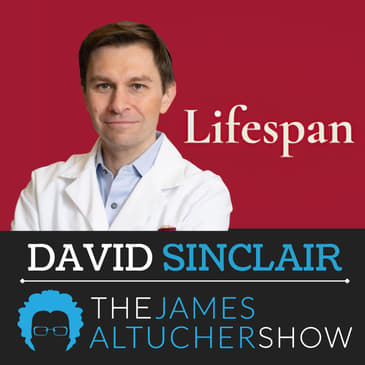
David Sinclair first came on the show in 2019, when his book Lifespan was published. He’s a professor of genetics at Harvard Medical School, and that first conversation changed how I lived. I started experimenting with intermittent fasting, paid much more attention to sleep, and began researching many of the supplements and lifestyle changes he discussed.
But the most important idea David talked about wasn’t a supplement. It was the possibility of reversing cellular age using Yamanaka factors—genes that can reset the instructions cells use to function. At the time, nobody knew whether this could be done safely without causing cancer or making cells lose their identities.
Now, a therapy based on three of those factors has entered its first human clinical trial. The initial target is age-related damage to the optic nerve, including open-angle glaucoma and non-arteritic anterior ischemic optic neuropathy. The trial is designed primarily to evaluate safety, but researchers will also measure visual function.
David explains how this technology worked in mice and nonhuman primates, why the eye was chosen as the first organ, and how the same approach might eventually be applied to the liver, lungs, joints, skin, and brain.
We also cover the practical questions people always ask him: NMN, NAD, metformin, berberine, testosterone, growth hormone, diet, fasting, sleep, exercise, and what David himself has started—or stopped—taking.
This is still experimental science. Nobody yet knows whether the animal results will translate into meaningful benefits for humans. But for the first time, researchers are beginning to test that question directly.
About Lifespan:
Dr. David Sinclair founded Lifespan to deliver clear, science-backed health insights that help people live longer, more vibrant lives.
He's now building the world's largest community dedicated to extending human longevity well beyond today’s limits. Join early access at lifespan.com.
New episodes of Lifespan with Dr. David Sinclair -- the #1 health and wellness podcast in its first season -- are now available on YouTube, Spotify, Apple Podcasts, and Lifespan.com.
Episode Description:
For years, longevity researchers have looked for ways to slow the biological processes associated with aging. Dr. David Sinclair and his collaborators are now testing a more ambitious possibility: whether damaged human cells can be restored to a younger, more functional state.
The experimental therapy, ER-100, uses controlled expression of three transcription factors—OCT4, SOX2, and KLF4, collectively known as OSK. These are three of the four Yamanaka factors originally used to transform adult cells into pluripotent stem cells.
Turning on all four factors can erase too much of a cell’s identity and has produced tumors and fatal outcomes in animal experiments. Sinclair’s team found that removing one factor, c-MYC, allowed cells to regain younger patterns of gene expression without completely returning to a stem-cell state.
In preclinical studies, OSK restored youthful epigenetic patterns, promoted optic-nerve regeneration, and reversed vision loss in mouse models. Life Biosciences, a company Sinclair co-founded, has now moved the technology into a first-in-human Phase 1 trial involving people with open-angle glaucoma or non-arteritic anterior ischemic optic neuropathy.
David explains how the therapy is delivered directly into the eye and activated using doxycycline, allowing clinicians to control when and for how long the genes are expressed. He also describes the development path that could follow if the treatment proves safe, including therapies targeting the liver and other organs, as well as future medicines that may reproduce similar effects without gene delivery.
The conversation then turns to interventions available today. David distinguishes between promising research and claims that have moved ahead of the evidence, discussing NMN, injected NAD, growth hormone, testosterone, taurine, nattokinase, metformin, berberine, and nootropics.
Throughout the episode, he emphasizes that no supplement has been shown to reproduce the effects researchers are attempting to achieve through partial epigenetic reprogramming—and that many of the most dramatic claims circulating online remain unsupported.
Editorial Note:
ER-100 is an investigational therapy. Authorization to begin a clinical trial does not mean the treatment has been proven safe or effective, nor has it been approved for clinical use.
The Phase 1 study is primarily evaluating safety and tolerability, with additional measurements of visual function. Results from mice and nonhuman primates do not establish that the therapy will restore vision or reverse biological aging in people.
The discussion of supplements, prescription medications, hormones, and lifestyle practices reflects the speakers’ personal views and interpretation of the research. It should not be treated as individualized medical advice. Prescription drugs, hormones, supplements, and experimental longevity treatments should be discussed with an appropriately qualified healthcare professional.
What You’ll Learn:
- How partial epigenetic reprogramming differs from completely resetting a cell into a stem cell.
- Why researchers selected three Yamanaka factors—OCT4, SOX2, and KLF4—instead of using all four.
- What ER-100 is designed to do and why the first human trial focuses on the optic nerve.
- How doxycycline acts as an external switch controlling when the therapeutic genes are expressed.
- What Phase 1 researchers will measure and what would need to happen before ER-100 could become an approved treatment.
- Why the eye provides a useful starting point for testing cellular rejuvenation.
- What animal studies suggest about restoring vision, memory, liver function, joints, and skin.
- Why delivering rejuvenation therapies throughout the body is more difficult than treating one localized organ.
- The difference between oral NMN supplementation and intravenous or subcutaneous NAD.
- What current research does—and does not—show about growth hormone, testosterone, taurine, metformin, and berberine.
- Why muscle, exercise, sleep, diet, glucose regulation, and inflammation remain important even if rejuvenation therapies eventually succeed.
- How Sinclair’s laboratory is searching for pills and small molecules that could mimic epigenetic reprogramming without gene therapy.
Timestamped Chapters:
- [04:53] The First Human Trial Begins
- David discusses ER-100, FDA authorization, and the treatment of open-angle glaucoma and ischemic optic neuropathy.
- [06:52] What Are the Yamanaka Factors?
- How reprogramming genes can reset cellular instructions—and why using all four factors can be dangerous.
- [08:56] Reversing Vision Loss and Memory Problems in Animals
- David describes studies involving the eyes, brain, skin, kidneys, liver, and age-related cognitive decline.
- [10:09] Why Four Factors Can Cause Cancer
- The difference between restoring youthful function and erasing a cell’s identity completely.
- [10:54] The Three-Gene Breakthrough
- How Sinclair’s student Yuancheng Lu persisted through years of failure and identified the OSK combination.
- [12:03] Pulsing the Genes vs. Leaving Them Activated
- Earlier four-factor experiments required intermittent activation, while OSK showed a different safety profile in animal eyes.
- [13:36] The Doxycycline Safety Switch
- How clinicians may use an antibiotic to activate and deactivate the therapy after it has been delivered.
- [14:51] Treating the Cause Instead of the Symptoms
- David argues that restoring younger tissue function could allow the body to repair damage associated with age-related disease.
- [16:02] Why the Trial Starts With the Eye
- Localized delivery reduces systemic exposure and makes visual changes easier to observe and measure.
- [16:50] Can the Therapy Reach the Brain and the Rest of the Body?
- The challenges of distributing gene-based treatments evenly across organs and through the blood-brain barrier.
- [18:25] What the Phase 1 Trial Will Measure
- Safety, tolerability, visual function, and the possibility of an accelerated development path.
- [20:36] Expanding Beyond Glaucoma
- Why each organ may require a different delivery vehicle—and how the liver could become another early target.
- [21:38] How Shinya Yamanaka Found the Original Four Factors
- The trial-and-error process that turned adult cells into induced pluripotent stem cells.
- [22:38] How ER-100 Is Delivered
- David explains the OSK genes, the AAV delivery system, doxycycline activation, and why manufacturing is expensive.
- [25:21] When Could the Treatment Become Available?
- David gives his most optimistic development timeline and discusses parallel programs targeting other organs.
- [27:31] NMN, NAD, Sirtuins, and the Information Theory of Aging
- How declining NAD levels may affect cellular defenses and the regulation of gene expression.
- [31:34] Oral NMN vs. Injected NAD
- Why David believes oral supplementation currently has more rigorous evidence than NAD injections.
- [32:20] Longevity Misinformation Online
- David explains why he is restarting his show and warns against confident recommendations unsupported by research.
- [32:41] Growth Hormone and Lifespan
- Why growth hormone may improve certain functions but has not been shown to slow aging or extend human life.
- [34:05] Testosterone, Muscle Mass, and Healthy Aging
- Potential benefits for maintaining muscle—and why testosterone alone should not be considered a longevity treatment.
- [36:01] Taurine, Nattokinase, and Changing Your Mind
- Why David stopped taking taurine regularly and what prompted his interest in nattokinase.
- [37:30] David’s Current Diet and His 86-Year-Old Father
- Lower meat and cheese consumption, little alcohol, exercise, supplements, and tracking inflammation through biomarkers.
- [39:33] James’s Longevity Routine
- Limited processed sugar, intermittent fasting, reduced meat and alcohol, and prioritizing eight hours of sleep.
- [40:07] Why Sleep Cleans the Brain
- The relationship between sleep, waste removal, protein accumulation, cognition, and dementia risk.
- [40:33] Metformin as a Possible Longevity Drug
- Why a medication developed for type 2 diabetes remains central to aging research.
- [41:41] Berberine and Mitochondrial Function
- What clinical studies suggest about glucose regulation and why David sometimes alternates berberine with metformin.
- [43:10] Modafinil, Adderall, and Nootropics
- Possible short-term benefits for focus weighed against uncertainty about long-term consequences.
- [43:43] What Comes After the Eye Trial?
- Potential applications involving the liver, lungs, kidneys, joints, brain, and other age-related conditions.
- [45:14] Can Rejuvenation Make Skin Look Younger?
- David describes unpublished work involving human skin, wound healing, and orally delivered compounds in mice.
- [46:17] Beyond Gene Therapy: A Rejuvenation Pill
- How AI and chemical screening may help reproduce the effects of early embryonic reprogramming more cheaply and simply.
- [47:31] When Could Chemical Reprogramming Reach Humans?
- David discusses the preclinical safety work and the uncertainty surrounding future human studies.
- [48:11] The Lifespan Community and Foundation
- David introduces his new show, longevity community, and support for scientific research.
Additional Resources:
- ER-100 Phase 1 Trial — ClinicalTrials.gov
- Official registration for the first-in-human study evaluating ER-100 in open-angle glaucoma and non-arteritic anterior ischemic optic neuropathy.
- Life Biosciences: FDA Clearance for ER-100
- The company’s January 2026 announcement that the FDA cleared its Investigational New Drug application.
- Life Biosciences: First Participant Dosed
- The June 2026 announcement marking the start of dosing in the Phase 1 trial.
- “Reprogramming to Recover Youthful Epigenetic Information and Restore Vision” — Nature
- The 2020 mouse study reporting that OSK expression restored youthful epigenetic patterns, promoted nerve regeneration, and reversed vision loss.
- The Sinclair Lab at Harvard Medical School
- Research, publications, laboratory members, and information about David’s work on the biology of aging.
- Lifespan: Why We Age—and Why We Don’t Have To
- David Sinclair and Matthew LaPlante’s 2019 book about the biology of aging and emerging longevity research.
- Lifespan
- David’s longevity show, research magazine, community, and information about the Lifespan Foundation.
- NMN Human-Trial Review — PubMed
- A review of the safety evidence and proposed effects of nicotinamide mononucleotide in human clinical studies.
- NMN and Physical Performance — PubMed
- A systematic review examining randomized trials of NMN and physical-performance measurements.
See Privacy Policy at https://art19.com/privacy and California Privacy Notice at https://art19.com/privacy#do-not-sell-my-info.
[00:00:00] Today on The James Altucher Show. Aging should be considered a disease like other diseases instead of just being accepted and that potentially we could cure that disease. And it does feel very significant given that there's never been anything that could truly reverse aging safely until now. In retrospect, it seems obvious to people who just hear about it that you just do this and age is reversed.
[00:00:24] But back when I was talking to you in 2019, it was still early days and we really didn't know if it was possible to safely reverse aging or if every time it would lead to death or cancer. This isn't your average business podcast and he's not your average host. This is The James Altucher Show.
[00:00:57] I've been obsessed with anti-aging and the science of longevity. By the way, I've been obsessed with this for a long time. As you know, I've had a ton of anti-aging experts on the show. And today I'm super excited because history is literally being made right now. Like people are going to remember this year forever. I have David Sinclair on the show. Back in 2019, David came on for the first time when his book Lifespan came out.
[00:01:23] He's a Harvard scientist researcher and he just submitted the first drug for FDA trials that's involved in anti-aging. We talk about that. But look, whenever David comes on, it's literally changed my life. I started intermittent fasting. I began taking all the supplements he talked about and we talk about them in this episode. I got religious about my sleep. And honestly, ever since then, it's been one of those moments where you feel like the future just cracked open a little bit.
[00:01:52] Well, today we're catching up. And of course, a lot has happened. I mean, the stuff we're talking about sounds like science fiction, but it's really here now, not just slowing aging down, not just looking good, but actually reversing aging. We dive deep into the Yamanaka factors, which is the groundbreaking work his lab has done. And the fact that they're again now in FDA trials to actually reverse aging. We talk about that. We talk about what's currently working now in animals with reversing aging in brains, eyes, livers, skin.
[00:02:21] It's totally wild. We talk about what's coming next for humans and what this could mean for Alzheimer's, dementia, and just getting our health back. We also get into the practical stuff. I know people are interested in NMN, NAD, metformin, berberine, testosterone, what I'm still taking, what David's taking, what he stopped taking, and the lifestyle changes that kept both him and his 86 year old father looking and feeling ridiculously young.
[00:02:48] And I'll say again, this isn't just like science fiction or things we hope for. This is stuff that is happening right now. Aging is being reversed now. So without further ado, my friend, the guy who's been on this quest since his thirties and is now seeing it move into human trials, Dr. David Sinclair. Thank you for coming on David. I feel like a lot of stuff has been happening. That's been all very good.
[00:03:19] Yeah, it's crunch time now. We'll see if our latest tech works or we have to try again, but you know what it's like as an entrepreneur, you keep going until you succeed. So that's, that's where we're at. You first were on 2019 when Lifespan came out and Lifespan was literally a life changing book. Like for me, I started taking a lot of the supplements you recommended.
[00:03:40] I started experimenting more with intermittent fasting. And one thing I did that was very serious is I took my sleep very seriously, like always eight hours. It's really important. But what I was really curious about then, and you've kind of been doing what you've been saying you would do is when would all of our lives change? When would aging reverse?
[00:04:00] And you always said that aging should be considered a disease like other diseases instead of just being accepted and that potentially we can cure that disease. And now you've recently done a study, which is going into FDA trials now to reverse the aging of eyes in humans to cure glaucoma and eye damage from glaucoma in humans.
[00:04:24] Yeah, that's a good summary of the years since we last were chatting about this. A lot has happened. And we've shown that our age reversal tech that works in mice, they work in non-human primates as well to improve vision, essentially curing blindness. And the patients are just either getting treated now or about to get treated. The FDA in January allowed the company that I founded to go ahead, Life Biosciences.
[00:04:54] And yeah, so I'm looking forward. And it does feel very significant given that there's never been anything that could truly reverse aging safely until now. And we'll see if it works in not just monkeys, but in slightly more intelligent monkeys.
[00:05:09] Let's talk about the science for a second, because even back in 2019, you were saying that sure, there are anti-aging supplements and lifestyle choices you can make and so on. But the most scientifically significant thing you thought even then were these things called Yamanaka factors, proteins that reverse or restore cells to the, they do a factory reset on cells.
[00:05:34] They restore cells to their initial epigenetics. And you specifically said that Yamanaka factors were dangerous because all four of them used at once might cause cancer. There's indications that they might cause cancer, but you were experimenting with three of the four. And that's what this therapy actually is. Well, exactly. And so in retrospect, it seems obvious to people who just hear about it, that you just do this and age is reversed.
[00:05:58] But back when I was talking to you in 2019, it was still early days and we really didn't know if it was possible to safely reverse aging or if every time it would lead to death or cancer. And it definitely does if you do it in animals. If you turn on these four Yamanaka genes, which were discovered as a way to make stem cells, not to reverse aging, but the Nobel Prize was awarded to Shinya Yamanaka for making stem cells out of adult cells.
[00:06:24] In those days, we weren't sure. We thought this might just be an interesting proof of concept scientific study. But very quickly, it became clear to us that choosing these three particular genes among hundreds of combinations that we actually tried was the secret, the holy grail of what we were looking for since I was in my 30s.
[00:06:44] And it's moved very quickly since then. We went from treating glaucoma to treating old age, nerve damage, multiple sclerosis, Alzheimer's, again, in animals, of course, even liver disease. And the fact that it's going into humans just, what is it now, eight years later, it's pretty phenomenal how quickly it's arrived here. And what's the most amazing result you've seen in animals using Yamanaka factors or using these three factors?
[00:07:12] These three genes, they are stunning in what they can do. And it's not just my lab now that's worked on these. In 2020, we were the only ones that did this. But since then, other groups have shown reversal in pretty much all major tissues in the animal from the brain to the skin to the kidneys to liver. And the most striking thing, I think, was the brain, where if you take an old mouse that has forgotten how to remember things, they can't even learn anymore.
[00:07:42] Not only are we able to reverse that and cure it of Alzheimer's and just essentially old age dementia, but we also saw that those mice had signs that they were remembering things from their youth again. So those memories are not necessarily lost. They just are inaccessible. And if that's true for people, we may have a way one day of taking someone who every 10 minutes has to relive the same 10 minutes
[00:08:08] and doesn't even recognize their children to someone who just suddenly gets everything back again. It's not lost. And if that's true, that would really change the way we think about old age in general. So let me ask you a question. The four factors together, and this is the combination that we think triggers cancer in animals and so on. If it does a true factory reset, like it takes a cell and turns it into a stem cell, wouldn't that make sense that it would cause cancer?
[00:08:36] Because then the stem cell kind of gets new epigenetics, and it's like a cell that's in your arm suddenly becomes like a cell that's in your leg, and you're going to get cancer. Of course you're going to get cancer. Yeah, exactly. And that's why Yamanaka never tried it, because it's crazy to even think that you could try it. But what I knew was that every embryo resets its age. There's this switch that we've been working on in my lab, and we think that that's the secret to safe rejuvenation.
[00:09:04] So we've all actually gone through this process before, once in our lives, and we're trying to make that possible as adults. And we hit upon this combination of genes by trying a lot of different combinations and growth factors, different oxygen concentrations. And my student, Won Cheng Liu, who almost quit this project, he was in my office. I think he was either crying or on the verge of saying he was not going to continue after three years of failure. And you called him a baby. I didn't go to a baby, but I said, trust me.
[00:09:33] My job now is to pick really hard projects that will change the world, put a really smart student on that project, and make sure they don't quit. And in this case, it really worked well. And he did a really good experiment, which was to leave out one of the potentially cancer-causing genes of these four Yamanaka genes. And those three, surprisingly, were sufficient to reverse aging in cells in the dish by about 75%. But then they stopped. They didn't go back 100% to zero, like Yamanaka found.
[00:10:02] And that was the breakthrough. And we really haven't stopped since then testing it. And it's been remarkably positive in terms of how safe it is. And you've been doing something else. You've been doing a treatment of pulsing the exposure to it, I guess. I don't quite understand the terminology. But you've been doing it in bursts, so it doesn't... I guess I'm confused because I thought you were doing it in these bursts so as to avoid the full reset.
[00:10:30] But the three, just using the three, don't do the full reset anyway. But maybe you can explain. Yeah, there was a study before us actually beat us partly to the punch. One, Colas Belmonte's lab, showed that if you turn on all four of the Yamanaka genes, you get a dead mouse in a few days. But they persisted and they found that if you turn on the four genes for two days and let the mouse recover and do it again the week after,
[00:10:59] if you keep doing that, a short-lived mouse, not a normal mouse, but a short-lived mouse could live longer. What we call a progeroid or a short-lived accelerated aging mouse. Now that raised a lot of eyebrows. People were saying, well, all you're doing is just stressing the heck out of a mouse and that's why it lived longer. And there was no real proof that it had anything to do with aging. So when we came along and we showed that not only could you reverse aging very clearly by looking at the structure of the DNA and how it's folded,
[00:11:28] but also that it improved the health of the mice, including their vision, that was the real game changer at that point. And what we showed, as you've said, is that we didn't need to pulse it. We could leave it on for the rest of the life of the animal and there was no cancer ever. The eye was perfect. In fact, the longer we left these three genes on in the eye, the better the vision got in these mice. It just kept getting better. So we do have a safety switch, though, because we want to make sure this gets to humanity.
[00:11:58] We're not going to take any risks. So we also engineered a proprietary way to not just deliver these three genes where we want in the body, but to turn them on when and where and for how long we want. And the trigger that we developed was to take an antibiotic that gets into the body, gets into the eye, turns on the three genes. And we think you're going to need about four to eight weeks to get your vision back if it works. But then the doctor will say, all right, stop taking your prescription antibiotics.
[00:12:27] It should switch off the genes. And if the mice and the monkeys are anything to go by, that person will have restored vision and it will be long lasting. And then the final punch to that is we know that if we turn these genes back on months, in some cases a year later, it works again. So you might just ask the patient a year later, I'll take another course of this antibiotic and your vision will get better again. So that's what the theory says.
[00:12:55] And we're on the verge of learning if that's going to come true for us or if we just have to go back and tweak things. Well, what's interesting with glaucoma is it's incurable. So once you have this vision loss, it's permanent. And so you're saying by doing this factory reset, you're returning the cell to where it was in pre-glaucoma days. And so the vision goes back to pre-glaucoma days for the first time ever. Yeah, that's the hard concept for most people to grasp because we're so used to the way medicine is currently done, which is treat the symptoms, not the cause.
[00:13:25] And really the underlying cause of all of these diseases, including ALS, is the underlying aging process. Our bodies can fight these diseases. We don't get glaucoma, ALS, heart disease, you name it, in our youth. Why? Because our bodies can fight those diseases. We're all predisposed to these diseases, but it's not until later when our bodies become weaker and more susceptible do they occur. And what we found using this age reversal method, and now that we have this tool, we can ask the question,
[00:13:53] if you reverse the age of the tissue, what happens? And what we're finding, without exception actually, that I can think of, that diseases go away because the body is young enough and it can cure itself. So that's the new concept. Make the body young enough and it will cure itself. We target the symptoms, we target the cause. So fascinating. And now, if people put this in their eye, does it affect other parts of their body or just the eye? Like in order for it to affect a part of the body or to affect aging in general,
[00:14:22] does it have to go everywhere or are you targeting? Yeah, well, in the case of the eye, we chose the eye for that very reason, that we could localize it. And that means it's safer at least. The FDA is more likely to not raise eyebrows. We chose the eye in the mouse originally because we could see in the future, excuse the pun, that it would be a good place to start testing this age reversal. But we could, in theory, even a year from now,
[00:14:51] be injecting the same medicine or something very similar into the vein of a human and then it would spread throughout the body. Including the brain? You could put it into the brain through, I guess, ICV, or you could put it into a vein in your arm and spread it. So the answer to your question is that if you put it anywhere in the body, it seems to have an effect. The challenge, though, is to evenly distribute the DNA throughout the body. Right now, we don't have really good technology
[00:15:21] to basically get into every cell evenly. But targeting things like the lungs and the liver, very simple, and we're already doing that in animal studies. But ultimately, where we're going with it is, let's not deliver the DNA. Let's just make a pill. And then you can swallow that and it'll get to every tissue. Equally? Or roughly equally? Roughly, yeah. Yeah. And when you take a pill, I don't really understand the whole thing of the brain-blood barrier. Does it get to the brain if it gets to the rest of the body?
[00:15:51] You can engineer molecules now, especially with AI, to get through the blood-brain barrier. Typically, they have to be a certain size. Small is better. And then they leak into the brain. So we are actually designing our molecules now so that they do get into the brain, in large part because we don't want to rejuvenate the body without the brain. That would be the opposite of what we're trying to do for humanity, which is to keep us healthier, longer lived, and not suffer from dementia, which is the problem with a lot of medicines today.
[00:16:20] They keep us healthy, like blood pressure medicine, heart disease, but they don't have a way of protecting the brains who have a lot of people spending longer periods of their lives without their cognition, even though their hearts keep beating and we don't want that. So, okay, you're in phase one, which I think checks safety, right? That's the primary achievement outcome of this trial, correct? Sort of a byproduct of testing it. You'll see if it works.
[00:16:48] Officially, the company is registered just to check safety, but we're going to be checking their eyesight as well. And phase two technically is efficacy, right? If it works or not. Well, the eye is a little different than most places in the body. You don't do a healthy volunteer safety study. You go straight to patients, which is essentially a phase two study. This is not officially a phase two, but in practice, it is like a phase two.
[00:17:16] So if we're lucky and the FDA is very satisfied with how the results look, and given that these diseases that we're treating, glaucoma and another one called nion, which is a stroke in the eye, given that there's nothing you can do for people right now, like you said, you cannot reverse these. We hope the FDA will allow us to go quickly, have accelerated approval, and go straight into a registration phase three trial so that in the next couple of years, we could be close to having this on the market
[00:17:46] for people who write to me every day saying, hurry up. Yeah, and phase three is what? Remembering that I'm actually a yeast biologist, not a human physician, but my understanding would be a phase three would be hundreds of people, not a dozen or two dozen, and then going for much longer. Really just to check what happens in the general population. I mean, just to say, I'm hoping you go fast because my father, uncle, grandmother, and great-grandmother, and presumably her mother all had glaucoma. And when I got my last test,
[00:18:16] they said I don't have it, but they had to check twice. I was like close. So I'm older than all my relatives were when they first got it, but that just could be lifestyle. Who knows what the reason is for that? And so I'm expecting to get it. There's no reason I shouldn't get it. So I hope by the time I get it, I'm lucky enough that your thing works. I'm like, this will be life-changing for so many people. But then will this also make, will you have to start back from scratch with phase one if you want to then check it for other diseases and stuff?
[00:18:45] Yes, because each disease is likely to require a different delivery vehicle. So right now we're using a virus-like particle called an AAV, and they have different numbers. The one that is being used right now for the eye is called number two. For the liver, you might use number eight. And each one of those does require a new safety study. So yes, we do have to go back. That said, I think it should be easier and easier as we go along,
[00:19:14] similar with these GLP-1 receptor agonist drugs where the government gets more data on its safety. But also what I foresee could be the future is if we get some positive results, then there will be a flurry of activity economically in this area. Already there are a number of very well-funded companies chasing me and my team. But I'm really excited about the prospect of what will happen if we see positive results this year.
[00:19:44] And a lot of people will jump on this. How did Yamanaka even come up with this? There's like gazillions of proteins that he could have picked. Like how did he narrow in on these four factors? That's such a good question. So the way the story is told, and I'm not sure history is always correct, but what I know is that he just trial and error and found that these four were the ones that worked. And what's actually shocking about his discovery is you'd think that over the last decade,
[00:20:11] we would have found some better combinations given that there's so many, there's 20,000 genes to choose from. But these four have turned out to really be the best ones as very few. So I'm not really aware of anybody who's greatly enhanced what he originally found. But how did he suspect that these four were the ones? He said, okay, these genes get switched on when we're very young. We find them on in stem cells. Maybe if I put this combination, and tried many of them. And initially, my understanding is
[00:20:41] he tried many genes together and then whittled it down to find the minimum set, which was these four. And now I don't really understand biology or DNA at all. So these are genes, right? They're not a drug that's going into the system. Well, these are genes that we're putting in, if you're talking about my technology. Yeah. Yeah. It's not a gene therapy in the way that you normally would understand it. A gene therapy is typically when you go in and change the chromosomes to correct a problem.
[00:21:08] That's not what this ER100 drug is doing. What we're doing is introducing the three genes called OSK for short. And we're putting them into the cells with what's called a promoter that responds to doxycycline, the antibiotic. And it does require genes and it will be classified as a drug. And it'll likely be given with an injection. And that's how it is. The problem with these
[00:21:37] is not that they're effective, actually very effective. The problem is that they're expensive. And that's why my lab has been working for the last six years to try and bring the cost down from hundreds of thousands to make the drug to hundreds of dollars. And what's expensive? Like, is it... So you have to accumulate a supply of O, S, and K? Well, no, actually we built that so that my student even built the main circular DNA molecule that essentially unchanged is going into humans.
[00:22:05] So that part we did in the last decade. So you have a supply of this OSK? Oh, yeah, yeah. So we've got lots of it. And what's your address? Yeah. You know, I think if you and I show up looking like teenagers again, people might get suspicious. You already look like a teenager, so... Oh, gee, you're kind... You haven't changed, actually. You must be living a very healthy life. I am trying to live a healthy life. And that's probably why
[00:22:34] you've got your eyesight still. How you live your life really does affect your aging rate. You can see that even in people who don't care about their health. They actually look older because they literally are older. We can measure that with a blood test now. But yeah, one thing I want to say, James, that you brought up that's important is the reason the drugs cost so much to make is they have to be made under such strict conditions. They're grown in huge sterile vats with human cells that multiply the virus that goes into the drug. And there's so many safety checks.
[00:23:03] You can imagine what would happen if it wasn't produced very carefully. It's not like food where you can have a contamination on it or a little bit of a cockroach. This has to be checked so many times. And it's that quality control largely that is the cost that goes into these things. But ultimately, if you can make it into a chemical or a pill, then the costs come way down because you can make that in the tons. So A, how fast do you think it will take? Let's say you're fast-tracked. Let's say everything goes great.
[00:23:32] What's the earliest that this could be available in actually curing people? So probably it's three to four years at the earliest before a doctor can prescribe this to a patient. And that means another three or four years after that before you have more general uses of these Yamanaka factors like to cure all aging. Well, the good news is we're doing all this in parallel. We're not waiting for the result. We're already working on... I can't disclose too much, but some of it is disclosed.
[00:24:02] We have good results in the liver. We can cure fatty liver disease in a way that no other drug can right now by reversing the age of the liver in animals. But we're now looking at that to be one of the drugs that we test as early as the end of this year or early next. And yes, there's a whole pipeline of drugs, including pills that we're working on that would come quickly after this. Take a quick break. If you like this episode, I'd really, really appreciate it.
[00:24:31] It means so much to me. Please share it with your friends and subscribe to the podcast. Email me at alcatra at gmail.com and tell me why you subscribed. Thanks. We've been using Storyblocks for years because, as you know, I'm always making podcasts, videos, newsletters, and we hate wasting time hunting for good footage, music, or images.
[00:25:01] Storyblocks is our go-to. I mean, it really is like a creator's dream. Everything is 100% human-made by real filmmakers and artists, professionally shot, curated, pre-licensed, so we can use it for anything without worry. And believe me, that is a worry for podcasters. We've used it for book trailers, YouTube videos, podcast soundbeds. The templates drop right into Premiere, and their plugin lets us search and drag assets straight into our timeline. This tool saves us hours every week.
[00:25:29] I love that every download supports actual working artists. It's the human-made stock media library built for creators like us, unlimited downloads, tons of customizable templates and smart tools to help you move faster. So head to storyblocks.com slash James right now. For a limited time, you'll get 15% off any annual plan, and that discount is only through my link, storyblocks.com slash James. Check it out. It's become essential to my workflow. Talk soon.
[00:26:06] You know, so it's just fascinating because, A, you were talking about this again. You've been on the podcast three or four times every single time we've spoken. We've talked about anti-aging in general, but you've always kind of honed in on Yamanaka factors, and it's such a pleasure to see that this is working out. Last time we spoke, I think you said you were close, and now here you are in FDA trials, so it's very exciting. I want to hit some technologies and ideas that you've also spoken about that are more kind of in the supplement range.
[00:26:36] Like you mentioned, first off, you know, you were the one who kind of first started talking about, as far as I know, NMN and NR as kind of precursors to NAD, which slow down, and correct me if I'm wrong, because they slow down mitochondrial death, and often your biological age is measured by, I guess, how many mitochondria you have or how healthy your mitochondria are. So what's the story of, I've been taking NMN, I've been taking NR, I've even been taking directly NAD+.
[00:27:06] And so I just want to know what your current thoughts are on the pros and cons of all this stuff. Yeah. Well, I have to be somewhat careful because my voice, my image, and even AI versions of me are out there selling products all the time. So it's a big job for my attorneys. But I can speak about the science because you're right, my lab was one of the few that worked on this from the beginning, going all the way back to 1999 and beyond. A good friend of mine, Shin Imai,
[00:27:35] is a professor at Washington University, St. Louis. And he deserves the credit, along with our mentor, Lenny Guarenti at MIT. And what they discovered was that the enzymes that control aging, and we think that the greatest cause of aging isn't just mitochondrial decline. What's really happening is that the cells are losing the ability to read the DNA correctly. These enzymes are called sirtuins,
[00:28:04] and they need NAD and NMN to work efficiently. And as we get older, we don't make as much NAD. So the idea is if you eat NMN, you'll make more of this cofactor for these defense enzymes, and they'll slow aging. And we actually have some evidence of that both in humans and in mice, some of which we hope to publish soon, including lifespan extension in female mice. And so the sirtuins, if you go back to my early work when I was in my 30s and 40s, now I'm 56, so it's been a while,
[00:28:34] these sirtuins are controlling genes. Even in yeast, where I started my work at MIT with Lenny Guarenti, these sirtuins are controlling how genes are turned on and off. And the Yamanaka factors, the reason we focused on those is we thought they were the way to get back the control of our DNA. And then once you've done that, what you've got young control of your DNA and all of your genes, the cell behaves like it's young, and it literally is young. So the mitochondria come back to life,
[00:29:04] and the cell is now functional again. So my point, James, is that this original story, now going back probably 15 years with NMN, is all part of the same progress. We haven't been jumping around. It's really part of what I've called the information theory of aging, is the understanding why we age. I think it's a loss of information. How to slow it down, raise NAD, and how to reverse it using three of the Yamanaka genes.
[00:29:34] So yeah, the basic part of it is I have been taking NMN. I've said that since the beginning, probably for 15 years. My father has two. And we now have human studies that show that it is quite effective at doing a lot of things that you'd want, including lowering blood pressure, body weight, lipids, improving endurance now. We have some data that. We're working with parts of the US government to do that. So I've not just a front row seat. I'm actually on the basketball court doing, playing the game.
[00:30:04] So I have a pretty good idea of what's coming. So I'm happy to share some of that with you and your listeners today. Well, yeah. So NMN is a precursor to making the NAD. What about if you subcutaneously inject the NAD directly? Is that good or bad or neutral? Well, I'm a scientist, so I can tell you we don't have any evidence, positive or negative. I think the best way to do it, based on science, is to swallow it. We know that that works.
[00:30:34] We just don't have a lot of data, if any, on injecting NAD, whether it's into the muscle, the skin, or into a vein. I know a lot of people do it, and they report feeling good, but it just hasn't been done rigorously like we've done NMN with double-blind placebo controls, which is what you need to really prove if something's making a difference. You know, every time you open up TikTok or someone like, I won't say any names, but there's people who are anti-aging experts
[00:31:03] recommending another thing. So I've heard, in the past three days, I've heard human growth hormone, I've heard testosterone, I've heard a whole bunch of things. So do any of these work towards anti-aging? Well, this is why I'm restarting my podcast, my show, because there's so much misinformation out there. And the people that are giving advice have never done any research. They've never been at a bench. They don't know how to do science. I'm not sure some of them
[00:31:32] can even read a scientific paper. And they definitely haven't been publishing in the world's leading journals for the last 30 years, like I have. People say, David, get out there and please tell us what the truth is. So the truth is that you've got to beware. There's a lot of people who are pumping stuff. They're probably even getting kickbacks. Growth hormone, there's no evidence that that will extend your life. There's some evidence that it could actually do the opposite. We know that mice that have low growth hormone are some of the longest lived animals. So the converse might be true. And certainly cancer,
[00:32:02] some of them like growth hormone. So I'm not against growth hormone, but I'm also not a physician. But I can say as a scientist that when you inject any peptide or a hormone, you have to be careful. I'm not aware of any peptide or hormone that extends lifespan or slows aging. You really just have to be careful with the information that you get on the internet. And I would only trust real physicians and people who are scientists. Otherwise, it's just people who
[00:32:31] are making it up or just listening to their friends and spouting knowledge that isn't true. And what about like, you know, I guess hormones, like when a woman gets older, they take estrogen. When a man gets older, they take testosterone. And there's a lot of evidence that for both sexes, you know, because of all sorts of environmental conditions and who knows what else, starting in our 30s, we lose our, you know, men lose testosterone at a rate of 1% a year.
[00:33:00] And what's the issue with, and a lot of people have been recommending it to me. So what's the issues, pro and con there, on testosterone? Oh, it's funny. I just recorded an episode on that this morning covering women's and men's hormonal health. There's a lot of data on testosterone. One of my good friends at Harvard, who's also running the NMN trials, is literally the world's expert on this. And so I can speak with some secondary authority. Testosterone was shown to have some benefits,
[00:33:30] including improving the ability to maintain muscle mass, especially when you exercise. But it did not improve long-term health and it did not extend lifespan. So lifespan extension is the ultimate goal. But also, if you want to have a good life and a safe life, having muscle mass is good too. So if you're unable to build up muscle naturally, which I recommend you start with, you can be augmented under physician's care with testosterone,
[00:33:59] but don't expect it alone to extend your lifespan. It's not a lifespan extending hormone. Although you have stated in places that muscle mass is a better indicator of potentially longer life than BMI, which is essentially leanness. That is true, but the people that received testosterone didn't live longer than those that didn't receive it. Testosterone alone is not enough. The exercise itself is probably beneficial in ways that
[00:34:29] testosterone alone is not. That's how I would interpret that data. And then, you know, you take things like taurine, which I guess enhances the works of the NMN or is it related? Yeah, I did try taurine for a while, but actually there was a paper that came out, I think about a couple of years after the original one that looked very promising that questioned whether taurine extends mouse lifespan. And so, I'm not currently taking taurine regularly and I experiment
[00:34:59] all the time on myself to see what works and what doesn't. So, I'm adapting and that's another reason for having my show is that what I said three years ago may no longer be the most up-to-date so I have to update things. But taurine is not as exciting as it used to be. But there are other things that I'm very excited about such as natokinase, which is an enzyme you can swallow that apparently clinically proven to clean out your arteries. So, I'm trying that one. Natokinase, how do you spell that?
[00:35:28] N-A-T-T-O A-I-N-A-S-E Natokinase. It's an extract from natto, which is fermented soybeans from Japan. And if you've been to Japan, that smelly, stinky, slimy stuff that they serve for breakfast, that's natto. And so, that's funny, does tofu then work? Unfortunately not. No, tofu is a good source of protein, but I tend to try and avoid a lot of tofu because it's got
[00:35:58] some estrogens in there that I'm trying not to overdose on. And you also don't really eat a lot of meat. You limit sugar, you limit bread, which of course is a sugar. And also watching my father's response, who's 30 years older than me. And we've been tinkering, we've been testing, we've been trying things now for a long time and optimizing a protocol. And, you know, I'm now 56. I don't have many wrinkles. I don't have gray hair. My eyesight's pretty good.
[00:36:28] My father is even more impressive. At 86, he has nothing wrong with him. And that's unheard of, right? And so, the combination of the supplements, the lifestyle, which does include exercise, and a lot of good eating. So you're right. I've learned for myself the best diet that makes my biomarkers look 10 years or more younger is a relatively low meat, low cheese, no alcohol, almost no alcohol diet. And that's
[00:36:57] worked for me. It's not like I just hear on the internet, I'll try this and I just do it. I'm actually testing things all the time. And I was inspired by my partner, Serena Poon, who has a number of degrees, including nutrition. And she's been working in longevity for over 20 years in LA. And you can imagine the number of people that want to speak to her. But she told me, just try not eating meat and cheese and drinking wine every day and try that for a month to see what would happen. And she was right.
[00:37:27] My inflammation went down dramatically to levels that I'd never seen before. And I thought I was healthy, but this took me to another better level and I've stuck with it for the most part. And so for me, that kind of lifestyle works. Now others, they have to eat meat, they need alcohol. That's fine. But I would say, if you want longevity, keep optimizing, measure things, do blood tests, see what works for you. Now that we can measure aging and its rates and even our biological age, you can science
[00:37:56] the heck out of yourself and make it a hobby if you want. And I know, James, I'm very proud of you. You've done that. You've taken it on board and it's seemingly working. No alcohol, limited meat. Like if sometimes, maybe once, every two months I'll have like a steak or something, but usually it's fish. And sugar is impossible to avoid. When you eat bread, when you eat anything, there's sugar in it. But candy or real sugar, like real processed sugar, I don't do. Or soda or anything like that.
[00:38:26] And I try to, as much as possible, do intermittent fasting. Sometimes it's hard, but I try. And then sleep is really, for me, just on a cognitive level, sleep is very important. I need sleep. Yeah. Well, you've got a very active brain, so that doesn't surprise me. But it is good. Most people don't realize that sleep isn't just for memories. It's actually cleaning out your brain. We know that now. And without it, it builds up all of the toxins and the misfolded protein. So that's clearly important too. Yeah. I read somewhere,
[00:38:56] and again, it might have been through you, that if you do like six hours of sleep for like three or four days in a row, it's almost like you'll exhibit symptoms of Alzheimer's. Yeah. Because it seems like a lot of anti-diabetes drugs actually are anti-aging drugs in secret. Yeah. And I can't think of examples, but I guess maybe like the GLP-1s are examples of this. Yeah, GLP-1s are the latest potential longevity drug. The classic is metformin. And that's something that my father and I have been taking
[00:39:25] for a while. You want to talk to a doctor, it's a prescription medicine in most countries, but it does lower blood sugar. It's taken by type 2 diabetics as one of the first line and one of the safest medicines for type 2 diabetes. Why it helps with longevity, we don't know. It could be through or because of the sugar lowering effects, but it may also be some off-target unknown effects. But either way, it looks very promising. It certainly doesn't hurt you as far as we know. It's quite a safe drug,
[00:39:55] again, with doctor's approval. And so I've been taking a gram on and off for many years. And when I say off, I also have experimented on berberine, which is the natural version of metformin. I was going to ask you about berberine. So during COVID, I was taking berberine every day. Great. How did it work for you? You know, it's hard to know. I'm not doing like a real test. So it's hard. I didn't get COVID while I was taking it. It was only when I stopped taking it, I got COVID,
[00:40:25] but I stopped taking a bunch of things at the same time. So it's hard to know. You know, I moved, so it was hard to kind of get my routine going again. But it seemed to have helped. Great. Well, so berberine has been well studied in clinical trials, which is why I like it. It's not just a rumor that it works and it's been shown to lower blood glucose as well as protect the heart. And we've studied it in my lab and it's quite effective and it works in part through some of these sirtuins that we study and it also boosts mitochondria we published about 10 years ago.
[00:40:55] And as you know, as you've said, mitochondrial activity is one of the keys to longevity and certainly having enough energy to drive your muscle and your brain activity. So yeah, berberine, sometimes I don't take metformin because I have a sensitivity to acid and metformin disrupts my stomach a bit. I'm one of the 40% that can be reactive to metformin so I switch for a while. But for instance, now I have no reflux. I've solved that. It's all good.
[00:41:25] So I'm now going back on a slow release metformin one gram a day. My father, by the way, has been on metformin probably for 20 years and I attribute some of his health to taking the combination of metformin, NMN, and resveratrol. And you know, this is not quite in the same category, but what about something like modifinil as like a nootropic? Well, yeah. I don't know about longevity, but certainly for focus. I have experimented with Adderall and to be honest, Adderall, when you take it,
[00:41:55] does make you smarter right then, but I'm worried about the side effects and the withdrawal effects. Yeah, for the psychotropics drugs, I've experimented with them. They definitely help me if I'm jet lagged. I have to get on stage, but I don't take them regularly unless I really have to because we don't know the long-term downsides. Yeah. So, so this is all very exciting with the Yamanaka factors and I really hope you have the best of success. How will we know? I mean,
[00:42:24] I guess you'll announce it when you're successful, but yeah, if the trials work, then the world will definitely hear from me. You might see some white smoke coming out of the chimney here. Well, David Sinclair, I mean, it's always so fascinating catching up with you. You've definitely changed my life through your various advice about lifespan, but one, but it really stuck with me that all of these supplements are good, but they're not going to solve the problem. And with Yamanaka factors, you really, it seemed like you were making this serious attempt
[00:42:54] at reversing aging. And so this is what I look forward to. I'm glad you're starting with glaucoma since it's probably the first example. I'm selfishly, it's probably the first example of aging I will have. So I hope it works. I was just watching a TV show too where someone got, a character in the show got glaucoma and they made a big deal how it's like irreversible. She's going to be blind forever. And this would be very exciting if you could reverse that, but also as a, basically a precursor to reversing other forms of aging. Like,
[00:43:23] what do you think will be next? Alzheimer's? Well, the brain is a little hard to get things into as we talked about. I think the liver, the lungs, the kidney joints, there's some great results from another lab showing you can rebuild joints by reversing the age with these three genes. So those are all low-hanging fruit that we're... What about just being youthful? Like, just looking youthful? Ah, now you've got everyone listening. They're turning up the volume, I'm sure. So, I've recorded an episode. So, if you want the long version, yep,
[00:43:53] tune in to Lifespan.com. The short answer is we've been working on that for many years and we actually have really good evidence that we can reverse the age of human skin. We can actually grow human skin in the lab from scratch. And I'm now more focused on hair as well. And yeah, I think there's a good chance that we won't just feel better, be resistant to diseases, cure diseases, but we should even look better as well. You can just imagine what that would be like
[00:44:22] is if you take a pill and you literally look younger. Of course, we have to start with the eye. You have to start somewhere but in the lab, in my lab, it's a daily thing where we reverse the age of the skin. It's better healing, it's better growth and it's down to a pill. It's not an injection. It's a pill for these mice. Their skin gets better. It's not Yamanaka factors? No, we've gone beyond that. My lab is so far ahead of what the world knows. What are you doing? Well, we've used AI and some ingenuity to find a little drink
[00:44:52] that we give the mice for four weeks and parts of their body, their skin, and other parts get younger and their body heals. You can even rub it on the skin and the body of those mice heals faster. So we're working diligently at the next generation of medicines beyond these Yamanaka genes. And what does that mean next generation? Like, are they other genes that you've discovered or...? They're little chemicals that we synthesize or purify that are put in a tablet or a drink.
[00:45:22] You know, imagine a Red Bull, but your doctor gives it to you and it's rejuvenation. This isn't me making it up. Every time I go into the lab, my students say, hey, guess what we just cured or what we just reversed? It's amazing. You should come up and see the lab. It's really fun. I will come up, definitely. And will I be able to sample this drink? No, but we'll show you the effects on mice and, you know, we should keep in touch. I can come back on the show and update your viewers, your listeners
[00:45:51] about how we're doing so that they're some of the first people in the world to hear it. Yeah, no, that would be great. And can you say what the science is of these chemicals? Like, what's the kind of backdrop here? I can say that they are chemicals that mimic what happens in an early embryo to reverse aging and so far very safely seem to make tissues young again in the same way that the genes do, but just safer, simpler, cheaper. And it is in mice, so we still have a long way to go.
[00:46:21] We have a few more years of work, but we're doing safety studies in animals to see how safe it is. And if all really goes well, and don't go betting on this yet because it's still early and risky, but, and I know you can bet on anything these days, we hope to dose our first human in 2026 if everything goes well. Wow. Well, David Sinclair, author of Lifespan, what's the podcast called? It's called Lifespan and sign up at lifespan.com.
[00:46:51] We're building the world's largest longevity community. We're going to learn from each other. We're going to build healthcare from the ground up. Excellent. And look, congratulations on being the first anti-aging drug to get into FDA trials. And I really hope, really, really hope beyond anything else that it succeeds. And I wish you all the best and good luck. James, I love coming on your show. I rarely go on podcasts these days and I've got mainstream media hounding me and it's no common. But you're one of my, I would call you my friend,
[00:47:21] someone I trust. And so it was a no-brainer to come on your show. I appreciate it. The last thing, James, before I go is lifespan.com is proud to support medical research through the Lifespan Foundation. And there's a lot of funding cuts to students and labs around the country in the United States. And so we want to help make up that difference in a small way. And so when you join us at lifespan.com, you'll be contributing to medical research into longevity as well. Oh, excellent. I'm going to check that out. Well, and everybody should check that out
[00:47:50] who's listening to this. It's such valuable information. So once again, David, thank you so much. I really appreciate it. I'm going to visit that lab in Boston. I'm excited. Great. I can't wait. And don't steal any, okay? I'll try not to, but don't tempt me because I don't know. We'll be watching. Well, take care. You look great and it's really great to see you. Yeah, thank you. See you. Cheers.
[00:48:14] Welcome to Pluto Phone. If you know the name of the movie you'd like to see, just stream it for free on Pluto TV, where all your blockbuster favorites are landing all summer long. Catch Anchorman, The Legend of Ron Burgundy. Fantastic. Men in Black,
[00:48:44] one through three. That's what I'm talking about. Mean Girls. Shut up. Titanic. I'm the key of the world. And so much more. For showtimes, press nothing. They're free 24-7. That is so fetch. On Pluto TV. Stream now. Pay never. I got a lot of money on Wonka. You've got to make a little bet if I want you that I can see here. It's going to be all the way I'm talking to the air.