


A Note from James:
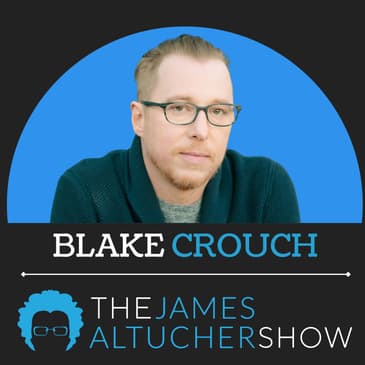
I'm so excited. I'm like a fanboy of my favorite TV show of the year. It's called Dark Matter, and it's on Apple TV Plus. I don't know how to describe it. It's a thriller, it's drama, it's science fiction, and it's emotional. It's just a well-written show. Every episode's a cliffhanger, and it's based on one of my favorite novels, Dark Matter, by one of my favorite novelists, Blake Crouch. Blake was also involved in writing the TV show. Blake agreed to come on the podcast, and we talk all things writing, thrillers, Dark Matter, TV, publishing, and he answered all my questions about my favorite show and his writing process. Here's Blake.
Episode Description:
In this episode, James Altucher interviews Blake Crouch, the mastermind behind the novel and TV adaptation of "Dark Matter." They discuss the intricacies of writing thrillers, the challenge of adapting a beloved novel for the screen, and the science and emotion behind the concept of the multiverse. Blake shares his insights into the creative process, his experiences with traditional and self-publishing, and the importance of emotional resonance in storytelling. Whether you're a fan of "Dark Matter" or an aspiring writer, this episode offers a deep look into the mind of a successful author navigating the intersection of science fiction and human experience.
What You’ll Learn:
- The creative process behind writing and adapting "Dark Matter" for television.
- Insights into the multiverse theory and its narrative potential.
- The emotional and existential questions that drive Blake's storytelling.
- The evolution of Blake's writing career from self-publishing to mainstream success.
- The balance between science fiction concepts and human emotions in creating compelling stories.
Chapters:
02:39 Exploring the Multiverse Concept
05:21 Character Development and Performance
08:52 Blake Crouch's Writing Journey
16:07 Self-Publishing vs Traditional Publishing
22:58 Defining the Thriller Genre
29:43 The Art of Surprising the Reader
33:12 The Art of Surprising Readers
34:03 Cliffhangers vs. Surprises
35:01 The Challenge of Writing Endings
35:59 The Value of a Great Book
36:59 Exploring Existential Questions
38:36 The Science of Gene Editing
43:29 The Appeal of Wayward Pines
45:23 The Complexity of Plot Twists
50:23 The Writing Process
55:35 The Impact of Success
01:00:04 Conclusion and Future Works
Additional Resources:
------------
- What do YOU think of the show? Head to JamesAltucherShow.com/listeners and fill out a short survey that will help us better tailor the podcast to our audience!
- Are you interested in getting direct answers from James about your question on a podcast? Go to JamesAltucherShow.com/AskAltucher and send in your questions to be answered on the air!
------------
- Visit Notepd.com to read our idea lists & sign up to create your own!
- My new book, Skip the Line, is out! Make sure you get a copy wherever books are sold!
- Join the You Should Run for President 2.0 Facebook Group, where we discuss why you should run for President.
- I write about all my podcasts! Check out the full post and learn what I learned at jamesaltuchershow.com
------------
Thank you so much for listening! If you like this episode, please rate, review, and subscribe to “The James Altucher Show” wherever you get your podcasts:
Follow me on social media:
[00:00:07] I am so excited. I am like a fanboy of my favorite TV show of the year. It's called Dark Matter. It's an Apple TV Plus. I don't know how to describe it. It's thriller, it's drama, it's science fiction, it's emotional, it's great.
[00:00:25] It is a great show. Every episode's a cliffhanger. I mean, it's just a well-written show. The reason it's well-written is based on one of my favorite novels, Dark Matter, by one of my favorite novelists, Blake Crouch. Blake also was involved in writing the TV show.
[00:00:42] Blake agreed to come on the podcast and we talk all things, writing, thrillers, Dark Matter, TV, publishing. He answered all my questions about my favorite show and about his writing process and on and on. So here's Blake.
[00:01:04] This isn't your average business podcast and he's not your average host. This is The James Altucher Show. I almost even don't like categorizing it as science fiction because I feel that says, oh, there's science fiction shows and then there's real shows with good acting and good writing.
[00:01:34] It's a great show. I'm surprised how great the acting and the emotions are. And it's always hard to talk to a fiction writer on the podcast because I don't want to give away any spoilers.
[00:01:48] But let's first off, let me just say, great show. Everybody should watch Dark Matter. I reached out to Blake because I love the show. I'm so grateful you came on on the podcast, Blake. But also, I've been following your career and writing for quite some time.
[00:02:06] So when I saw Dark Matter was on TV, I watched it instantly and it was well worth it. And welcome to the show. Well, thanks for having me on, man. And I want to get...
[00:02:20] I mean, you're so great at coming up with these great science fiction ideas that on the one hand seems so obvious. Like, oh my gosh, why didn't somebody else beforehand think of such an idea?
[00:02:34] And some of these tropes are... I don't want to say common, but have been used before. But Dark Matter was particularly creative and interesting this idea that there's a multi... Because of quantum mechanics, there's a multiverse.
[00:02:49] There's an infinite number of worlds and infinite number of versions of you where you make every decision forks off a new world. And so the main character... Well, I can't even say much at the beginning because why don't you describe Dark Matter?
[00:03:05] So then it lets me know which spoilers you're comfortable with or how you describe it. I mean, it's a... By the way, the book came out 10 years ago and the show has been out now going on.
[00:03:16] It'll be three months soon and I feel like we can talk some spoilers. And if your viewers haven't watched the show, go watch it and come back and listen to this. Dark Matter is sort of a scientific exploration of that Robert Frost poem, The Road Not Taken.
[00:03:33] It's about a guy who has lived a pretty good life and has a wonderful family, is a good job. They're not really wanting for anything but occasionally he wakes up at three in the morning
[00:03:45] and asks what if I followed my work back in my late 20s and just stayed head down on that. Instead of embracing the family life and all that comes with that, the good but also time is finite and you can't do everything.
[00:04:03] And it's a show that really gives him the chance to see what that other life might have been like all in the service of this epic journey across worlds and multiple versions of our characters. Yeah, I mean it is sci-fi but it's about life too.
[00:04:21] And there's a thriller component as these kind of different versions of this character kind of vie for the reality that they want. That's right, that's right. Yeah, all my stuff is probably first and foremost a thriller.
[00:04:37] I think that's the most core DNA of my fiction and the shows that I make. What one realizes when watching this is that it's not just like, I wish I had chosen this bit different path over here and then my life would be different
[00:04:55] but your personality depends on those choices you make. So like the two different characters, they seem like they're the same but just in other universes but the differences start to really crack open and that is revealing to the other characters in their lives.
[00:05:15] Well, that's right. Well a lot of that goes to Joel Edgerson's performance, a very nuanced take on two versions of the same man. But you see like in the Jason 2 which is sort of the Jason, the interloper who kicks this whole story off
[00:05:33] the one who takes over this guy's family. You see that not having had a family for all those years and just really focusing on himself and his work, it sort of made him a little harder around the edges
[00:05:47] whereas having a family man and being selfless really made Jason one, our protagonist, a little more I would say well-rounded and a little more generous of spirit to his loved ones because he's had a life of that was in service not just of himself.
[00:06:09] And you know I want to get into your writing career and process and so on but you mentioned the actor Joel Edgerton. He really did a brilliant job like conveying these subtle differences in personality even towards the end where I won't give any spoilers but there's aspects
[00:06:27] where it probably was particularly hard for him to do the acting and he did a really great job. I was impressed how different that I had to really tell myself it's the same actor.
[00:06:39] Yeah, that's a huge compliment I think to Joel's work because he also never made it feel like a skit and one of the things that we talked about a lot was like Jason, if you look at all versions of Jason
[00:06:54] it's not like yellow Jason and black Jason and white Jason and purple Jason they're all shades of the same color and so the differences between them aren't massive and huge they're subtle and the differences are attributable to the choices that they made
[00:07:09] and we just really zeroed in early on wanting the show to have a grounded feel and part of that was not making wildly different versions of our characters like the closer they are to this core character then I think it helps you buy in a little bit more.
[00:07:31] Now do you believe that perhaps in some version of quantum physics there is that what you described is more real than we realize that there is a multiverse where every universe is spun off from every decision?
[00:07:49] I think it's highly possible. I mean with all of my books which are technically techno thrillers it's all about this core concept in the case of dark matter, this box which cancels out all external stimuli
[00:08:07] and this drug that cancels out the consciousness piece of our minds that give way to decoherence or collapsing all realities into one. Yeah it's just a matter of is this technology something that we would see in our lifetime
[00:08:22] and I don't necessarily think it is in the case of dark matter. I had subject matter experts on the show and we would talk about this kind of stuff and what it would actually take for us to put a human being in super position
[00:08:36] and it would take a lot, it would take a lot. Like you know what's the roots of this like were you thinking to yourself one day boy if I had made XYZ decision
[00:08:47] I wonder what my life would have been like, what were you thinking when you kind of, ah-ha this is the book I need to write? I had been, I didn't take any science courses in geology and geology except for geology, rocks.
[00:09:04] I was like I was far more interested in literature and writing but when I got out of school I became fascinated with science just because of like emerging technologies and also I saw it as a way to sort of put a different sort of a spin
[00:09:20] on the kinds of books I would write. I was writing which at the time was just more straight thrillers and a little bit of horror and this was in the early 2000s and you know we didn't have a Marvel movie coming out every month
[00:09:32] that was making use of quantum superposition as its core story point. There hadn't really been like a real, I don't think like definitive take on the idea of the multiverse and multiple versions of ourselves. I mean there have been things that did it but nothing like huge.
[00:09:53] I mean GC Comics has you know Infinite Earths they have their kind of, but you know the comic book version is not really, doesn't really deal with any of the actual issues it's just sort of comic book.
[00:10:03] They're not human, it's not about like the human ramifications of playing with that sort of technology. So anyway I fell in love with the idea of quantum mechanics, just started reading a lot about it and wondering if there's a way to turn that into a story.
[00:10:18] And I mean this was like 10 years in the making and I was writing other things and around the time that I started working on Dark Matter I was in my mid-30s
[00:10:28] and just like for the first time in my life like old enough to look back at the choices I had made, some great, some not so great and I started wondering of what,
[00:10:38] if there are other versions of Blake out there what they were doing with that looked like and that just sort of married really seamlessly into this concept. What decision in particular do you wonder about?
[00:10:52] You know my early on I thought I'd be a lawyer, not because I really wanted to be I just thought well writing isn't really a kind of career path
[00:11:05] and then you set out to endeavor to make money on it's very lucky if you're able to support yourself in the arts. So I had applied to law school out of college but only to one and I got waitlisted
[00:11:19] so they considered me but it was like on the bubble and I just was wondering like what if I'd gotten in my life would look really really different and you think it's one of those moments where how close were they to admitting me
[00:11:33] and if I had I definitely wouldn't have pursued writing to the extent that I did I might have done it in my spare time or come to it much later in life or forgotten about it altogether and I just thought a lot about that
[00:11:45] and how tragic that would have been to me not to do it but for all I know if I'd been a lawyer I'd be even happier than I am now so I think it gets dangerous trying to look at the path not taken with regret
[00:11:57] which is sort of what the book and shows about. And do you consider yourself pretty happy right now? I do, like yeah I get to do exactly. I feel like I'm busy. I feel like I could not have ever imagined my life as busy as it is
[00:12:13] and creatively interesting. It's kind of hard to process sometimes especially coming off the after like a show like this which has been so long in the making for me and then suddenly like millions of people get to watch it
[00:12:26] and have opinions and thoughts about it. It's very surreal. Yeah, on the surface you're kind of living the dream life. You get to write science fiction novels that get made into TV shows I mean probably everyone listening to this podcast
[00:12:38] would be like oh I'll sign up for that if I can. Yeah. But it was like you started writing like you said in the early OOs what was the beginning of your career? Like what got you into writing? What did you start writing?
[00:12:52] You weren't always writing science fiction like this. You've written a couple different genres. Yeah, I was always a storyteller back when I was 10 years old. I tell my younger brother bedtime stories and try to scare the shit out of him.
[00:13:08] And then I wrote some short fiction in middle school and went through a spell of writing a lot of bad poetry in high school. And then my senior year of high school I started to try to write a novel
[00:13:20] and I finished it my freshman year at college at Carolina. And it was this giant like 200,000 words sprawling family saga that was you know was never going to go anywhere. But I sent it out to literary agents and I ended up meeting one
[00:13:37] and she rejected it but was very encouraging about the writing itself and I was already writing a new thing at that point in time and it was something that was it was a much more of a thriller. It became my book Desert Places.
[00:13:49] And it was more of the kind of thing I loved to read and to watch and I sold that and that was my first book that was published. So your first thing other than your virgin effort,
[00:14:01] your first thing that you wrote, you basically got sold at who'd you sell it to? St. Martin's Press. And I was 22 years old. And they... And I thought I made it. I've made it. I made it and I had not made it.
[00:14:19] Okay, how much did they pay you for that first book? $6,000. $6,000? Okay, that was that's $1,000 more than my first book. So congratulations. And when you were 22, you sold your first book, you got the news. Did you instantly go out and ask the girl you had a crush on
[00:14:39] out on a date because you had confidence now or like what happened? No, I was actually married at the time. What? You were married at 22? Yeah, I was married at 22. No, it was a big celebration and it felt like, oh, this is amazing.
[00:14:53] But like everything you set this... Like you want to do something and you achieve it and then you realize that this little mountain you've been obsessing about getting to the top of that when you get to the top of it,
[00:15:05] then you see the real mountains in the distance and they're even farther away than that one is because the book comes out, it just does okay. It sells a few thousand copies. You get a new book deal, but it's not for that much more and you're still having...
[00:15:18] Now you're having... You still have a day job and you can feel the dream of wanting to do this full time and throwing yourself completely into it. Like it's struggling to stay alive and I did that for 10 years until I finally broke through
[00:15:31] and wrote something that really connected. I want to get back to the beginning stuff but what was the breakthrough? It was a combination of things actually. So this would now have been around 2011 and I had written this novel called Run. It's the first thing I wrote
[00:15:53] that had a little bit of a speculative twist to it. I wouldn't say... It's not sci-fi in the way that weird pines or dark matter or recursion are, but it had a speculative thing going with it and it just was the best writing I'd done
[00:16:07] and the story had really come together. And I had a new agent, but they couldn't sell it because all of my track record for my first four books was not good. And interestingly, this was the moment where self-publishing was a viable new thing
[00:16:24] and I got the rights back to my old novels and I published this and it's the only book I've ever published that's new. It would be Front List I self-published and it just took off and suddenly I was making every month
[00:16:37] what I had been paid for my first novel and in a very impulsive moment I quit my day job and threw myself straight into all of it and doing that allowed me to focus in a way I hadn't before and then the next thing I wrote
[00:16:54] was the first book of the Weird Pines trilogy which did change my life. And that eventually became like a TV series, right? And Night Shyamalan directed it. It came out on Fox at the time. It was the biggest day-in-day release of a TV show ever.
[00:17:09] We had a great cast. It was right before the streaming thing really hit. It came out in 2015. Yeah, so it really increased my profile and also gave me more of a platform to do my next book which was Dark Matter.
[00:18:10] And around that time you also saw things like Wool which became silo by Hugh Howie. That was originally self-published and The Martian was originally... Andy Weir and Hugh Howie's been on this podcast several times and self-publishing, 50 Shades of Grey was originally self-published.
[00:18:30] All of this was kind of occurring around the same time as people realized that Amazon Kindle was not... it was print on demand so you didn't have to stock up with some Vanity publisher or a bunch of books. And the Kindle reader was coming out
[00:18:45] so people could easily and cheaply download your book and you could control your marketing and like you said, you got paid every month and you got all the statistics about how it was selling. And you teamed up actually to write some stuff
[00:18:58] with J.A. Conrath who's a writer who's a big proponent of self-publishing. So what right now are the pros and cons of self-publishing versus publishing? I have no idea. I haven't actively self-published since 2012. I guess because like... See, I thought the... I never...
[00:19:20] I knew that I always felt like we were in a moment and the moment was great and it was like there's this time where it felt like you could just like open the umbrella upside down and self-publishing money rained down out of the sky.
[00:19:34] This was before Amazon started gaming the system and trying to sell right now in it writers who do really well self-publishing and they spend $30,000 a month to do it. I don't think... I know this. It is not the same environment it was 10, 12 years ago.
[00:19:51] I just... I never believed that books were really going to go away. I never believed that. Like I would sell a lot of books but I always wondered like when you sell a book for $299 people are really reading it. I don't think it makes...
[00:20:05] I never felt like the numbers were good the money was good but it didn't feel like you make fans at $299 for an e-book. But people could buy... I think some fans, but not at that level. It's a skewed metric. Like if you sell a million e-books
[00:20:20] there's a much smaller percentage of those people are actually reading, finishing the books and going on to your next one versus if you sell a million of a print book like you buy a print book you're probably gonna read a print book.
[00:20:31] You could self publish your book and say okay I want it available as Kindle but also paperback, hardcover and Audible. You can make the Audible version too. Sure. And I did that. I did all those things and I just saw the tail starting to...
[00:20:45] And you had to do more and I didn't get into writing to be my own marketing. I mean I did it for a while and I kind of built a core group of readers who helped get the word out and loved my stuff
[00:20:59] but that's not why I got into this business to market myself and to put myself out there like that. And so when I had the opportunity coming off of Wayward Pines which was not self published it was published by Amazon Publishing which is a real publisher.
[00:21:14] I jumped because I was like now is the moment to go back to traditional publishing in the right way. So I've gone back and forth with nonfiction and I can't really decide which I prefer. But like you say, when you self publish you're the publishing company
[00:21:32] so you have to do everything. You have to market it. You have to find a designer. You have to do the whole thing. So it's a different type of task maybe less frustrating, maybe more frustrating depending on your personality.
[00:21:44] And how much you like dealing with publishers and so on. What self publishing relied upon in my opinion was that Amazon and Barnes & Noble and Kobo and some Ashwords and all these places but mainly Amazon at that moment in time wanted to give visibility to self published authors.
[00:22:08] They stopped wanting to do that and they saw them instead of bringing up a bunch of writers letting them have an equal footing with traditional publishers. They just made, you know I think they saw them then as oh these are marketing targets
[00:22:22] we can sell marketing packages to them which is what it's really become now. It's hard. I think it was really cool for a moment and it helped me in my, it bridged I was a failed traditional novelist maybe that's being harsh but I think I was
[00:22:38] a failed traditional novelist. Self publishing bridged me into my success and for that I will always be grateful. Now earlier you kind of described that you basically your very first effort this 200,000 word family saga this didn't really work and then you wrote something you started getting more into
[00:23:01] writing your thrillers and techno thrillers. What is a thriller? Like what defines, what are the what's the boundaries of that genre would you say? I think what really defines a thriller is sort of the intensity of the plot that's happening to the protagonist
[00:23:20] and everyone I think there's multiple versions of what a thriller is that are valid for me it's the intensity of what happens to the protagonist and I think you have thriller and then I think you have horror not like horror in the sense of monsters
[00:23:33] and things like that but I mean horror in the sense of like truly horrific stakes truly in an intensity of the experience they're going through and all of my books have a little bit of that horror in them because all of my characters do go through hell
[00:23:47] from page one to the end of the book. For me it's about that, it's about pace it's about like how fast how much are you sucking a reader in and making them neglect their home duties. So like what are the beats? In the first chapter is somebody kidnapped
[00:24:09] or killed, what would you say? And again this is not a there's no formula I'm just saying for you maybe you can take the structure of Dark Matter or some other book what are the basic beats of a thriller? As opposed to a family saga or a mystery.
[00:24:29] It's about a, I think there has to be a certain normal normalcy about the protagonist's life to me a thriller is they have to keep they have to feel like a normal person and then a normal person who is dragged into an insane situation
[00:24:49] and how quickly they're dragged into it for debate. Yeah, you can do it in chapter one. But I think sometimes it's better to slow burn it out and like really let the shit hit the fan in chapter three I did that a little bit more with recursion
[00:25:03] the book I did after Dark Matter I didn't I didn't want to get pinned down into having to do some like crazy thing to grab someone's attention in the first chapter. Like I wanted to do it in a more nuanced way that built
[00:25:21] and built and built. And there's all sorts of ways you can grab someone by the throat and in chapter one you can just slowly turn up the temperature between one and two and three and four there's truly no one
[00:25:31] right way to do it. Well let's say you do it in chapter four how do you keep people interested in chapters one, two, three? How do you keep them interested? Yeah, let's say you're going to really turn up the intensity in chapter four what are the
[00:25:45] tricks of the trade to keep them interested in the reader in turning the page chapters one, two, three? Oh you for see I don't it's not just about like what happens that I think pulls a reader along it's asking questions that makes them lean in like is there
[00:26:05] there's something under the surface there's a backstory that's only teased at but you tease it in such a way that you're like huh I don't ask me to name it I was literally reading a book last month that did this very thing it was just like one
[00:26:19] sentence like the first chapter was kind of quiet and just set in the scene and introducing the character but it was like one sentence that suggested a backstory that it grabbed me sometimes I think you can overly you could do it
[00:26:33] you can do too much in the first chapter because you don't want to like use all of your ammo in chapter one and then because that's what I read that happens a lot some crazy stuff happens in chapter one and then it's like flat lines for a while
[00:26:47] while we do all the other business it's a weird equation but there's no one right way to do it every book is hard because every book needs its own approach and like every book sort of has to teach you how it wants to be written
[00:27:03] well to make what you have in your mind work in dark matter I like how you do it in both the book and the tv show mirror is what happens in the book where and I don't think this is a spoiler to describe chapter one but basically Jason
[00:27:17] Jason's friend Ryan wins this great prize for his intellectual scientific brilliance and is given almost like a million dollars all sorts of money and opportunity and his life seems great and you're kind of it's hinted at that this could have been Jason so you don't you're not real
[00:27:39] we're not really into the story at all at this point but you do sense the kind of personal conflict Jason has had and to some extent his wife also has had in their lives leading up to this point that's tension as well
[00:27:53] like tension isn't just like running from somebody or a gun coming out there's a lot of different ways to to build tension and for me it was like in dark matter I thought like well what I would do here is sort of give you a
[00:28:07] sense of something just right under the surface and that will pull you to the inciting incident which is the mass man comes out grabs him a gunpoint, whisks him away and then you're off I don't know do you have to be swept away
[00:28:23] by some crazy thing in chapter one like what works on you I think for us regular let's call it a procedural thriller like a crime detective kind of thriller I think I have to be swept away as much as possible because those are more formulaic and I know
[00:28:43] as I'm reading what I'm getting myself into I know some kid's going to be kidnapped his parents are going to hunt down the killers and or the kidnappers and whatever but for something like what you're doing there's an idea component where I'm trying to
[00:29:01] I don't need to be swept away because I'm also I'm getting excited to be indoctrinated into the ideas I know roughly what the ideas are by the back cover and how other people have told me about the book so I know this is going to be a
[00:29:15] topic I'm interested in and I'm curious how the writer is going to engulf me in those ideas so it doesn't see I don't really that's fascinating I don't really sit around and think about I don't try to I think it's dangerous
[00:29:33] to try to reverse engineer how a book works because the premise of that is you're just going to do that again and that's not what I think readers want I think readers want to be surprised the best thing you can ever do is just
[00:29:45] surprise someone see I think that's a really important point because like I always wonder how writers do a police chase because how do you surprise somebody if you're writing a police chase it's kind of obvious what happens in every scene of a police chase someone's being chased
[00:30:01] they have some they fall a little bit and eventually someone's either caught or they get away and we're going to have to chase them later again so yeah exactly there's a great quote Robert Frost said that no tears in the reader, no tears in the
[00:30:19] writer, no surprise for the writer no surprise for the reader like so you have to surprise yourself first if you surprise yourself and if you move yourself then there's a good chance the reader is going to feel that as well but if you know exactly what
[00:30:33] and there are writers and in total respect like who sell way more books and publish way more books than me that it's a formula for them and they know what they're doing they call the shots and they knock it out of the park and good for them
[00:30:45] that's just not what interests me as a writer I want to be surprised and I don't want to do the same book over and over again there are certain elements of my books we'll always have because that's just what I love I want it to be different and
[00:30:59] that makes it harder yeah like I would say in dark matter first off there's many surprises but I would say other than the inciting incidents there's you know major surprises in the middle I won't describe exactly how because it's such a leading to spoilers
[00:31:19] and then obviously there's major surprises at the end and it's pleasant to be surprised and if you surprise yourself when you were writing those parts I think you know what surprises I'm referring to but maybe not I don't know yeah I started taking notes
[00:31:37] I take notes in journal about books for a while before I start writing and I got to that point you're talking about in dark matter and it just seems pretty obvious to me what the resolution was going to be you know mono a mano and that didn't seem
[00:31:55] it just seemed expected it seemed what was there and I thought it was going to be enough when I was writing but I got to that point of having to actually start writing those scenes and I was just like I don't know I'm not feeling that
[00:32:07] and I set the book aside for about a month and went back through my journals and literally on day four of my planning for dark matter I had written what if Jason gets home and then blah blah blah happens and I would just spoil it for the audience
[00:32:23] and then I'd written no that's too crazy that would never work but having written like 250 pages and trying to figure out what the great ending of this book is I saw that with fresh eyes I was like I could definitely make that work I completely had forgotten
[00:32:37] I had done that and it just immediately changed what the third act of the book was going to be I think it's one of the cooler I don't know if I'd call it a twist maybe it's a twist I think it's one of the cooler twists
[00:32:49] I've ever written I would love to write another twist like that again in my career you know there's no come along very often and I'm fascinated by the concept of a twist in the thriller because like you said you're right if the writer is not surprised
[00:33:05] I don't know whether or not that means the reader is surprised or not but at least the writer doesn't know if the writer is not surprised the writer certainly doesn't know if the reader is going to be surprised or not like you can't plan a surprise I think
[00:33:19] because if you figured it out while you're writing then the reader is probably going to figure out while he or she is reading it unless it's a complete non-sequitur and so there's one kind of writing formula where basically if the writer gets stuck
[00:33:37] you're supposed to just kill your main character is like a way to kind of induce a twist but I always feel that's very fake or artificial it's sort of obvious that they're doing that I've seen that happen where you kill the main character in chapter one
[00:33:53] and that's kind of interesting I saw Neil Gaiman do that in the graphic novel Black Wurkhead but then it was like it blew my mind then 30 years ago but I think it's hard to pull that off but I think it's surprising
[00:34:09] I was talking to Brad Thor who's a thriller writer and he outlines everything out and he didn't so much have twists you always sort of knew what was happening but he always had cliffhangers at the end of every chapter and that's what kept the reader going
[00:34:23] as opposed to surprises I think that's a I love the serialized approach we did that with the show I always try to do that cliffhangers in the early chapters get a little trickier it might feel a little more forced to get everything in motion it's a wonderful way
[00:34:45] to not only bring the reader along but to stop writing for the day when you hit a cliffhanger because you know that when you come back the next day you've got something great to dive into it just makes the process far easier As you're surprising yourself though
[00:35:01] do you ever kind of surprise yourself into a corner where you can't back out and figure it out? Oh yeah, every book Every book I end up throwing away hundreds of pages because usually it's the third act I'm really really hard on my third acts
[00:35:17] because I don't think most media ends well I think plenty of things start well I don't think a lot of books films, movies, TV shows I don't think they end well because endings are hard and for Dark Matter I didn't throw away a lot in Dark Matter Recursion
[00:35:37] I wrote this whole book and then realized I didn't like anything past the midpoint so I threw out 200 pages of Recursion 300 pages of Upgrade just because it doesn't make sense anymore for me to publish a book that isn't in my opinion great surprising does all those things emotional
[00:36:01] it doesn't make sense I think something that a lot of writers don't know is that one really successful book that connects with The Preuters is worth literally 100 books that you could write that it's just good or okay if you can break through and make that one book that
[00:36:23] really just grabs people it will change your life, it will change your career it will give you more time to find the next idea like that I think a lot of writers have this I got to keep putting books out I keep putting books out I'm like why
[00:36:39] why put out great it's like it's saying good is the good is the enemy of great now perfect is the enemy of finished nothing can ever be perfect but if you can find that sweet spot in between there that's where careers level up and take different turns
[00:37:06] where dark matter really connects is not on the science fiction level but where this idea that hey could I have chosen a different path in my life that would have made me happier and I think everybody relates to that and then of course it's kind of cool
[00:37:31] the whole multiverse thing and traveling through multiverses blah blah blah like that's intellectually interesting it's science fictiony and it gets this thriller going but I think having having it be character focused first on something on such a fundamental issue that humans have as opposed to
[00:37:51] like again a police procedural someone dies there's some intrigue around it the police was having problems in his marriage but also needs to solve this crime we've seen that been there and done that and it's not a question that we all ask ourselves
[00:38:05] I think that's where dark matter really resonates I agree I think that's why I think that's why it really broke through because it asked a question that we all ask ourselves and there aren't many of those really existential questions I mean are we alone I think
[00:38:27] well upgrade your novel always interesting your novel upgrade is very interesting in this sense and the idea that if I can change myself right now what would I change now that's just this fundamental question we all ask but then the science for that is we're on the verge
[00:38:45] right now of the science of that so this is a question that people almost have to take more seriously absolutely I don't know how many people are really I still don't feel like the what like the truth of gene editing is hit the mass awareness
[00:39:00] just yet you know there's a lot of other it completely has not tire fires on our horizon it completely has not because when it hits it's gonna be like yeah because gene editing is here right now and the only thing slowing it down are correctly ethics issues and
[00:39:16] be there is some computational complexity to figuring out which genes do what when there are multiple genes involved right because there's so many genes that if more than one gene is involved it's an exponentially hard problem that computers can solve easily 100% you need yeah exactly we don't have
[00:39:34] the computing power to like really understand because what you need to make a correlation between you know the gene itself and its expression because everything in your body is an expression shape of your head your eye color all those things they're all expressions of these incredibly complex
[00:39:56] gene systems working together in concert and like you could take a 23 million probably do some sort of cross reference analysis on all of the customers their genetic stuff and starting to drill down into those things but is there enough computing power in the world
[00:40:14] to really do that right but so yeah probably not yet so you have this convergence right now that's happening of quantum computing and AI and gene editing where as that convergence happens you will be able to do it and just no one
[00:40:28] knows when the tipping point will be but at some point we'll know oh these 17 genes define your IQ or your personality or your height or whatever and right now they only know single gene mutations maybe two three gene mutations but it's very very difficult to even do
[00:40:44] two and but to that point it's on the horizon as opposed to traveling to the multiverse and so upgrade you're asking a question we've all asked since we were a kid like if I could change one thing about myself what would it be of course I would
[00:41:00] be more handsome but but but now the technology is almost there we can ask this question and so that's why upgrade kind of is on a personal level very interesting yeah I mean I I'd love to not have to sleep we make juggling all
[00:41:22] things I have to do much easier I'd love increased focus concentration the things that make you memory because you know writing is all about memory when pulling moments experiences from your life and distilling it through the story you're telling yeah it's a fun thought experiment
[00:41:38] yeah and like so it's interesting so starting with these kind of thought experiments like oh what if I made a different choice in my life or what if I could upgrade some part of my life you know starting with that starting with the personal torment that results
[00:41:54] in you know these are all questions of frustration right I'm frustrated with a choice that I made in life I'm frustrated with some feature myself and then having some science fiction way to solve that and then creating kind of a throwing a thriller trope on top
[00:42:10] of that I'm not saying this is your formula for a novel we're just we're just talking but like that is an interesting approach yeah I mean I think you could definitely look at the dark matter recursion and upgrade as a kind of trilogy of standalone
[00:42:26] novels that all kind of function that way looking back in hindsight I don't really do it when I'm writing or planning a book when you look back and it's like well there's a personal issue that we're dealing with there's a sci-fi overlay that sort of gives the
[00:42:42] sets the characters out on their journey and brings in the stakes and then there's just the larger zeitgeisty conversations about you know an upgrade all the things you're just talking about if you could do this it's like a what if
[00:42:56] there's a what if element of it and recursion what if you could return to a memory and live your life again from that moment dark matter what if you could visit another version of yourself or another world where you made different choices of those are like
[00:43:12] engines that make books not just run but also it makes people want to talk about them to other people I think that's a really big component of my writing is that I wanted to sort of have like it's a start of conversation I like people to
[00:43:28] want a book club about it and I think it is weird because a lot of book clubs read my books but then what we traditionally think of as book club fiction but it's all just about emotions that's what people want to talk about Now looking at
[00:43:46] wayward pines which turned into this TV show what do you think like M. Night Shemalian who ended up running with this show producing it he has a very particular style of thriller like you always know there's this weird you know I see dead people twist at the end
[00:44:04] of an M. Night Shemalian type of thing what do you think attracted him to wayward pines I think it was the I think it was this idea of the town you know I always looked at wayward pines to sort of Twin Peaks the TV show was a big
[00:44:22] impact on me when I was 12 I watched it when it aired and so wayward but you know like in Twin Peaks Twin Peaks was weird because it was a David Lynch show and David Lynch just does weird cool shit I mean like everyone's acting
[00:44:36] weird because they're in a David Lynch thing and I always thought- And by the way did you only think that the first three episodes were interesting because that's all that David Lynch was involved in I sort of lost interest after the first three episodes this is like 1992
[00:44:48] yeah no I love the whole thing and I thought you know what if we were talking what if there was a town that was weird in that way but there was actually a reason why it was weird not just because it's a director
[00:45:04] that makes this kind of stuff that surreal stuff but there was a real reason why everyone was acting strange and keeping secrets and that's it me down that path of that book I think the twist is what probably pulled night into it
[00:45:18] although I don't know I think he you know the man loves his twists the man loves those big like reveals and I remember when he read it the pilot script he was like as long as the reveal is not they're all dead I'm in And it's interesting because
[00:45:36] it's hard to do those big reveals like just taking you know six cents his first big movie you know the guy didn't talk to his wife it's not giving spoilers the movie came out what in the 90s so if you haven't seen six cents then
[00:45:56] I don't know what to tell you we're going to talk spoilers for a second the guy didn't talk to his wife for an entire year and suddenly only then you realize like everybody was willing to go along on that
[00:46:06] ride with him where he's not talking to his wife for an entire year and only at the end you realize he's dead like the fact that he pulled it's kind of genius though and only yeah it'll only a movie can do
[00:46:18] that because you I think you tell yourself one of two things either one something else is going on here I'm just not sure what it is or always talking to his wife they're just those scenes are more off camera you know
[00:46:30] yeah because we're just you know you obviously can't show every moment of someone's day that's a good point maybe he couldn't have pulled that off in a novel because in a novel there's always yeah you can always throw in one sentence somewhere where he's having a conversation
[00:46:44] that's right that's right oh what did you think of lost where I feel like they did a really great job setting things up and there seemed like there was a reason behind everything but then they had a hard time ending so I was saying earlier I just
[00:47:00] think a lot of a lot of things and I would put that as you know offender number one it's really easy just to ask a bunch of questions that's easy that's not hard to do but providing answers that are satisfying but also like
[00:47:18] push the plot forward like I think when you're writing when you're plotting and playing around in the world of like reveals and twists it's not enough for them just to to tell you that finally what it is like the answer itself should raise another question
[00:47:34] that pulls you through to the next part of the story I mean I think with lost they just they lost their way I don't think they really ever knew what it was and they kind of pulled it together at the end but not really
[00:47:48] but there's so much of that show that works so well and is so entertaining and I kind of want to go back and see it again now that's on Netflix I've watched the whole series like six or seven times like I love
[00:48:00] lost I'm not even going to criticize the ending it just you could just sort of feel they didn't really have wrap all wrap it all up as opposed to like let's say a sci-fi series well like Dark Matter but a multi-season series like Battlestar Galactica I feel
[00:48:16] it was a big mystery and then I felt that they nicely tied it up I don't know if you saw that series but Oh I loved it I'm also watching a series my kids called from which is awesome and a little lost the little more horror
[00:48:30] than lost but it reminds me of lost in that you're about happy to the second season and manages all they've done is ask questions if answered none of them and the I was talking to my kids the other day we're like hmm I think there's
[00:48:44] just two seasons now but I think they're making a third we're like some answers by the end of season to like we should just go ahead and realize that maybe they don't have any idea what this all means
[00:48:56] and say how that was a fun time but we're not watching this anymore because we're expecting to have anything explained but it's fascinating if you haven't seen it it's a blast Oh I haven't even heard of it I definitely have to watch that yeah and as long as
[00:49:08] we're doing a did you watch you must have watched coherence which is about multiple universes dinner party yeah oh yeah I mean it's like the ultra low budget version of dark matter kind of yeah I thought it was I thought
[00:49:22] it was very brilliant because you start to realize the layers at which this whole the concept started in the movie like when did this start happening you get further and further back into the movie so it's something deeply unsettling about it
[00:49:36] I also love primer which I don't know that one if you've seen you know primer now oh Shane Karuth oh yeah well I think your your viewing has been sorted out for this evening if you don't have plans exactly good luck good luck trying to understand
[00:49:52] anything that's happening but it's fascinating all the way what about something like like everybody was always recommending to me tenet and I started and I just didn't like it yeah I love tenets I know a lot of people don't like it I love it
[00:50:06] I think it's a blast I think it holds up to repeated viewings because it's so such a pretzel I think it's I think it's a lot of fun I just love that he swung for it literally has people like moving back in
[00:50:20] time as others are going forward it it's bonkers and beautifully beautifully shot I was a fan now you're so prolific like it sounds like there's a long process for writing a book like you're talking about oh I threw away 200 pages or I set the book down
[00:50:36] for a month I don't think I'm prolific I publish a book every three years that's not prolific I mean I made a show also yeah you're right you're making shows it looks like more than one book every three years well good but it's
[00:50:50] at least in stark matter it's been a book every three years and what are you working on now working on working on a new book kind of in the earlier state early stages of it but you know trying to find my way I've had some starts and stops
[00:51:07] with it but I think I found my I think I found my way and do you write every day which is also half the battle no I wish I did I don't most of my books get done and real intense bursts like
[00:51:19] there are more like period of six weeks writing you know every day when I'm like just jamming along but until I get to that place it's a little bit of star start stopping journaling trying to understand my characters it's and everyone is different
[00:51:33] unlike I mean no one should look at the way I write books for any kind of guidance on how to write books well well I don't know if that's true like you've described interesting ways of kind of how you conceptualize these books but like
[00:51:47] what do you mean by finding your way into it well if you have an idea right you have a premise a big idea there's I'm gonna let me think of a way okay so for dark matter before I landed on the way that it's
[00:52:05] now written in the book it became I had this idea that the box shows up in someone's backyard just one day and they have no idea what it is and they start exploring it and trying to sort of deconstruct it to understand what it does like that's
[00:52:21] a valid way into that story I had thought of thought of telling it from Jason too's point of view I there's a lot of ways in to telling the story and not necessarily one right way but when you have a general idea you're living in a super position
[00:52:42] and there's so many doors you could open that are different versions of that story so for me it's about fighting like what's the best version of it what's the one that I'm excited to tell and it usually ends up coming back to
[00:52:52] an emotional question like why are you writing this book what's that what's that emotional existential crisis question that maybe you're personally wrestling with that you want to work out on the page that's what it I don't always know that at the time
[00:53:08] but when I look back at books I'm like oh yeah well that I understand exactly why I did it that way yeah because it seemed like I see what you're saying how like there's multiple ways you could it's almost like an analogy to the
[00:53:22] novel itself the process of writing the novel like there's a lot of choices you could have made in the beginning that would have totally altered how this novel was done but now in retrospect it seems like you made all the perfect choices
[00:53:32] like starting with Jason one as opposed to Jason two and because he's the one that's most like us like human that's right and that's right and the trope itself the multiverse trope is one that's been done and so of course there's multiple ways to
[00:53:50] choose to do that but the way you did I feel like had the most thriller like aspect to it as opposed to a box appearing in someone's backyard right right I still think that's a cool idea it is a good idea I've tried
[00:54:02] it's almost like the lion the witch and the wardrobe type of thing where oh there's a closet that's magical and then that's where it starts exactly so exactly so is there going to be a dark matter series too I don't know you know the show just ended
[00:54:20] end of June and I think we're just taking a minute to sort of catch our breath because it was two of the most intense years of my life making that show and just you know kind of it took me away from books and other things
[00:54:34] so I'm enjoying those other things at the moment I don't know I'm not trying to be cagey or coy I just I don't know at the moment yeah usually the writers not as involved in making the show and I'm assuming you enjoyed that process I loved it
[00:54:50] in the case of dark matter I don't think I would have done it any other way it was just too special of a book to me and I just didn't want to see it get fucked up you know is dark matter your best selling book
[00:55:02] yeah it probably is it probably is a lot of people really really love recursion I don't know if it's my best loved book I think it's probably my most popular I mean pines was where pines is also up there it was published differently than dark matter
[00:55:20] dark matter was a traditional public publication from thing of Random House where pines was Thomas and Mercer so it was just one platform but with the show and stuff you know we really sold a lot of that book and how do you think this now has
[00:55:38] changed your career in terms of the success of the show the success of the book what's next career wise what do you see as a change that's going to happen in your career I don't know success gives you options it gives you people return your calls
[00:56:00] doesn't really change anything when it comes to just why I think I'm successful it's because I come up with good ideas and I choose the right way into those ideas and that need hasn't changed the success of the show doesn't change the need to still go back
[00:56:18] to a blank page in journal and think about like what's the next story I want to tell why is it important to me to tell it why do I think it's important for other people to hear it that hasn't changed so in some ways yes things
[00:56:32] have changed but also it's still the same it's more just like you can get very distracted with things as you get more successful I like those questions you just asked I like those questions you just asked because I haven't heard a thriller writer
[00:56:48] or a writer describe it quite that way where you look for what it is I forgot exactly how you viewed it but why do you need to tell a story why would people want to read this story why would it be important to people
[00:57:02] like that's kind of an interesting way to kind of begin the process of writing a story well I think that's like that is the if you look at books that are that sort of they fall into the zeitgeist and that people talk about
[00:57:22] and want to share with others it's generally because there's some real emotional resonance within them and they touch on questions that are universal so I do think it's like sometimes you just start a story because you see some cool scenes and a cool character
[00:57:40] and you rush forward through it and I absolutely do that but at some point during the process I will begin to ask myself but why does this actually matter what elevates this out of just being a fast thriller into something that like stays with people and
[00:57:58] makes them want to talk about it I don't think people like talk about books that are just merely entertaining I think people the word of mouth begins with books that really make people also think and so that's what I'm trying to do like I think though
[00:58:16] there's an aspect where your books are also a little I don't know if aspirational is the right word like I'd like to upgrade myself or I'd like to not just what if but I'd also really like to upgrade myself I'd like to potentially visit alternative universes
[00:58:34] and see what decisions I've made there's something that's like what do you call that it's like a wish fulfillment it's wish fulfillment as opposed to like let's take Old Man in the Sea so there's a question there too it's not just a book about fishing
[00:58:50] it's a book about how age almost actually how would you describe Old Man in the Sea it's this old fisherman is man versus nature man versus himself it's about how age tears us down and how we fight against it's all those things and just beautiful
[00:59:10] it's just beautiful it's a beautiful vibe to live in right it's beautiful and the writing fits the questions but it's not wish fulfillment so I think no but it still works yeah it still works so I almost think there's these two these two aspects of literary
[00:59:28] style writing one is kind of these questions but with an element of the wish fulfillment and the other is just the questions not as much the wish fulfillment it's a meditation a meditation it's like you're living in the yeah you're sort of living in the environment and reflecting
[00:59:44] on what it's like to be there yeah yeah and lost also has a little bit of the wish fulfillment like what if I could escape society but be on this magical island where where there's something amazing happening it's a little bit of wish fulfillment but in any case
[01:00:04] Blake Blake Crouch author of Dark Matter also author of the best TV series on TV Dark Matter I highly encourage people read the book and by this is one of those things you could read the book and watch the TV and be pleasantly
[01:00:20] surprised in both and I highly encourage people do it plus recursion upgrade other books by by Blake Blake thanks so much for for coming on the show and come on the next novel you're writing you always have fascinating stuff to write about I love your books
[01:00:38] thank you so much oh thank you so I love this conversation and then it's fun to get to talk craft and writing a little yeah a little more it's been it's been a joy I'd love to come back thank you