
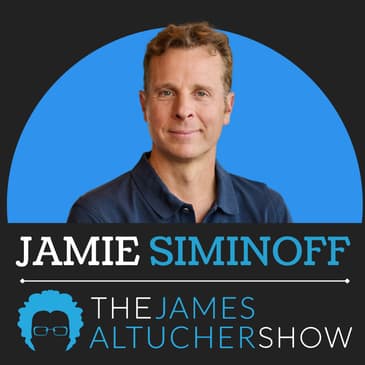



A Note from James:
Imagine going on Shark Tank in front of Mark Cuban, Mr. Wonderful, Lori Greiner, Robert Herjavec, and the rest of the Sharks. You’re offering 10% of your business for $700,000, which values the company at $7 million. They all say no. Then, a few years later, Amazon buys your company for a billion dollars.
That's gotta feel really good, and that's the experience of our next guest, Jamie Siminoff.
Jamie built the company behind the video doorbell that lets you see who’s at your door—Ring—and helped turn a simple household object into a home security platform. He went on Shark Tank in 2013, didn’t get a deal, kept building anyway, and eventually sold Ring to Amazon.
Jamie has a book coming out right now called Ding Dong: How Ring Went from Shark Tank Reject to Everyone's Front Door. What really impressed me about Jamie was the simplicity of all his business ideas, since this was his fourth business. A doorbell you can answer from your phone. A way to turn voicemail into text. A tool to unsubscribe from unwanted emails. The kind of ideas that make people say, “Someone must have already done that.” But we talk about this very thing and how critical it is for entrepreneurs to get over these feelings of like, "Oh, I can't do that."
That’s the lesson. Sometimes the obvious problem is still unsolved. And sometimes the person who wins is the one naive enough—or stubborn enough—to fix it anyway.
Episode Description:
James sits down with Ring founder Jamie Siminoff to talk about one of the great modern startup stories: a rejected Shark Tank pitch, a product investors dismissed as “just a doorbell,” and an eventual billion-dollar acquisition by Amazon. But the episode is not just about the sale. It’s about how entrepreneurs see problems before markets know what to call them.
Jamie explains why investors misunderstood Ring at first. They looked at it as a doorbell business, not a home security company. That framing made the market look tiny. But customers were already showing something different: they wanted to know who was at the door, feel safer, and use video in a new way around the home.
The conversation also moves into Jamie’s earlier companies, including PhoneTag and Unsubscribe.com, and what those taught him about declining markets, customer behavior, and the difference between a clever product and a durable business. From there, James and Jamie talk about AI, why software is easier to build than ever, why that does not make startups easy, and why simple pain points still matter.
What makes this episode useful is Jamie’s clarity: don’t start with the technology. Start with the problem. If something is broken, fix it. And don’t automatically assume that because an idea sounds obvious, someone has already solved it well.
What You’ll Learn:
- Why Ring looked like a tiny doorbell business to investors—but became a massive home security company.
- What Jamie learned from being rejected on Shark Tank while already showing real sales traction.
- Why simple ideas are often dismissed precisely because they seem too obvious.
- The difference between being an “inventor entrepreneur” and a market-first operator.
- Why declining markets can make even beloved products hard to scale.
- How AI changes the cost of building software, but not the difficulty of building a valuable business.
- Why Jamie believes entrepreneurs should focus on problems and solutions, not technology for its own sake.
Timestamped Chapters:
- [02:00] Jamie on why a doorbell sounded like a “steam engine” idea
- [02:39] A Note from James: from Shark Tank rejection to Amazon acquisition
- [04:03] What Jamie does now inside Amazon
- [04:32] Looking back at the Shark Tank pitch
- [05:51] Why the Sharks misunderstood Ring’s market
- [06:44] Doorbell company or security company?
- [07:45] Why obvious ideas are hard to see in real time
- [08:22] The objections investors kept raising
- [10:10] Simple ideas, doubt, and the fear that “someone already did this”
- [10:50] The hardest period after Shark Tank
- [11:43] PhoneTag and the voicemail-to-text opportunity
- [12:31] Why declining markets are hard businesses
- [13:16] Building products you personally want to use
- [14:00] Jamie as an inventor entrepreneur
- [14:33] Unsubscribe.com and the “gray mail” problem
- [16:27] The path from earlier startups to Edison Junior
- [17:05] How Ring came from a garage problem
- [17:40] Jamie’s lifelong habit of fixing what’s broken
- [19:14] Why naivete can be an entrepreneurial advantage
- [20:19] James and Jamie on Claude Code and AI app-building
- [21:29] Why AI’s “brain” has outrun its scaffolding
- [22:44] Coding may be easier—but deployment is still clunky
- [23:37] The future of building apps without seeing the sausage made
- [26:25] Why Jamie might have sold Ring early for far less
- [27:52] Hardware is ugly until it gets big
- [28:47] Why investors are often too early or too late
- [29:58] OpenAI, Anthropic, and whether AI becomes a commodity
- [31:48] Why Jamie expects another major AI shift
- [32:39] What happens when you raise VC money
- [33:18] Swinging big or dying fast
- [34:25] Why Amazon bought Ring
- [35:34] Choosing Amazon instead of an IPO
- [36:23] How life changed after the sale
- [37:41] Ring’s AI work on lost dogs
- [39:14] Why people do not always use obvious solutions
- [40:38] How Ring’s lost-dog feature works
- [41:23] Privacy, consent, and community video
- [41:45] Fire Watch and using Ring cameras during wildfires
- [42:57] Why Ring focuses on safer neighborhoods, not cameras
- [43:48] Building a startup in the AI era
- [45:03] Why SaaS is not dead
- [46:10] Where Jamie would look for startup ideas now
- [47:47] Why people will still pay for useful small software tools
- [48:23] Ring’s app store and the long tail of camera use cases
- [49:55] Horse monitoring, elder care, and unexpected AI applications
- [51:41] Shark Tank relationships after the Ring sale
- [52:29] Jamie’s advice for standing out on Shark Tank
Additional Resources:
- Ding Dong: How Ring Went from Shark Tank Reject to Everyone’s Front Door
- Ring official “About” page.
- Jamie Siminoff’s LinkedIn profile.
- Amazon’s article on Ring Search Party for Dogs.
- Ring Search Party / Fire Watch information page.
- TechCrunch coverage of Unsubscribe.com.
See Privacy Policy at https://art19.com/privacy and California Privacy Notice at https://art19.com/privacy#do-not-sell-my-info.
[00:00:00] Today on The James Altucher Show.
[00:00:30] We haven't fixed it yet, so go fix it. This isn't your average business podcast and he's not your average host. This is the James Altucher Show. Imagine going on Shark Tank in front of Mark Cuban, Mr. Wonderful, Lori Greiner, all the others.
[00:00:59] You're gonna sell 10% of your business for $700,000. It values your business at $7 million. They all say no. And then a few years later, you sell your business to Amazon for a billion, a billion dollars. That's gotta feel really good. And that's the experience of our next guest, Jamie Siminoff. He built up the company Ring, which is that doorbell combined with video. So you see who's at your door and it's a good security type doorbell. And there's so many other use cases for it.
[00:01:28] He was on Shark Tank back in 2013. They all said no to him. Millions of sales later and Amazon comes along to buy it for a billion dollars. What a great story. Jamie Siminoff, he has a book coming out right now called Ding Don, how Ring went from Shark Tank reject to everyone's front door. And what really impressed me about Jamie is just the simplicity of all his business ideas. Because this was his fourth business. There were other businesses. And I always think with simple business ideas,
[00:01:58] oh, somebody probably already did that. But we talk about this very thing and how critical it is for entrepreneurs to get over these feelings of like, oh, I can't do that. Anyway, we talk about a lot of other things that are also mentioned in his book. And here's Jamie Siminoff, founder of Ring, which sold for a billion dollars to Amazon. Well, now you're not in your Amazon office right now, right? I am, yeah. Oh yeah? That's your office? That's my office, yeah.
[00:02:28] And so like on a typical day at Amazon, what are you doing? It's funny, like I don't, I'm not like a, I've never been like an operator of a company. So like I don't, you know, it's not like I like meetings or anything. I try to do like zero recurring meetings, any of that kind of stuff. So I mostly like build shit. Like it's kind of physical products, features, fixing things. Like there's a lot of shit that's always broken. Okay.
[00:02:54] I cannot get over on that Shark Tank episode that you were offering basically 10% of the company for $700,000. And, you know, Mark Cuban as just an example said he didn't see this being an 80 or $90 million company and boom, you sell for a billion. Like, but at that moment, what were you thinking? Oh shit. Um, I mean, you know, it's funny.
[00:03:21] It's like, I didn't, there's so many different types of entrepreneurs. Like I'm not the confident one. And so as much as I was still driving it forward, I was kind of like, you know, when Mark Cuban's like, I don't see this becoming a big company. It's like, that's not a good sign. Like that's, that's not good. So I did like worry about that. The good news for me was I was already too far in on the business. Like I was, I was in the only way for me to get out with any skin left on me was to,
[00:03:51] to make this thing somewhat successful. So I didn't have a choice to stop. But when I left Shark Tank, if I, if I could have, I would have, I would have, I would have left the, I would have been done. I would have gotten out of it for sure. Here's what I don't understand. Like I've watched a lot of Shark Tank episodes and, and I, I've actually had most of the Shark Tank people on this podcast. Yeah. You were coming in there with a $3 million run rate. You said the prior year, I think you said you had a million in revenues, but just the last month you had 250,000 in revenues.
[00:04:20] So you're showing growth. You were offering to sell equity at only two times sales, which is like a ridiculously good deal on Shark Tank. And I just don't understand the math of why they would reject this. I think you have to like put yourself back in that time, which was the, every investor had the same thing. It was like, what's the total addressable market? You know, the TAM. And it turns out that the way they do TAM is you take the doorbell market and then you take a percentage of the doorbell market, which is what I could get.
[00:04:50] And that's it. So like the doorbell market, everyone was figuring the doorbell market was like less than a hundred million a year, which is probably true. And that I would, you know, be maybe 10% of that. So you're like a $10 million a year business. What if you had reframed it as the security market? I don't think at that point, anyone would have believed that it was a security product because all I had was the doorbell. Like, so I think it's like, you have to also like, no one, I believed it was going to be a security product and a security company at that time. I, again, it just, no one believed it.
[00:05:19] It's, I mean, if, if they did, I would have been able to raise a lot of money and I couldn't raise money for the company for years because every time, every time I hit, it's like, it's again, it's so funny when you go backwards in history, when I hit 30 million in sales, people are like, well, that's it. And then you hit 170 million sales. We're like, that's it. Then it is like at every level is like, well, you capped it out. Like you got all your customers. It's like, no, I didn't. I mean, I know it's easy to say in hindsight.
[00:05:46] So credit to Mark Cuban, Lloyd Greiner, you know, all of them. But it does seem like, oh, if the whole addressable market is a hundred million and he's on a run rate of 3 million already and he doesn't, he barely exists. That kind of gives the message. Something weird is happening here. But again, it's easy for me to say in hindsight. Again, I think, and I do think like you have to put yourself back into this, which is like a doorbell.
[00:06:12] Like at that time, making a doorbell sounded like you were making, like if I said, I'm going to build steam engines right now, you'd be like steam engines. Like it just didn't. I think the problem was like people just like, like I would literally tell people, yeah, this is what I'm doing, whatever. And they'd laugh and say, no, really? What are you doing? When you describe it, for instance, you describe it. Your wife says, oh, this would be great. Hey, it would make me feel safe. Like if you were to describe what you were doing, it's like a daily occurrence. Someone rings the door.
[00:06:40] You want to see who it is and you're up snared. But the people were like, the doorbell's gone away. No one uses the doorbell. I mean, you can't, you, again, like you, like every VC meeting I had, like it's incredible how things played out versus what they sort of in that moment, it was like the doorbell's going to go away. Why would people keep it? It's an 1800s piece of technology that no one wants anymore. Everyone has your cell phone. Like it was like, I got that. Everyone has my cell phone. They just call me when they get to my house. They don't use the doorbell.
[00:07:10] Oh, okay. You know, so there was just, it is like, it is just very funny that like, but the other one I got, so I got, there's not enough internet bandwidth to do cameras for people. Okay. Smartphones were only like at the time we were doing this, like whatever, 30% penetrated. It wasn't clear that they were going to be like a hundred percent penetrated when we started this. Okay. And so people were like, what are you going to do for all the people that don't have smartphones? Like I, I literally, I'm like, what?
[00:07:38] Like, and, and again, you know, Robert's response in Shark Tank that was almost in the other direction that it's too technically savvy. Like he was worried. Unlike an ADP solution, it could be hacked because it's on the internet. Yeah. You got that. I mean, it was, it just was, I mean, it's like, I think a lot of these, like, why did anyone else build electric cars when Elon was doing it? Like, you know, it's like, it was obvious. Like he put out the math of what it, how it worked. Like, he's like, if you use these batteries in this engine, you can get this much power.
[00:08:08] And everyone's like, no, you can't. I mean, it wasn't like, I'm saying, but like these things are like, they're incredibly obvious in hindsight. And they're, this is the frustrating part. They're like super hard to get, you know, it's like why you need passionate missionary entrepreneurs because they're, they're just like, I don't know. They're just like super hard to see, I guess. Listen, I was on the other side. Like I was like literally dragging myself out of VC offices, like someone's leg is telling me I have to leave.
[00:08:37] What I love about the idea, and this also applies to the ideas for companies you had that you sold before you even started bringing unsubscribe and the phone tag businesses, which we'll talk about in a second. Like there's a certain simplicity to your ideas that I want to like, sometimes when an idea is very simple, like my gut reaction is, oh, someone must have already done this. And so then I give up instantly, but, and I want to get to that in a second, but just
[00:09:04] right after Shark Tank, what was like the most hopeless you felt during this period? Uh, God, I mean, that's, that's a, that's a good question. I mean, like I was kind of hopeless. It's so hopeless the whole way through. I mean, after Shark Tank, I mean, definitely shipping door bots was pretty tough. I mean, we were shipping a product that like, was really challenged.
[00:09:27] Building a complex hardware product at any time, but I would say, especially at that time was, you know, was, was, was, I would say very tough and, you know, like, and, and God, like the amount of problems we had with it. So yeah, that was, that was tough. Getting it out there, returns. I mean, it was, it was a, and then you're, while you're doing it, it's like, it is changing the jet engines mid flight.
[00:09:51] Like we knew we had to fully rebuild it while we're trying to support selling the current one, which we know is super challenged. So it was, it was a really like, that's a tough place to be. Well, okay. So your, your first couple of businesses, let's talk about them. Like again, so phone tag, I think that's the, the voicemail to text. I just even hearing that idea that you built it and, and did something with it. Like, why didn't somebody do this? And I'm thinking to myself, why did I do this in 1999?
[00:10:21] Like it's such an obvious thing in retrospect. What happened? How did people go with that idea and then build it? Definitely. It was a, it was certainly a opportunity hiding in plain sight. The problem with that business. So the business is great. And people love the product when you had voicemail, you know, and you had a Blackberry, like it was like, that was the, the crossover was Blackberry and voicemail. Because as soon as you got used to a Blackberry and you were getting voicemails, like when you could put them together, that was like that, you know, that basically lit it up. Like it was like lit a fire.
[00:10:50] And I learned this is no matter how big a market is, if it's declining, it's very tough to create value in a declining market. And voicemail was, you could see it, you could chart it out. Like it was going away to text and to emails. I mean, it still was going to exist, but the importance of it was sort of going down, which meant your acquisition opportunities, your like, everything sort of was like on a downward slope.
[00:11:16] And so it was very, very tough to build a business in a sort of, in a declining market, even if it was a huge sort of ocean you were building into. I'm almost wondering if the psychology is, hey, I'm going to, I'm going to build something that I would use right now and let my friends and whoever else use it. That's what I kept kind of doing. Yeah. I mean, that's how Uber got started.
[00:11:39] I mean, you know, they built Uber in essence because like they were a single guy living in San Francisco and it was cool to get picked up in a black car from an app. And so then they gave, like, I don't think it's that public, like they gave a bunch of friends equity in Uber just to use it. The original Uber, there was like 10 people that got equity in Uber just to, because they just wanted them to use it. Like Garrett Camp was giving out, you know, equity just to get friends on it.
[00:12:07] So, and again, no one saw at that point, it was like just a fun polar trick of a business. And now it's what it is today. So I do, like, I do the, and again, like I said, I think there's different types of entrepreneurs. I'm more of an inventor entrepreneur, which is someone who sees a problem and launches something versus the people that are much more, there are people that are much better at like studying the sort of the business side.
[00:12:33] And they usually do better from a financial side because they're good at like building these things into the right thing. Like they understand like how to sort of from like start to finish how to do it. I just love solving problems. And so the doorbell, phone tag, like all that stuff was just, you know, unsubscribe.com. Didn't you think anyone else had done an unsubscribe spam type of product? In fact, if you look like your email box still to this day, like spam, spam is solved.
[00:13:03] Like actual like bad spam that's like, you know, trying to like take yourself is basically solved. I mean, like you used to get like a, your inbox was full of it. And then all of a sudden, you know, Google and these guys figured out great algorithms and you really don't see any like what we would call spam in your inbox anymore. But yet more than 50% of everyone's inbox still to this day is, is gray, which is the stuff that you are.
[00:13:27] It's like legal mail, but it's like stuff that you would unsubscribe from that are these newsletters and, you know, things you bought something and now they send you mail. And, you know, people just delete it. They don't unsubscribe from it because it's a pain in the ass to unsubscribe. There is sort of links and, you know, some of the Gmail stuff that kind of work, but they don't really. And so, yeah, we came up with this idea to, you know, and this is pre-AI. I mean, if, if we had come up with that, if we had done that with AI, I think it would have been a little different.
[00:13:56] Though I will say the learning from that business was people don't pay for like, it's interesting. Like their, their time that they spend on something like that, they will not pay to get back. Like the aggregate amount of time spent like managing your inbox is astronomical. Yet companies and individuals will not pay for that time. It's like, there's something about it that's like been set to free. And so they just won't at scale. They just will not part with money for that thing.
[00:14:27] Like they won't pay even like three or four dollars a month. Like I just, it's like email is free and I'm not paying anything for it. Even if an hour a month or something or two hours a month, I'm sitting there deleting emails from whatever company that I should have unsubscribed from. And so when you first sold, you sold phone tag first, right? If you go back, I mean, out of college, I started doing business plans for people. And then I got into this like global voiceover IP gray market telecom.
[00:14:55] And then I merged that with a guy doing phone cards. And then I sold that and started the phone tag business. And then I sold phone tag and started this unsubscribe thing. But none of these were like great sales. Like, I mean, they weren't like, they were like, I was like, you know, they were kind of like salvage sales.
[00:15:15] And then when I sold unsubscribe.com, I was like, I'm just going to my garage and I'm just going to like build, I'm just going to work on my own, like my ideas and whatever. And so I created this little lab called Edison Jr. And it was doing that, that I couldn't hear the doorbell. And that's when my, which is a funny thing is like, you know, the ring was actually not the product from the lab. It was like the solution for trying to answer the door in the lab.
[00:15:43] You know, like I was working on all these other ideas. So it actually, it kind of like wasn't one of the ideas for it. It was, it ended up being this, this thing that like was really just by being in the garage, I couldn't hear the doorbell. So you felt like this angst, this pain that you wanted to solve. Yeah. And in all my life, I mean, since I've been like literally like my earliest memories, like I would, if I saw something, if there was like, if I hit a wall or I saw something that needed to get fixed, I fixed it.
[00:16:12] Like, it's just what I do. Like I literally, like from the earliest ages, like I had, you know, I'd remote control cars at my, as a kid. If there was like a tool that I couldn't, you know, you, like if I was trying to take something apart and I didn't have the right tool, I'd build the tool. Like I just was someone who, you know, would see a problem, see something and I would just kind of fix it.
[00:16:35] And so it's, I always think like I'm lucky that I made it in terms of from a business side because I'm, I really am not focused on the business. I'm focused on the solutions. And a lot of times like those people are not like successful business people. I think I, I sort of got lucky in the end. I really liked this concept of being as simple as possible, hitting like pain points, not necessarily being afraid.
[00:17:02] Like I remember talking in 2001 or 2002 about the spam I was getting in my email. Not, and I agree, not, not the area. So just spam then wasn't necessarily solved. But I was, I remember specifically thinking like, oh, this is, or my friend who I was talking to said, oh, that problem has been solved. Like you don't start a company with that. And I just would give up. And instead it's these simple ideas. Like, like Uber too is like a simple idea.
[00:17:29] Why can't I just use my phone to get a cab basically? I think, I think, and I even struggle with this now because like where, where I've gotten to and the people that I'm around, I think that there is something about like being naive and not understanding anything about the world is better than understanding it. Because like even with AI now, everyone's like, oh, this is done and that's done. And I'm going to, I'll guarantee you that there's someone who's just like, F it. I'm just going to build the, another coding platform.
[00:17:59] Even though everyone's like, oh, you know, XYZ has that or cursor has it or whatever. And they're just going to like do it and just do it first principles. And it's just going to work. And I think like the, oh, it's almost like in some ways, the more we know the, the least dangerous we are. Like it's, it's like, there is a benefit of just being like naive. And if I do look like a lot of the stuff I did, people would have said, you're right. Like they would have said like, that's done or this is done or you can't do it. You know, it's like this, all this, all the rules, like, like, like the world has created so many rules.
[00:18:28] And the reality is if someone's, if you see a problem, usually it's because someone hasn't fixed it yet. So go fix it. And you learn as you go. I mean, yeah. It's funny you bring up the code example because for the very first time, just yesterday, I taught myself how to use cloud code. I hadn't done any sort of AI coding. So awesome. It really is awesome. But I found like there was all this workflow. Okay, you got to set up your GitHub and then a place to deploy it like Vercel. And then.
[00:18:58] Oh, that's crazy. I had to cut and paste, you know, API keys for the different things I was, I was building into, I guess, the Vercel environment variables. And so I asked Claude at the end, how can you take this entire workflow and automate it? Because this was already too difficult for me. And Claude was basically talking me out of it and saying, look, you know, try V0.dev. This is just this morning. Try V0.dev. We're lovable. They'll do it. It's not a weekend project. Don't fool yourself.
[00:19:29] And I was thinking, well, but then Claude said, but all the app, all the app keys, all the API keys. No one's really done that, but that's really hard to do. And I'm like, really? What if you just asked me what the API keys are? I put, cut and paste them in. So it's true. But it's funny how even the AI will try to talk people out of doing this good life.
[00:19:48] And you're right, it is still like, that is still crazy clunky for where we're at in terms of like, and it is like, it's like funny, like with AI, the brain is now so smart that the scaffolding hasn't been built around it. Like the simple things. Like it's actually like very easy to build systems to turn up AWS instances. And like, that's actually very easy. It's like, but it's the brain has moved so much faster than the scaffolding that like the scaffolding hasn't caught up yet.
[00:20:18] Like the plumbing, like it's all these like infrastructure things around the brain have not caught up. And so, yeah, but I mean, it will, but I do think, yeah, like there's a huge opportunity for just go to a place and type it in. And it's like, like, why do I need to know where it's being stored or what's running? I don't care. Like, I'm just trying to build it. I want to build an app. Like, I don't care what the backend is and where it is and how many instances it has. Like, it's going to cost me 300 bucks a month. Okay, here's my credit card. Yeah, I agree.
[00:20:48] And I don't want to have to figure out all this stuff. And then it had me booting up my terminal on the Mac. I never did that before. I'm using some Linux shell, I guess. It got to be pretty complicated when it's supposed to be super easy. Yeah. And I think, I mean, what it has done, and this is the crazy thing, it's made the coding, like the science part is now fixed. Like, you can, it'll code like a super complex app, which is like, that's the, in essence, the hard part.
[00:21:15] What it won't do is, yeah, like set up the environment for you and run it, which is kind of like, it's more like, that's like more color by the numbers. Like, that's actually not that difficult. It's a good job. It needs to be done. Okay. So we're going to go start, we're going to start that company. There we go. Perfect. We got this. I'll send you the first draft today. All right, I'm done. Like, it's like, you know. That was the goal of this podcast, was just to get you. Excellent. All right, sending in my resignation. We're starting this very simple. Yeah. Like, yeah.
[00:21:43] Although, I still am going to try Claude's recommendation of, you know, maybe you should try these other apps that are already out there before you start working on yours. Like, it's literally trying to dissuade me by recommending another app created by Anthropic. Yeah. And there are like, I mean, there are like definitely, like, Glovable, like you mentioned, is a great one to do it. But I do think, you know, again, in a year or two, someone will have it where there's like, or maybe by, it might be with the speed of AI, it might be in a week. Like, you just go to a place and it's like, you put your credit card in
[00:22:11] and then you just have a box to put what you want. And it just gives you what you want. Like, it'll just give you the iOS, the Android, the website. Like, you won't know anything what's happening behind the scenes. You won't see the coding. Like, because right now you're still seeing, like, they're showing you, like, the sausage being made when really, like, we're just customers. We want to go to a restaurant and eat sausage. We don't want to, like, watch it being made. Right. Exactly. Like, okay, I have a background in coding, so I don't mind seeing the reams of code it puts on the screen.
[00:22:40] But nobody else wants to do that. That is not why they're sitting down there. Exactly. And so I think it will be, it is kind of like the restaurant thing is, like, someone, they haven't built, like, the place that you sit and you look at the menu and you tell them what you want and it comes. Like, that's what you want. Like, you're not looking at, like, what ingredients. You don't care, like, what type of stove it's cooked on. Like, it's just like, give me my pasta. Take a quick break. If you like this episode, I'd really, really appreciate it. It means so much to me.
[00:23:10] Please share it with your friends and subscribe to the podcast. Email me at Alcatra at gmail.com and tell me why you subscribed. Thanks. Running a small business, let me tell you, it's tough. And when it's time to get a loan, it can feel impossible to find a lender that you actually trust. Big banks will say no.
[00:23:37] The internet is just filled with sketchy, sky-high rates and the fine print that you can barely read. And whether you need help covering payroll, managing cash flow, investing in growth, you really do deserve better. And that's why I recommend the small business marketplace, Fundera, powered by NerdWallet. It's a free, easy-to-use platform that lets you compare real financing offers from trusted lenders all in one place. What I like is that you don't need perfect credit to get started on this. Believe me, I like that.
[00:24:07] There's no spam. There's no bait and switch. Just personalized options that fit your business needs. There's plenty of times in the past literally 30 years where I could have used a product like this. For instance, after I sold a big deal, but I hadn't yet hired the employees to fulfill on that deal, I could have borrowed some money for a short term to finance the funding of the project and so on. But there was no product like that that existed. Now this product exists. And I'm so jealous of current entrepreneurs who get to use it.
[00:24:37] And here's the best part. For a limited time, when you visit nerdwallet.com slash James and fill out the no obligation form, you'll get the VIP treatment. You'll talk with a real person who knows all the ins and outs of small business lending. Do not risk your business on unreliable lenders. Go to nerdwallet.com slash James to find the funding you deserve. Fendera Inc. NMLS ID number 1240038.
[00:25:10] The other problem I find I have with ideas like this, like, you know, you described how the doorbell market might not be, okay, in retrospect, we now know it wasn't really a doorbell. It was a security thing and it's a huge billion dollar market. But you didn't really know. And everyone's telling you, hey, okay, 30 million says you've maxed out. You should probably sell the company. Like, if someone had come along pretty early on and offered you, hey, 50 million for the company. 50? How about like 5, 10? I mean, are you kidding me?
[00:25:41] Like, I remember when I sat with ADT, this guy Noreen Gersani, he was a great, like, he was the CEO of ADT at the time. Great guy. Still a great guy today. When I sat with him, I remember telling my wife, like, something like, basically, like, try to sell it for 10 million. I didn't say it like that clearly, but I'm like, you know, it was like, this guy would give me 10 million for this thing, like, and I can go to ADT, like, I'm out. Like, this is like great. And, you know, he didn't, again, he was super gracious and nice and helpful, like a great person, but he didn't see the value in it because if he did,
[00:26:11] he would have bought it on the spot. I mean, ADT was 50, 100 times bigger than me. And I would figure you're, look, you're really great at hustling and taking advantage of the opportunities in front of you, but you were focused, of course, on sales of, you know, the product. You had focused also on selling the company. Do you think you could have really gone all out and, like, sold it for 10 million? You know, particularly when you're at a three, four, five million dollar price. I don't think so because it was a pretty, you know, hardware.
[00:26:41] The problem with hardware is that the, that your costs, like, it's like an ugly business inside. Like, it's like, until they get really big, they're kind of ugly. And so, you have to really have gotten someone, I mean, like, ADT was probably the one place that would have bought it. You needed someone to believe that it was going to attach into their business and be super valuable. And I think it was just really hard to get anyone to see and understand that. What were your attempts at expanding beyond, let's say, the doorbell? You know, for instance,
[00:27:10] there's the nanny cam type market. I mean, we started to, it's, again, it's so funny. It's like everything we did was like, well, you're only going to do this. It's like, it just was like, we were, in a good way, we were probably just, we were early enough that the investors didn't see it, but late enough that customers were buying it. So, we were kind of in this, like, perfect slipstream of, you know, it's like investors probably want to invest too late in things. And, you know,
[00:27:40] customers are sort of in this, so like, you know, on the timescale, you could be so early that customers won't buy it and investors won't invest. Actually, I shouldn't say that. What's funny is when you're too early, investors want to invest in things too early and they want to invest in them too late. They usually never do it right on. Like, they're almost never like in the middle. Like, yeah, they're either too future, like, oh, this is going to be the future and we're going to like put all this money in or they're too late. And I mean, yeah, AI we're going to see, but it does feel like
[00:28:09] you're seeing a lot of these similarities where they're probably investing too early in companies right now at too high evaluations because like, the concrete hasn't settled yet. Like, it's still wet and yet they're putting money in as if it's like the building's already up. I mean, you're seeing valuations, you know, tens, hundreds of billions of dollars for companies that, you know, and I'm not talking about the big ones. Like, there's just, there's like a whole slew of these other ones that, you know, this stuff could move around very fast again.
[00:28:39] And so, I think you will see these like different, you know, layers of it. What do you think about that? Like, OpenAI, for instance, trillion and a half dollars and I'm not saying their product's not valuable and they don't have, I don't know, hundreds of millions of customers, but at some point it's a commodity. Like, you know, between OpenAI, Anthropic, you know, Google and a few others, they're kind of jumping over each other with the best product out there. There's no brand loyalty. So, you're only, you're either the best
[00:29:09] or you're zero in some sense. And how is this going to play out, do you think? Like, what do you see, you know, in the next couple of years with these big companies? I mean, the one thing you do see with OpenAI and with Anthropic and a few of them is like, you do seem to have great entrepreneurs running them. And I mean great from like the execution entrepreneur. Like, they seem to be doing like an incredible job, like the people running them. I would say overall, I mean, my long-term belief is like, you know,
[00:29:36] science and like intelligence usually trumps everything. And so, I just feel like the idea that no one is going to figure out how to build something like this for a lot less that's a lot better just doesn't seem to track to everything else that's happened in the world. So, I do think there's going to be a lot of sort of still, I think there's still a lot of turnover. That said, these companies could still be worth trillions of dollars. I mean, it's like such a big thing that you could still, you know, like you could still have Anthropic
[00:30:06] and OpenAI being worth a trillion dollars and XAI. Like, I mean, so you could still have all of that happening, but I think there's still going to be new entrants coming in that are going to change the way they do this. I don't think we've settled yet. Like, I just, the idea that like we've just come across this incredible new way of doing everything in technology and that it's going to just sort of now stop and this is what it is and it's going to go many years just doesn't make sense to me. So, what do you think
[00:30:35] will be the next generation of this? I mean, I wish if I knew that I would be, I would actually be doing that if I knew that. I just, if you track everything else, I mean, you look at like the internet, like it's, you know, the Yahoo's and what, you know, Lycos and all these companies were doing it one way and then, you know, the Google guys sort of figured out a totally new way to do it at a different cost basis that was, you know, kind of transformed it and it was like the second round. And so, I do feel like there's going to be some technology science.
[00:31:05] It's definitely not coming from me. Like, I'm not, I'm just not that smart on that. But I do, I would not be surprised if we find that like some AGI thing comes out of somewhere from left field that's just different. And, you know, and again, like power utilization wise, everything else, like I just wouldn't be surprised if something changes with that. And, you know, so, so at some point you brought on VCs, you did your crowdfunding, you raised money. And once you bring on VCs,
[00:31:35] you kind of have to keep building value. You can't just sell for 10 million because they just put money in. So now you have to build. That's sort of, that's sort of good and bad. Like it almost tricks you sold. Because maybe you would have sold it earlier. Yes, which is so funny because I will talk to entrepreneurs who like, they kind of want to have like a family small business, but yet they also raise VC money. And I'm like, once you raise VC money, like you are lighting the rocket. You either blow up or you go to the atmosphere.
[00:32:04] Like you go into space. Like when you raise VC money, you really have just two options, which is like death or massive success. Because anybody, that's to align with VCs. Like VCs don't want, you know, 20 companies that are on life support like for 20 years. Like that's terrible for them. Like they don't want just sort of like GDP growth companies. Like they need stuff to either be rocket ships or for them, honestly, clearing off the deck so they can get more time is good also. And,
[00:32:34] you know, one of our, our like, you know, the sayings we had inside the office, we were in Santa Monica. And I'd always say like, if we go out of business, I want to be a hole. I want to leave like a hole in the ground so big in Santa Monica that it's never filled. Like if we go out, like we go under, I want it to be known that we went under. Like I want people to never forget like that, you know, that ring was here. Which, but again, what's funny is it actually aligned with our investors. Like they wanted us to swing big and go for it. Like they weren't giving us
[00:33:04] $10 million to, you know, try to slowly burn it down over five years. Like they wanted us to swing for the fences and we swung. And you did. And then of course, Amazon comes literally knocking on the door and, you know, why did they want to buy it? Like what, what were your first, like, did you start daydreaming? Oh my gosh, they're going to buy this for a billion is Amazon. Like what happened? I mean, I was, I was actually, I want, I, it's again funny. I wanted to take the company public. It's 2017.
[00:33:33] We're doing, we're that year we did 480 million. So we were like, we were like a decent sized business. We were losing a ton of money. The IPO market, like all the bankers are like, yeah, you can't take companies like this public, which they were so wrong. Like looking back, they were just so effing wrong. Like, which is why like analysts and bankers, and I'm just like, I just, like they just, whatever the wind, whatever direction the wind is blowing, it's like, that's usually where they're going. And so you look, it's like one of these bankers should be like, yeah, we'll take you public. Like, this is awesome.
[00:34:03] Like, let's go. And instead of like, oh no, like you can't, it's just not what's happening. So we were trying to go public. We ended up raising, basically raising our pre-IPO round. And while we were doing that, Amazon had, they were an investor in the business. So they were kind of watching us and we were working with them and doing all sorts of stuff. And I think they realized that this was going to be like, the end of 17 was kind of the, like, you kind of had to do it or not do it. Meaning like, the company was either going to really work, which is possible
[00:34:33] or it wasn't. But if it really worked, it probably was going to escape their sort of value for this type of business that they would buy. And so yeah, we like, they kind of said, hey, listen, we'd like to do this. And I, for me, I just wanted to, part of why I wanted to IPO is I just wanted to keep going. Like, I just, I just, I just wanted to keep in the business, which I now have and keep building it and keep, you know, the mission, make neighborhoods safer. Like, I just wanted to keep sort of pushing it. And I was like, well, Amazon will let us do that. So let's, let's go. And, and yeah, I mean, listen,
[00:35:03] the billion dollars was not a, you know, for a kid from Jersey, it was not a terrible, you know, terrible thing to see. And how did your life change once that deal closed? You know, it's what I think my life, I mean, certainly the stress, which I had had for a lot of my life as like a sort of a startup founder entrepreneur, there was a stress that like you're going to lose everything. Like literally like the house kind of thing. Like, you know, it's like I didn't have a safety net under me. You know, I was like a tightrope walker with no safety net.
[00:35:32] So if I fell like, yeah, like you actually do like, I mean, you don't die. You come, you can come back, but like you could definitely like have a impact that would be pretty hard. And especially, I got a family, like a young, you know, young son at the time, wife. And so it's like, that's pretty hard. You know, hopefully you've invested well enough. And, you know, I think I have that like, you kind of at least like, there is a safety net. So if I fall, like I'm going to get caught. And so I think that's the biggest thing. For me, I kept,
[00:36:02] I kept, you know, I'm an animal. Like I kept going, like I kept fighting and kept working. And, you know, the day after the sale, like I was in there working as hard as I was the day before, maybe even harder. And we built, have continued to build ring at an incredible clip and, you know, products and everything. So I, I'm like super, I'm proud of that. I like to build stuff. So I still like that, that didn't die off with a sale. So. And now with, with Amazon, you're working on, uh, again, something which I think,
[00:36:31] I feel like has already been developed before, or maybe not. Like the idea of finding lost things. Like, is it there wasn't, isn't, didn't Apple make like tags you put on things you don't want to lose? So it is funny. So I'm in a meeting and I'm talking about like, we're going to do this lost dog thing. And someone says, well, why don't we just put, you know, Apple tags and GPS and collars on dogs. And it's like, again, I think this is the problem is like, you overthink it. Like, but all those things exist today.
[00:36:58] Yet there's a million lost dogs still every year. So it's like, yeah, like, sure. Like, but I, I wish I, it's one of those things where it's like, yes, like we have this lost dog finder using cameras. It would be great if every lost dog was found immediately because they're tracked. They're just not. And so instead of me sitting here and being like, put trackers on your dogs, which people are just not doing like you need to solve the problem. And yeah, sure. At some point, I guess people will put trackers on every dog. And that's great by the way.
[00:37:28] Like I don't want any dog to be lost. Like pets are like family members. I mean, my dog is like a family member for us. So I don't want it lost, but there's lots of reasons why pets get out. Even people that try to have trackers on them, they, the batteries die, whatever. And so you need to have this lost dog thing. So you're right. It is funny. Like, I mean, one of the first things I faced was people would say when we wanted to build this, even internally was like, why don't we just build another collar for the dog? And I'm like, well, they're out there and obviously they're not being used.
[00:37:58] Yeah. So, so yeah, why aren't people using Apple tags on their, on their dog? It's because humans are, we're broken. I think, I mean, I think that's also something that as an entrepreneur, you can like, I think we come from it as the world's perfect. That if you build a product or have a solution, people will use it. I was involved in this thing called flow, which is a water regulator, like checks for leaks on your house and ended up selling to Moen. I was, I was an investor in it.
[00:38:27] And you know, when people buy like, this is back then. So I don't know what it is now. But like when people would buy the product from us, this is a leak detector. So they're like, stop a leak in your house. When would they buy it? When do you buy a leak detector? After the leak happens. That's exactly right. That is exactly right. They buy it. Like their house gets destroyed. They're out of the house for six months. It's getting rebuilt. Now they buy a leak detector. And so it's like, you know, I,
[00:38:56] I think humans were just, were not rational. And so I, you know, like, yes, like people should have trackers on their dogs and I shouldn't be able to have any business doing anything with finding dogs. But yet there's, you know, we're reuniting over a dog a day right now on our system. And so we're doing it. How do you address the market if the market has, is kind of upside down like that? Like how do you do things differently than what Apple's probably doing? I mean,
[00:39:23] so what we do is like you post a picture of your dog missing in the neighborhood. We then look for it on the cameras, the ring cameras that are in the neighborhood. If we find it on like your camera, it's like, James, this dog, like missing in the neighborhood looks like this dog in front of your home. Do you want to call the owner? Do you want to call the person for that dog? And you get to choose, but this is also what's great. It's like, you also have your privacy. So if you say no, I mean, I don't think you're a really great person,
[00:39:51] but you can say no and you're anonymous and no one ever knows that you saw the dog. If you say yes, and you call the person and you talk to your neighbor and say, Hey, I think your dog is here. And when you reunite the dog. That's great. What other uses can you do? Kind of this aggregate public video you have,
[00:40:21] like what else can you do? Yeah. And so what we have done with that is again, we look at it as like, you have to have your privacy and your anonymity. So like you have to be able to choose to enter into the situation at each time. So when there's something happens, you choose to do it or you choose not to do it, or you just don't do anything and you're, you're private and you're anonymous. So we never sort of just do this. We're doing it with fires. So again, the Palisades fire in California,
[00:40:50] we had over 10,000 cameras. We now have a thing called fire watch, where when a fire happens in an area, like a big event, we ask you like, would you like to join in to help the authorities and everyone else? Like with the fire mapping and, you know, sort of in essence, donate your cameras for 24 hours to our AI to do this. We look for embers. We look for fire. We look for smoke. And then we report it up to watch duty, which is what is in all the command centers and all that stuff.
[00:41:20] And basically build a much more real-time fire map, which helps them deploy the resources better. We do it, you know, again, like it's, it's the, the ring customers are doing it, but they're able to make the choice, the time of the fire, which by the way, like when there's a fire, I can tell you you're very motivated to help. Yeah. And so, so what about like cameras on things other than the doorbells? Like, you know how Tesla has the cameras on the cars. So you could see if someone keys your car, you could see who it was,
[00:41:48] what other products or what other things do you want to put cameras on to maybe again, create this big aggregate video that has these other use cases. I mean, we're very focused around the home and neighborhood. So like, that's definitely like our, our, you know, like there's, this is where I think, you know, again, where companies, entrepreneurs, startup founders go wrong is they focus on the technology and not on the solution. Like I'm my, my, I'm focused on making neighborhoods safer. I'm not focused on cameras.
[00:42:18] And so when cameras can help make a neighborhood safer, great. We'll make a camera for that. A floodlight camera, a spotlight camera, you know, a doorbell camera. Like we'll make those things. We'll make them in power over ethernet, make them in wifi, make them in battery, make them in solar. But we're not focused on the, product as much as we're focused on the solution. So it's not like I'm trying to find places to put cameras. Like I don't care where cameras go. I just want to make neighborhoods safer. And it turns out that cameras for a lot of things are good for that. A lot of different ways. You know,
[00:42:47] we talked earlier about how easy it is now to make software, at least it's like a thousand times easier than it was three years ago. Do you think for entrepreneurs, does that mean focus more on like hardware type technology, things that are hard to make? Like you still have to actually make them as opposed to like software companies. I think how hard it is to build a business will be the same. And so I do look at it as like, it's very similar to children, which making the children is very fun.
[00:43:17] It's gotten easier to make the children basically, which is the startup side. It's still very hard to raise a good child. Like that, like, so the second part is very hard regardless of technology. And so I think, yes, like getting an app built has gotten easier and easier and easier to the point of like you this weekend, like you were like, do, do, do, do, And like you built an app, but making that app have value is I think equally as hard as it was at any other time.
[00:43:42] I would say it's probably economically takes less money in a lot of these areas to do it, which means you should be careful with how you raise money because again, like the leverage on that might be different. But if you're like a startup entrepreneur, I wouldn't be scared of anything. Like I think being scared of SAS is crazy. Like these companies, it's like, Oh yeah. I mean, Salesforce is like way down. It's not only worth a hundred billion dollars or I didn't know whatever it's worth. It's like a hundred billion dollars.
[00:44:11] If you're a startup person, like that's a lot of money. So I just wouldn't, I know don't raise then a billion dollars as your seed round because that, like the, the, the leverage on that might be off. But if you're starting a business with four people and you're trying to build some SAS thing, like you don't need to like do that much. Like you do 30 million a year. The company's probably worth a hundred, 150 million. You own, you know, 60, 70% of it. Like it's not a bad day.
[00:44:41] And so I just think it's like, don't overthink it. That's a really good point. So again, the, the idea that entrepreneurs should still focus on kind of their pain points, simple solutions. Don't be afraid of everyone who says, Oh, that's already been done 67 times. Like there's still these opportunities out there. Like if you, like right now, if you were to start a new company and, and look, maybe you're, you do have this mindset right now within Amazon, but which areas would you be looking at? I mean, my problem is like, I'm actually like, I'm not.
[00:45:10] So like, it's like, but like I would be looking at like, there's so many little pain points that I think you can solve by building these like point-based AI solutions. I actually would be looking at SAS. Like I, I'd be going, I'd be going right at like, this is, but this is also my problem. Like I'm a contrarian. So I, I would go right into this. I'd like fly right into the sun. When everyone's saying that software is worth nothing. I'm like, I'm going to fly directly into the sun. Now I would probably be, I'd be super capital efficient.
[00:45:38] I would make sure I did it with a very small team. I'd be very careful, but I would be looking for like real problems and trying to solve them. And I don't care if people say that someone else has solved it. I don't care if people say SAS is dead. SAS isn't dead. You know, charging someone a thousand dollars a month for a seat of software. That's not that valuable is probably dead, but charging them $5 a month for a seat of software. Even if you could build it yourself with AI, you'll still probably pay.
[00:46:05] There is a cost to like running something yourself. And so you'll still pay something. And so maybe it's $5 now versus 500. But if you're a brand new startup and you get, you know, 10,000 people on your $5 a month thing, like that's not bad. Like you might build a nice business and keep going. So, yeah, no, that's a really good point that, that innovate, you know, innovation doesn't have to be in a straight line on technology. It's more innovation just be on the solution. Like, Oh, the problem is not the technology,
[00:46:35] but the cost is too much or the cost is too much for a small business. And there's millions of small businesses and so on. So, so looking at the vector of what the problems are, isn't it? And I think like, don't think that just because people can type something into a computer and it builds them this solution, that doesn't mean they're going to do everything themselves. Like no one ever does everything themselves. And so again, I think that the price they're willing to pay for it will go down,
[00:47:03] but the actual market for it might grow because you like, you do have abundance of it. So like, like I might be paying for 50 different software things from small places in two or three years at $5 a month each, because these like little point based things might help me with stuff. Yeah. And then what about home with the home now? Like I obviously you're thinking in terms of like how you're going to use this aggregate video for home safety. Is there any other problem? Like you've always wanted to solve at the home.
[00:47:32] So that's what we launched an app store for ring. And the, the concept there is that, you know, we, we were always focused on like making neighborhoods safer and security, but we're seeing so much more than that. Like we're seeing when they, like we're seeing everything like the garbage cans aren't out. We're seeing it. The, you know, these bird that people actually, this is like the most popular app right now. Like a bird. That's like some special exotic bird or whatever for the area. Like a, you know, comes in flies into your tree and you want,
[00:48:02] you care about that. You want to see it. Like we don't ring is not going to tell you that, but there's literally a bird watching app now in ring that people are downloading. And like they, they pay for it by the way. And they're not paying thousands of dollars, but they're paying, I think it's like $5 a month or something. And people love it. That's the kind of stuff that's so cool is like, like, you know, small teams can build things that give people value and you can do it off of like, just like, you know, the thing about the apps that, you know, what this enabled was,
[00:48:29] was tens of thousands or millions of entrepreneurs to unlock businesses. Like, and I, I do think that's going to, we're going to see that across now a bigger vector. Like, like ring now becomes an area that entrepreneurs can build off of. And I think there's going to be more of those kinds of things. Like not, not just ring, but yeah, for the home. I mean, I think going out and building, you know, it's, it's amazing. I just saw one, I was at USC and this team of, you know, four, four kids are building.
[00:48:58] They built this app that can tell if a horse, I guess when horses lie down in the stall, if they do it too long, they're like lungs fill up with whatever. And they can like actually die. And so like, if you can tell the people that own the barn or whatever, that like, that this horse has been down too long, you can save it early. Like it's easy. You just like basically get it back up. So they just created this app and this camera thing. And so like, we're going to get them in the ring app store now. They can like, you know, you can now like have it looking at your horses. And by the way, there's,
[00:49:26] I don't know how many thousands of barns, but I can tell you, there's lots of people that have ring cameras on their horses already. So instead of them having to now sell cameras and put in stall cameras and do all this stuff, they can turn this on in, in probably in a week. Oh my God. Yeah. Also, what about, what about putting the camera on a dog? Now I'm getting back to your dog tracking. I can see exactly what the dog is doing. Like a hundred percent. And you can do all the, the health tracking and the pre warnings. And I mean, again, this is where AI,
[00:49:55] but we have like bedside is another app in the app store that does for people living, like elderly people, you know, living in place in homes. So like when they go out, it tells you if they're like, you know, are they limping a little bit? Or like they can kind of keep checking on them and comparing to make sure, like if all of a sudden they're showing signs of something before, by the way, a normal person would see those signs before like the event happens. It's like, Hey, you're, you know, your mother is, is not, you know,
[00:50:23] like you should check these images because it looks like she's starting to limp. Okay. Let me check that. And then it's like, Oh wow. Like, yeah, she's not doing well. Let me call her. And so like this, there's just, there's so many cool things like that. And there's just, you know, again, there's like a thousand on the long tail side, tens of thousands, millions. I don't even know. Yeah. I mean, Jamie, this has been so enlightening. And I just want to say that the books riveting ding don, how ring went from shark tank reject to everyone's front door.
[00:50:50] Have you had been having regular conversations with Mark Cuban since you sold for a billion dollars or what's I've become very close friends with Robert and Kevin. They're great. I've stayed in touch with sort of all the sharks, including Mark. Shark tank is like a family show, like, like a family show, but it's also like literally the people on it are like a family, like the whole cast crew is really like a family. And so it's been amazing that I was kind of, because I'm the largest company ever to be on there. I went back on as a shark.
[00:51:18] So I've kind of been like somewhat of like a adopted family member to them. And it's been great. They're great people. It's done a great job, you know, I think for the world. So yeah. For someone going on shark tank, what's the advice you would give if you want to kind of stand out? I mean, first of all, I would like, I trained for it like it was the Olympics. So when I went on there, I was sharp with my numbers. I was sharp with my answers. It's very difficult when you have multiple people asking questions at the same time and managing that. So it's like, you have to train for that. It's a different muscle.
[00:51:48] And I would also try to make sure that you're realizing it's a TV show. So you're not just answering questions. You have to answer people in a way that is also entertaining or make someone watching TV want to be interested in what you're saying. It doesn't just be like, you don't have to be joking, but it has to be something that you get to present yourself in a way that someone's like, I want to watch this because that's, I mean, it's a TV, at the end of the day, it's a TV show. So be the most entertaining person you can be in your own sort of voice in your own way.
[00:52:17] That's how you get successful at shark tank. Excellent. Well, Jamie, thanks so much for coming on the show. And again, your book, Ding Dong, How Ring Went From Shark Tank Reject to Everyone's Front Door. Great book, great entrepreneurial story. Congratulations on all the success. And thank you once again for coming on the show. Thanks for having me.
[00:52:51] Thousands of free movies and TV shows. We're coming at you with everything we got. This is the mindset. Free. This is the mantra. Free. This is the... Movies like Pineapple Express, the entire Star Trek film franchise, and Gladiator. And TV shows like Survivor, Spongebob Squarepants, The Fairly Odd Parents, and Ghosts. Pluto TV is always free. Huzzah! Pluto TV. Stream now. Pay never. You.